
Lily McCardle 2025
Analogue to Digital: Representation, Data & Control
5968 words | 40mins
How has transitioning from analogue to digital representations of information impacted our conception of data as a controllable entity?
Introduction
The shift from physical, tangible representations of information to virtual, abstract infrastructures represents a development in how we interact with and perceive data. This progression, influenced by historical and technological developments, has transformed data. From a tool for organising information into an omnipresent entity that reshapes our understanding of reality, agency, and connection, affecting our understanding of information and data as a controllable entity. This essay focuses on its effects on structures of control and determinism within societies.
To begin, it is important to differentiate between data and information. One interpretation of the distinguishing definitions is that data is raw and lacking context; it becomes information when processed and given context. Floridi suggests, in Information: A Brief Introduction, that by applying understanding to information it becomes knowledge (Floridi, 2010). Consider a book made of paper and ink. The content is abstract and material in terms of meaning and structure. Information exists as patterns or arrangements that a conscious mind or system interprets, meaning it is shaped by context and relational frameworks. Metaphysics is a relevant philosophical lens because it denotes the essential nature of reality, existence, and the foundational principles that govern the world. Information, at its core, is a representation of reality. Metaphysics challenges us to question what constitutes truth or knowledge and how these concepts are conveyed. Digital infrastructures have significantly enhanced the ability to collect and analyse data, raising crucial questions such as, How does the control of data shape power dynamics in society? How do algorithms and digital platforms mediate our perceptions of truth and knowledge?
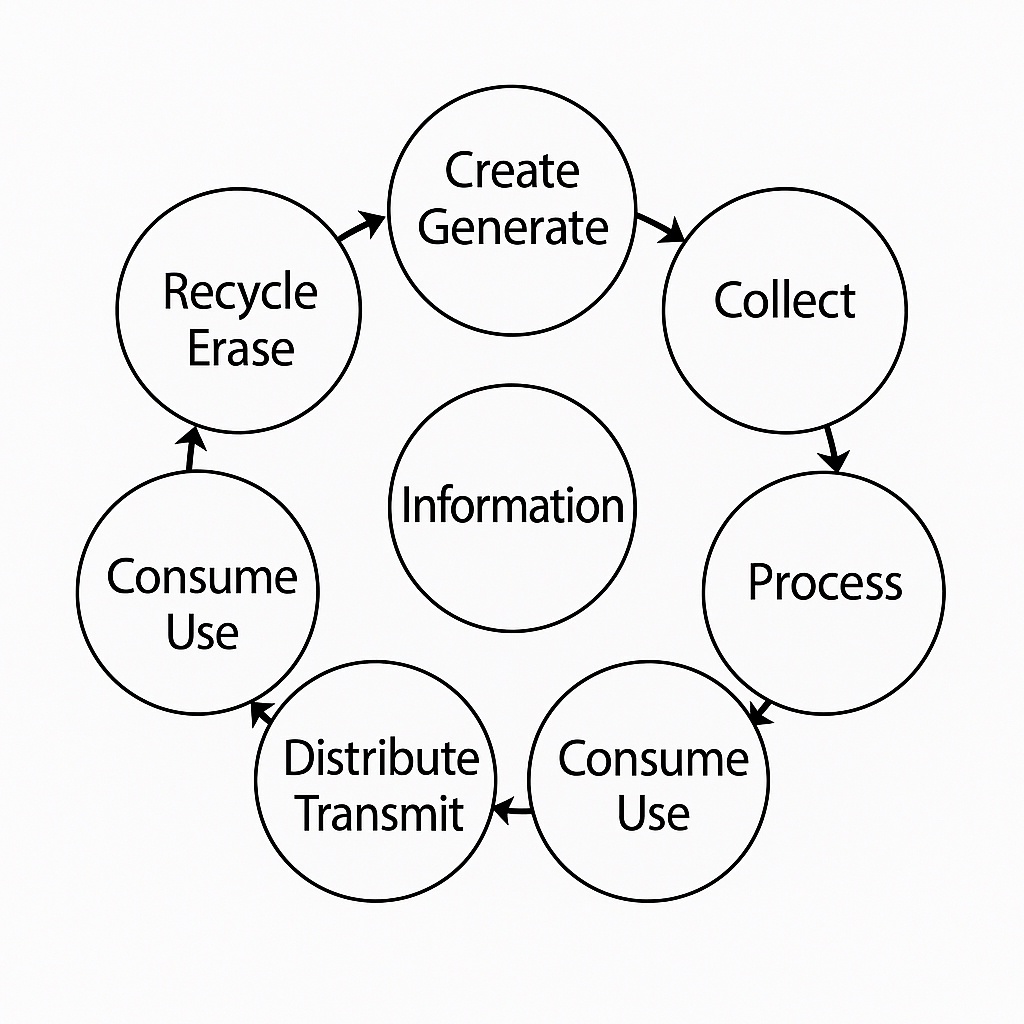
Fig.1 A typical information life cycle
Beginning with the tangible origins of information, such as cuneiform tablets and early administrative records, we shall follow its evolution through key turning points of advancement, including the dissemination enabled by the Gutenberg press and the control of printed material exercised by the Privy Council during Henry VIII's separation from the Catholic Church. The analysis then moves to the development of machine-readable systems, such as punch cards, which introduced abstraction and automation into data processing, paving the way for efficiency in data storage.
We are reshaping how information is distributed and redefining our understanding of our role in the digital age. This transformation compels us to reconsider the nature of information and its impact on shaping our perceptions. The information lifecycle (Fig.1) provides a structured framework for analysing and understanding the continuous flow of information, regardless of its format. Each stage in this cycle highlights critical functions that maintain information's relevance and utility. This life-cycle is bound by physical constraints, such as printed texts that tie data to a material form. However, digital infrastructures have abstracted these stages, enabling transitions and scalability in data creation and distribution. These abstractions increase data's utility and redefine its role within systems of control.
Our understanding of reality, our metaphysics, is shifting. Where we once viewed the world through a materialist lens, focused on physical matter and tangible objects, we are now moving toward an abstract informational perspective. In this new view, reality is increasingly defined not by physical attributes, but by data and information (Floridi, 2010). In many ways, we've become detached from the physical world, interacting instead through layers of digital representation. As data infrastructures become more widespread, often operating invisibly in the background, they shape our world in ways we barely notice. This makes it more important than ever to engage critically with the philosophical foundations of data. Understanding how data frames our perceptions and decisions is essential if we are to navigate the ethical challenges of a world deeply embedded in digital connectivity.
Chapter One: Data in Substance
Is data simply raw material to be refined into information, or is it the basis of thought and civilisation? This question is central to understanding how the transition from analogue to virtual infrastructures has reshaped our perception of data as a controllable entity.
This chapter examines the material foundations of information, tracing its evolution from tangible artefacts to the mechanisms of mass distribution enabled by the printing press. Throughout history, data has existed as an abstract concept and material entity, be it the grooves decoded by a stylus or the ink of a printing press or stored in the electrical charges of flashdrive memory (Atherton & Bugler, 1984). Data requires a physical medium to exist. However, our understanding of its materiality has evolved significantly as information shifts into virtual infrastructures. The physical labour behind ancient clay records or printing presses mirror today's environmental and geopolitical costs of server farms and algorithmic governance.
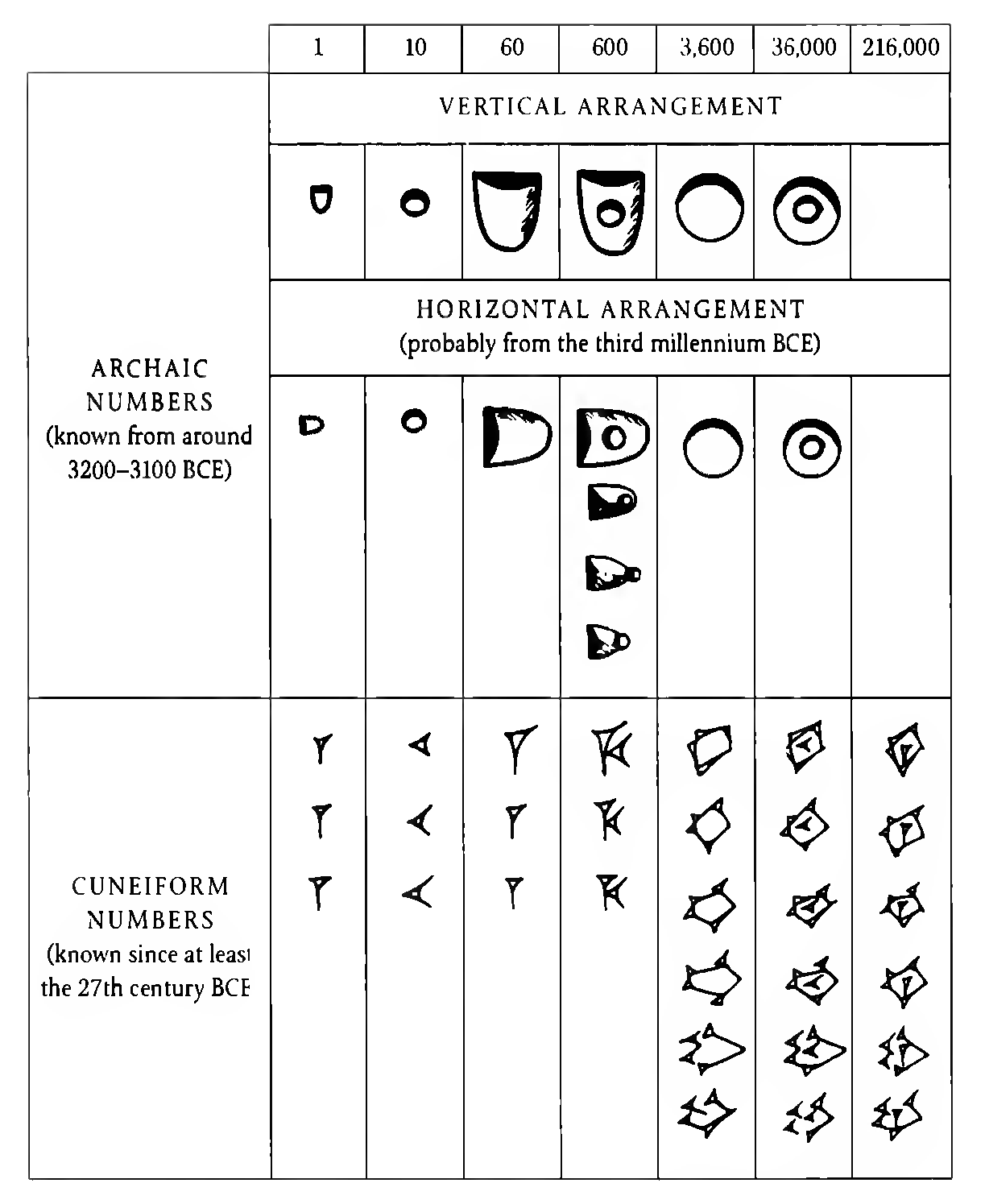
Fig.2 The Mesopotamian written counting system

Fig.3 'Field of EN': Cuneiform Record of Complex Surface Calculations
Information has long been intricately connected to written language, serving as a medium for conveying ideas and knowledge. The first written language, the Cuneiform script from Mesopotamia, was thought to have been created for long-distance communication (Cammarosano, 2020). This script, which involved making impressions with a stylus into soft clay and letting it dry to become a record of evidence. Some of the earliest examples were pictorial scripts, as they represented tangible items, such as barley. The script evolved as the need arose to express more intangible concepts, like the will of the gods. The development of the script concept made the text more concise, reducing the overall character count. This progress allowed for clearer expression of intent and abstract concepts (Mark, 2022).
Among the earliest examples are cuneiform records from Mesopotamia, such as the 'Field of EN,' (Fig.3) an administrative document from Jemdet Nasr, Iraq (3200-3000 BC). This tablet records land calculations, with two-thirds allocated to the EN (a Sumerian lord) and the rest unequally distributed among five high-ranking individuals, including the EN.SAL, interpreted as the lord's wife (Kelley, n.d.). These records, more than just logistical tools, reflect social stratification, demonstrating how data was used to reinforce hierarchies at the earliest stages of recorded history, and emphasising the connection between economic management and social and political structures. The creation of these records was not neutral. Scribes, with their specialised knowledge, served as intermediaries between rulers, merchants, and various social classes. They played a pivotal role in transforming information into cuneiform script, thereby encoding systems of governance and territorial organisation. As observed in Eye of the Master, "Numbers and counting tools were components of these primitive abstract machines that forged human civilisations through territorialisation and segmentation" (Pasquinelli, 2023). This territorialisation (dividing lands and resources) is recorded in Fig.3 by the unequal distribution of land, in the Mesopotamian written number system (Fig.2). Showing that the abstraction of numbers can become a mechanism for controlling resources, reinforcing social division, and institutionalising power hierarchies. The term "machines" implies systems operating in structured, interconnected ways to control aspects of society and to operate as a whole. This perspective suggests that data, even in its most ancient forms, is material. Its creation, involving significant labour and ecological resources, confers value to records like the 'Field of EN' (Fig.3). Yet their worth extends beyond their physicality; they also reflect the priorities of those in power. This selective process of inclusion and omission reveals the inherent biases embedded in representation, illustrating that no form of documentation is ever truly neutral. The process of recording transformed information into an instrument of administration. This is just as important today, where recording and archiving can influence the power of what stories are told and which are erased. Furthermore, just as modern data infrastructures mediate access to wealth and influence, these early records reveal how numerical abstraction has long functioned to institutionalise authority. Ensuring that economic, social, and political dominance remained in the hands of an elite minority.
The evolution of information distribution highlights our ongoing need to document and regulate knowledge. After all, we share to preserve history and learn. The physical nature of data has influenced the development of religious and political power structures. Such as the control of manuscript production by medieval religious institutions and the centralisation of printing to regulate information flow. Information, inherently malleable, can shape ideologies and transform societies. A pivotal moment in the history of information dissemination occurred during the 15th century with the introduction of the Gutenberg Press. Johannes Gutenberg (c. 1400-1468) revolutionised printing by developing movable metal types, enabling the mass production of written materials (Fig.4). While printing and paper originated in Asia, Gutenberg's innovation marked a turning point in Europe (Zeldenrust, 2024). William Caxton (c.1422-c.1491), an English trader, was crucial in promoting this technological advancement. In 1476, Caxton established Britain's first printing press in London, printing the first English book and beginning a new era of communication and accessibility to information. Printing transformed information from individual, handcrafted records into mass-produced, standardised texts. Fundamentally altering how knowledge was preserved and distributed. However, despite the increased capacity for distribution, access to this information remained limited. Printed materials were often restricted to the educated elite and institutions, requiring literacy in Latin or the vernacular to understand them (Zeldenrust, 2024). As a result, the ability to access printed information was anything but just.
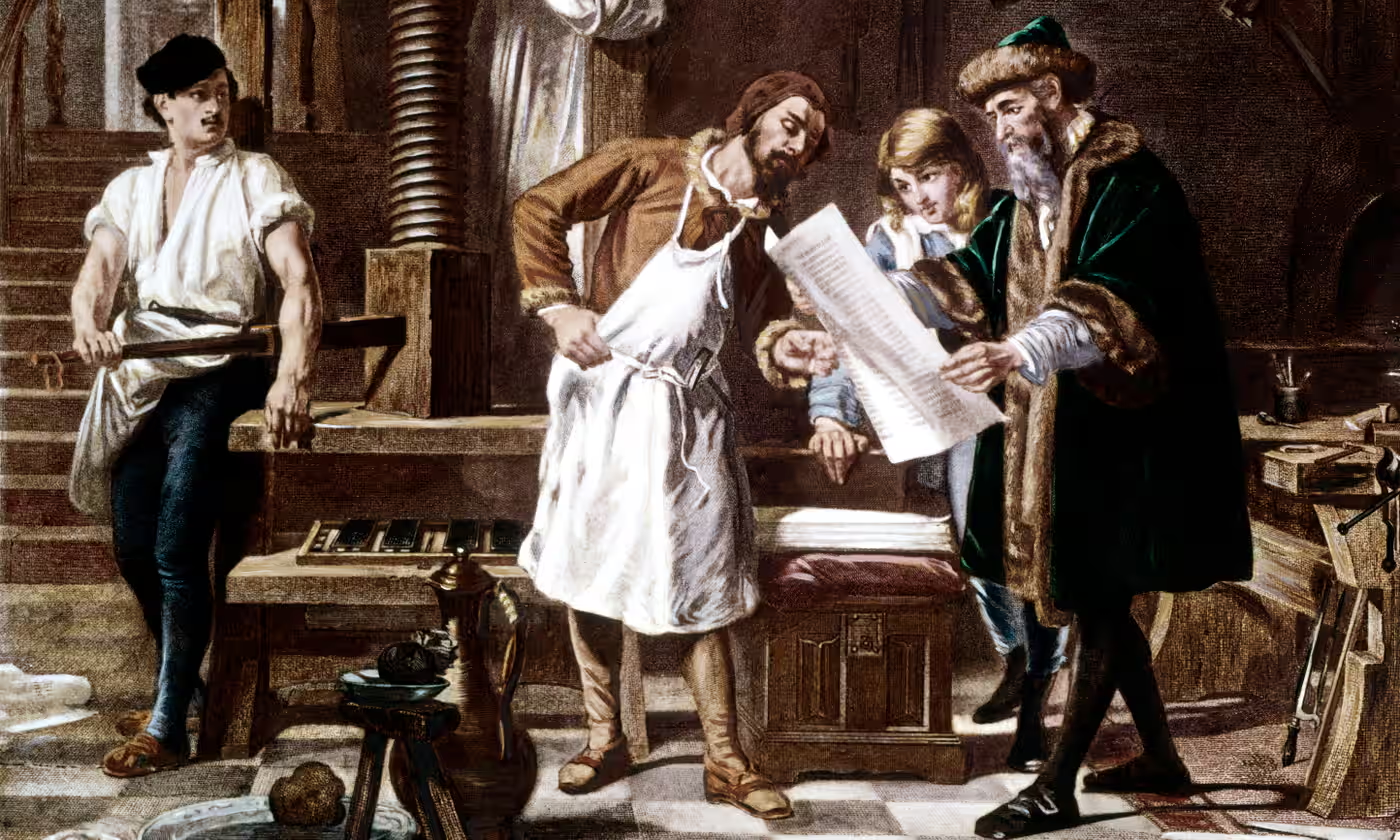
Fig.4 Invention of Printing 'Gutenberg Taking the First Proof'
In Tudor England, the privy council tightly regulated the printing and distribution of texts. During Henry VIII's reign (1491-1547), this control became a vital tool of state power. The king's authority over church and state allowed him to combine censorship and propaganda under the Crown. As The Press under the Early Tudors explains, "The control of the press now rested entirely with lay councillors...recent unification of the headships of church and state placed the burden of censorship upon the King" (Loades, 1964). The term "burden of censorship" suggests that the press was not a privilege but a heavy obligation and perhaps a necessity for preserving stability and continuity of sovereign power. Henry VIII's council utilised the press to suppress dissent and propagate their version of the truth regarding his engagement to Anne Boleyn. The Privy Council commissioned texts to justify the divorce from Catherine of Aragon, and the feud with The Roman Catholic Church, ensuring Henry VIII's narrative dominated public discourse. It also declared any 'words written or printed to the prejudice of the King, against his marriage with Queen Anne…' (Loades, 1964) which was not merely discouraged but actively persecuted. This strategic use of print, a powerful tool of persuasion, served as an instrument of control, illustrating how information can be weaponised to consolidate power. Using printed materials for propaganda highlights how technological advancements in information distribution can be as much about power as democratising knowledge. The reign of Henry VIII represents the duality of the printing press as both a liberator and a regulator of ideas. While the technology allowed for the dissemination of new religious and political doctrines, it also enabled the Crown to suppress dissent and enforce conformity. The sovereign power shaped public opinion and reinforced the monarchy's authority by commissioning pamphlets and books that supported his theological and political positions (Warner, 1999). This manipulation of the press ultimately fueled years of religious conflict, between Protestants and Catholics and heightening tensions to lead to the War of the Roses.
With the printing press under Henry VIII's rule, the capacity to control the distribution and interconnection of ideas became a tool of Sovereign power, reinforcing hierarchies and shaping public discourse. Furthermore, the material constraints of printing, access to presses, literacy, and distribution networks meant disseminating ideas related to elite-private networks, even in illicit forms. Rebelling publications from exiled Protestants often required significant financial backing (Loades, 1964). This dynamic highlights how the materiality of data, whether inscribed in clay tablets, printed on paper, or encoded in digital formats, has consistently mediated not what knowledge is shared but who has the authority to share it.
Newspaper endorsements in a contemporary context echo these dynamics, shaping public opinion and influencing voters' opinions (Fry, 2018). While they serve as a trusted source of credibility and legitimacy, their influence is mediated by digital platforms, where algorithms and data-driven biases amplify or diminish their reach. Especially given that digital platforms often lack fact-checking processes. It is concerning that META, formerly Facebook, is scaling back its fact-checking features. The META Chief Global Affairs Officer stated that "too much harmless content gets censored…in response to societal and political pressure to moderate content" with these changes as an attempt to return to the commitment of free expression (Kaplan, 2025). Research indicates that inaccurate social media posts spread 20 times quicker than accurate ones, especially when including extreme content like conspiracy theories, racist complaints, and indictments of violence (Antonelli, 2025). A 2000% increase in engagement directly translates into higher ad revenue for platforms and ultimately prioritising engagement and revenue over fact. Instead of a Sovereign power, as seen with the printing press, social media can be seen to uphold a capitalist power, where profit-driven algorithms dictate the flow and visibility of information. This interplay between traditional media, such as the printing press, and contemporary digital platforms, like social media, highlights the struggle between power and influence and the changing frameworks through which information is shared.
The parallels between historical and modern data systems highlight an enduring tension between control and liberation, inclusivity, and exclusion. As we navigate the complexities of the digital age, data's material and historical underpinnings remind us that information has never been neutral. Data functions as a material construct and a vehicle for ideas, constantly challenging the balance between its potential to record knowledge and its vulnerability to manipulation and control.
Chapter Two: Data in translation
Throughout history, how we have recorded and used data has evolved dramatically. What began as tangible inscriptions, like the grooves of cuneiform tablets, has transformed into abstract encoded systems, such as binary code, which is the foundation of modern computing. However, encoding through abstraction comes at a cost. This process reduces the inherent human context and interaction preserved in earlier, tangible forms of representation. As a result, the validity of the original source is diminished, transferring into a more streamlined yet less contextually refined format. This encoded format emphasises machine-readability at the expense of human understanding, creating a separation between data and the labour, meaning, and origin involved in creation. Additionally, those who control the encoding frameworks, scribes in ancient civilisations or contemporary technologists and corporations acquire an uneven level of power and control, influencing what is encoded and how it is interpreted and utilised.
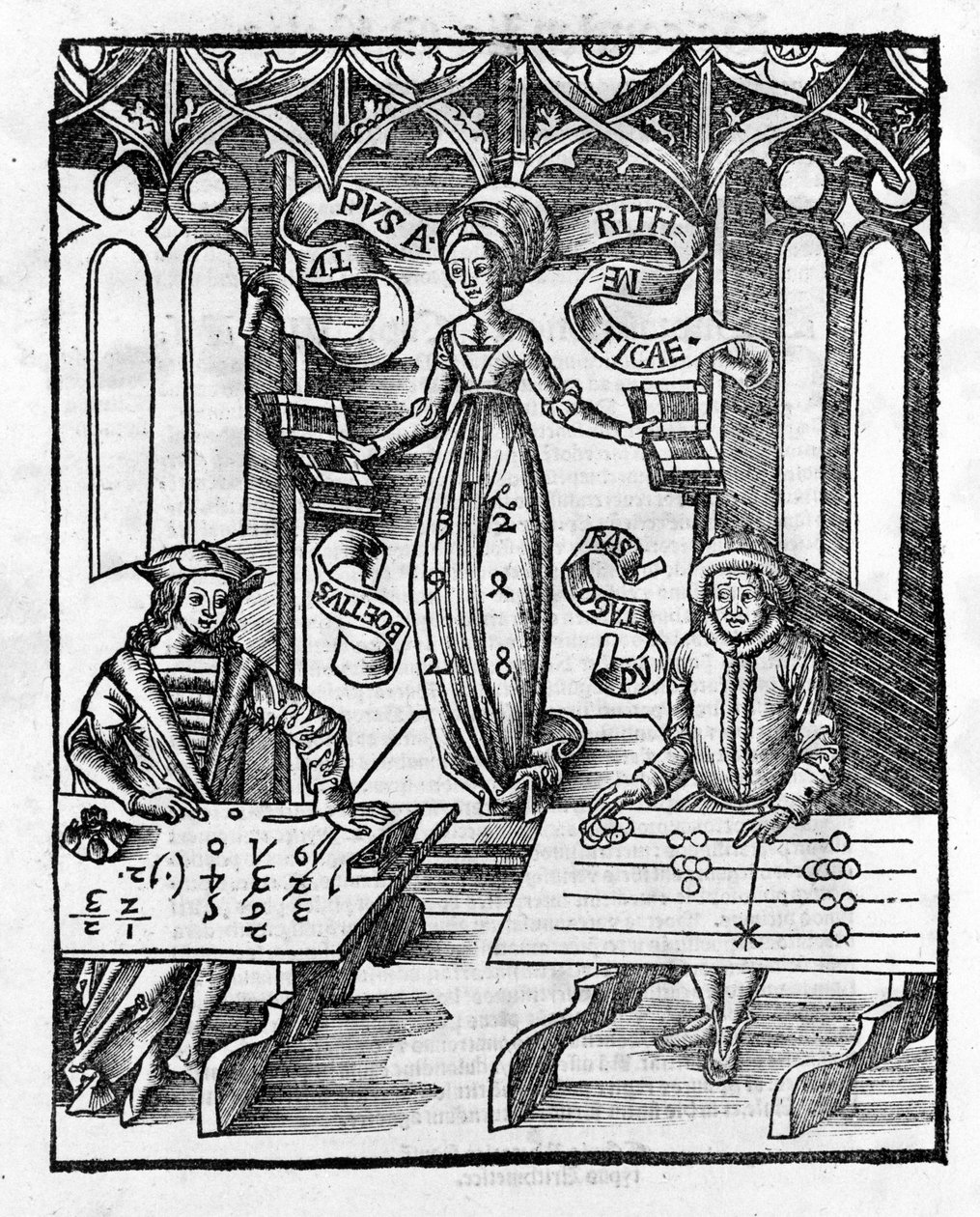
Fig.5 Allegory of Arithmetic, Margarita Philosophica, 1503
The tension of mathematical evolution is captured in Fig.5, where the allegorical figure of Arithmetic stands at the centre of the composition, positioned between two opposing groups: the abacists, who cling to Roman numerals, and the algorists, who adopt the new Hindu-Arabic numeral system (Pasquinelli, 2023). She is positioned smiling towards the algorist, her robe now covered in the symbols of the numeral system, signifying an alignment with the new notations. Despite the algorist's victory, the use of the abacus remained deeply ingrained in people's habits, leading them to double-check all written sums on abacuses for accuracy (Ifrah, 2000). This dichotomy illustrates a broader tension between preserving established systems and embracing paradigms that redefine the frameworks of practice and governing. While the adoption of the Hindu-Arabic system marked a shift in mathematical thinking, the persistence of older practices shows how change, though inevitable, can be slow and contested.
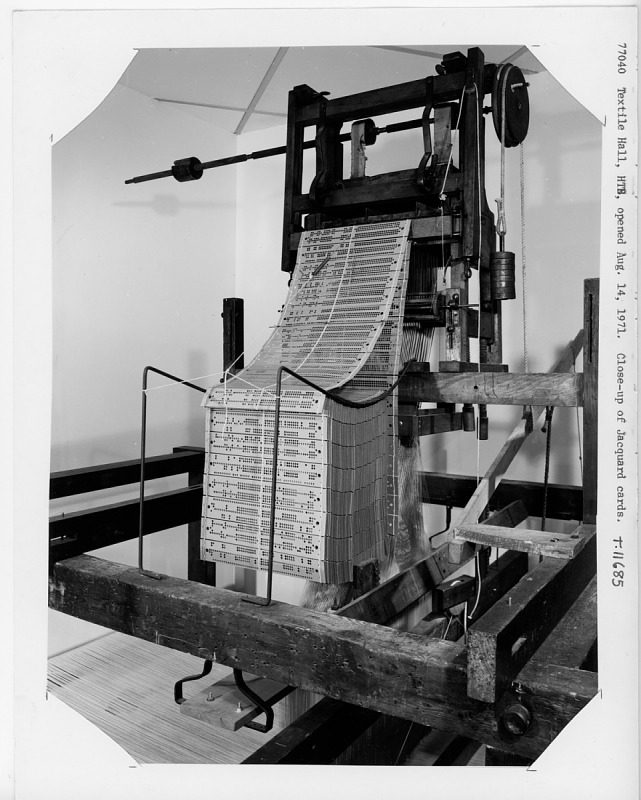
Fig.6 Model of a Jacquard Loom
Prior to the Industrial Revolution, the textile industry employed skilled workers to operate complex looms for manufacturing. The workers would have to manually raise and lower the loom to create patterned fabrics, taking two to three weeks to set up drawlooms to specific patterns (Plant, 1998). In 1801, Joseph-Marie Jacquard built upon the earlier automated works of inventor Jacques de Vaucanson to create automated weaving machines (Science and Industry Museum, 2019). Named after himself, the Jacquard Loom added interchangeable punch cards, connected as a belt (Fig.6), to store the fabric design to be manufactured. Punches would differentiate, allowing specific threads to rise within the design, just as the workers did, and automating the system. By converting manual weaving instructions into a programmable format, these cards illustrate the transition from tangible data (individual threads and patterns) to information (the encoded punch cards) and, ultimately, to actionable knowledge (the automated weaving process). Control of the Jacquard Loom is then programmable. "Jacquard's punch cards turned manual instructions into information- computable knowledge" (Pasquinelli, 2023). This distinction between data, information, and knowledge highlights a crucial shift from raw, unprocessed material to structured, usable content that drives decision-making and operations. In this way, Jacquard's innovation represents a foundational moment in developing automated, intelligent systems, laying the groundwork for the modern computational infrastructures we use today. Indeed, International Business Machines (IBM) later adopted punch card storage as a standard storage format for their analogue computers until the 20th Century (Pasquinelli, 2023). In replacing human labour with automation through punch cards, the Jacquard Loom showed a shift in human-machine interaction, where the once manual and skill-based process was now executed by machines with pre-programmed instructions. The frames of the looms were famously broken by rioters, who saw the hardware as "a piece of their bodies literally being transferred to the machine" (Plant, 1998) reflecting their fear of technology not only replacing their livelihoods but also eroding their sense of agency. This conflict encapsulates the tension between innovation and its social consequences, a recurring theme in the history of technological progression.
By encoding human labour into a binary system, the Jacquard loom reveals the broader implications of abstraction: it simplifies complexity into machine-readable formats, enabling efficiency and scalability at the cost of individuality and context. Binary language is efficient but lacks human interpretability, leading to systems that rely heavily on machines and centralised technical expertise. "It takes two to make a binary, but all these pairs are two of a kind, and the kind is always kind of one" (Plant, 1998). Plant's quote invites reflection on the paradox of binary systems-they depend on duality yet prioritise singularity. In the digital age, this same binary logic underpins computational systems, raising questions about how abstraction continues to shape labour, agency, and power dynamics. Binary abstraction depends on the interaction of two states: presence and absence; in the case of the Jacquard Looms, a hole (presence) or no hole (absence). However, as Plant suggests, this duality ultimately collapses into a singular framework of uniformity and standardisation. It demonstrates the application of absence and presence, transitioning from a philosophical notion to a practical tool.
The evolution of data storage reflects an interplay between abstraction and practicality. As suggested in Metaphysics as a Guide to Morals, "Art evolves, social classes transform, religion changes, technology progresses" (Murdoch, 2003). Murdoch highlights the natural progression of technology, which builds upon previous discoveries to shape future innovations. A contemporary example of this may be the release of a new iPhone model almost annually, marketed with seemingly 'unmissable' updates. Interestingly, Murdoch deliberately uses the term progresses to describe technology's trajectory rather than evolves, transforms, or changes-all of which are equally applicable but perhaps fail to capture technological advancements and relentless goal-oriented projection. This deliberate choice of wording suggests that technology is inherently tied to forward movement, constantly regenerating itself by leveraging on past achievements. Unlike other societal elements, such as art or cultural trends, which may wax and wane in influence, technology is consistently characterised by its linear momentum. While progression seems optimistic, it prompts deeper reflection: Are we fully aware of where this trajectory leads, and can we even speculate on its ultimate destination? Murdoch's description of technology as "progressing" suggests forward momentum, but it does not imply that this movement is always linear or beneficial for everyone. Progress might mean demanding sacrifices of stability, tradition, and ethical considerations. This raises the question of whether technological development truly has no endpoint or whether human priorities and limitations shape it. Could there come a point where progress plateaus, shifts focus or redefines itself entirely? Certainly, the workers replaced by the progression brought by the automated punch cards did not rejoice in their displacement. While progression is often framed as improvements and positive, it remains a human construct shaped by choices. In the end, perhaps the more significant question is where we see this technology is not heading but if we are consciously steering its course or merely being carried along by its momentum.
The Search for the Perfect Language explores the idea of a language that removes ambiguity and conveys meaning with absolute clarity (Eco & Fentress, 1997). In this sense, binary language embodies that ideal by simplifying complexity into a system of discrete choices: yes or no, presence or absence, 1 or 0, high or low. This level of precision makes binary an ideal language for machines, allowing them to process information efficiently and perform calculations at speeds far beyond human capability. Is this definitive clarity an advantage? While binary logic enhances computational efficiency, it can lack the nuance and contextual depth characterising human thought.
While binary may be the perfect language for machines, its limitations remind us of the richness of human expression, something that cannot always be reduced to a simple choice between two combinations. This abstraction comes at a cost; binary language is inherently inhuman. It prioritises simplicity at the expense of the nuance and layered meanings characterising human thought and communication. As observed, "Only machines can speak this language." (Strickland & Lewis, 2022). Therefore, it could be argued that we are increasingly relying on an inhuman language, like binary, more than human language, especially as digital platforms become central to our daily lives. Much of our communication, through text messages, social media posts, and voice notes, is built from binary code for technology to interpret.
This increasing prevalence of binary language marks a significant cultural shift as machine-oriented systems increasingly shape human realities. This emerging pattern invites critical reflection: how can we reconcile the rigid precision of binary systems with the complexities of human existence? In pursuing linguistic perfection designed for machines, we must consider whether such precision distances us from humanity's core qualities-the capacity for creativity and meaningful connection. While binary systems excel in efficiency, they impose a rigid framework that fails to accommodate the messy, layered nature of human interpretation. These frameworks support modern surveillance technologies, algorithms, and data-driven decision-making processes. Furthermore, while essential for computation, binary systems remain inaccessible to humans without mediation through softwares into human-readable formats. This reliance shifts power away from individuals and toward centralised institutions and the experts who program and control these systems. This shift also underscores the dual nature of abstraction. While abstraction fuels innovation and technological progress, it can also turn data into a means of control, reflecting the biases and priorities of those who encode it. Consequently, data transforms from a neutral record into an encoded construct that actively shapes how reality is governed.
Chapter Three: Data in command
Today, technology is everywhere, and we are constantly interacting with platforms that collect and exploit our data, often without our conscious awareness. This chapter explores the tension between human agency and the structures of digital systems, questioning whether genuine autonomy can exist in a world where data is the ultimate controlling currency. Examining technological determinism, surveillance, and speculative critiques to understand the implications of living in a digital environment that increasingly influences our choices and behaviours.
In The Metaphysics of Virtual Reality, determinism is defined as "The view that every event occurs necessarily, following inevitably from the preceding events. Determinism rejects any randomness, considering the freedom to be either an illusion or subject in some way to necessity" (Heim, 1994). This definition challenges the understanding of free will. Suggesting our decisions may not arise from conscious choice, but that choice is already determined by past conditions and preceding events. Consider recommendations on YouTube, Instagram, and TikTok. Our preferences are predicted by algorithms that learn from our past behaviour steering users towards a specific pattern of exposure and consumption. As a result, self-directed exploration of these platforms is not truly self-directed. Autonomy is replaced by algorithms, shaped by corporate agenda and reinforcing a deterministic interaction. Platforms require users to accept opaque terms and conditions, which are rarely read and fully understood, consenting to data collection that feed algorithms (Fry, 2018). "Determinism is always reappearing in new forms since it satisfies a deep human wish to give up, to get rid of freedom, responsibility, remorse, and all sorts of individual unease" (Murdoch, 2003). This suggests that determinism is a relief from the burdens of responsibility and accountability. Absolving users from control, creating a passive relationship with digital infrastructures of information. This highlights this sense of determinism by framing digital systems as a seductive but disempowering digital environment.
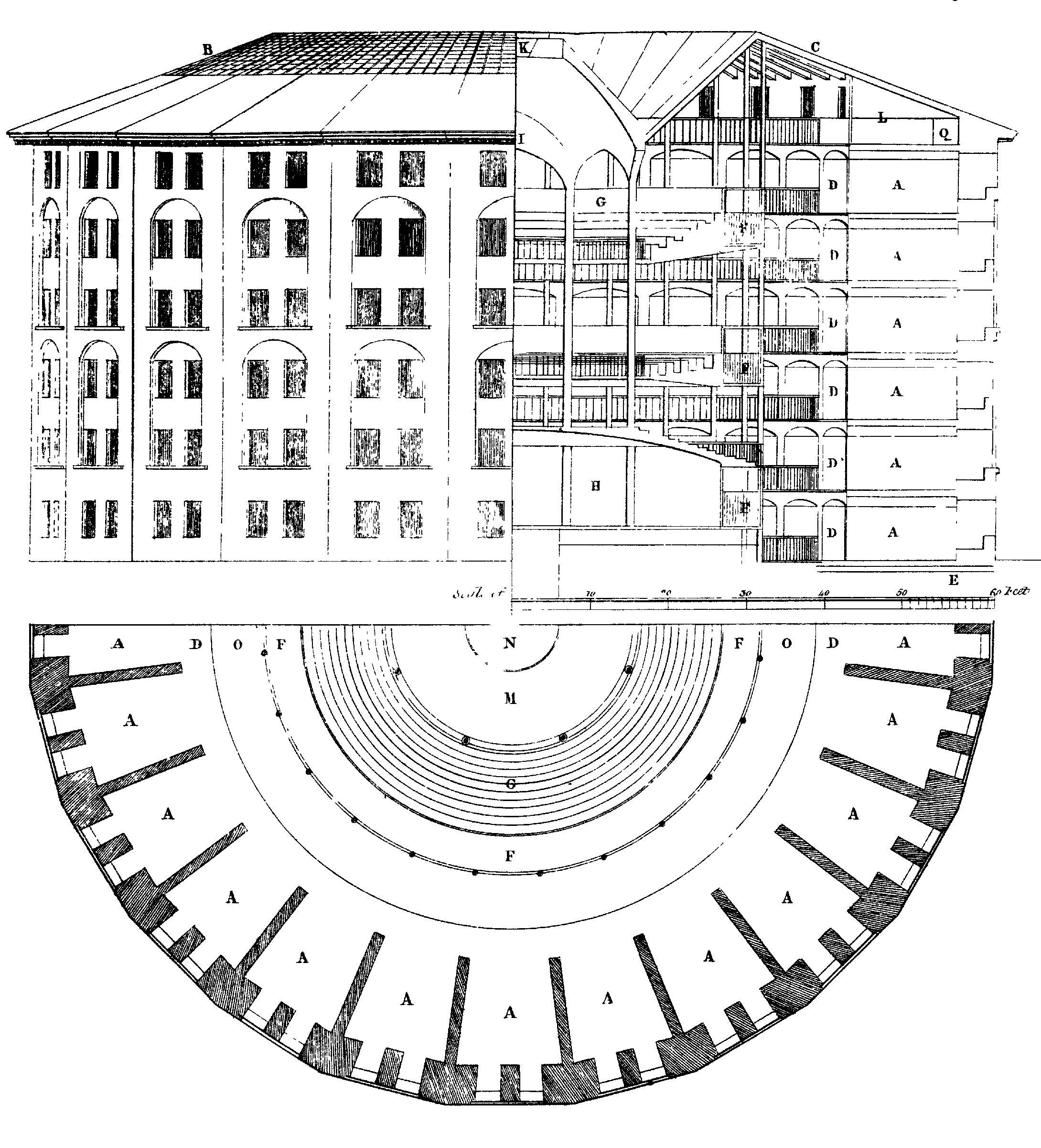
Fig.7 Design for the Panopticon by Jeremy Bentham, Samuel Bentham, and the architect Willey Reveley, 1791
Participation in the digital world is becoming increasingly necessary, as social, professional, and personal interactions shift online. Social media platforms have become essential for maintaining friendships, building social networks, and engaging in various activities. This situation presents a double-edged sword: while reducing time spent in the digital world can promote mental clarity and reduce stress, it also has its drawbacks, as daily life becomes more reliant on digital participation. As a result, curating your digital presence often seems more important than being your non-virtual self. This idea of digital curation introduces an awareness of being observed. The sense of being evaluated, whether by peers, potential employees, or algorithmic systems, encourages self-surveillance. Internalising the gaze of others and adjusting behaviour in accordance.
Jeremy Bentham's panopticon serves as a powerful metaphor for understanding digital surveillance. As illustrated in Fig. 7, the architectural design of the panopticon places a watchman at the centre, capable of observing all the surrounding cells. However, the inmates, unable to see the guard, must assume they are constantly being observed. This uncertainty creates a self-regulating system of control, where the mere possibility of surveillance shapes behaviour. The structure enforces compliance without direct intervention, making control an inherent system feature. Michel Foucault expands on this concept in Discipline and Punish, stating, "He is seen, but does not see; he is the object of information, never a subject in communication" (Foucault, 1995). In digital infrastructures, this dynamic evolves further-the control and observation systems become increasingly abstract and intangible. Unlike the traditional panopticon, where the watchtower is at least visible, in the digital age, even the watchman's presence is obscured. Users know they are being monitored, yet the mechanisms of observation remain hidden. In this environment, individuals are no longer just watched; they are transformed into data points, and their actions are recorded and repurposed through every click and interaction. Foucault's insight extends beyond surveillance to the nature of digital connectivity itself: "The crowd, a compact mass, a locus of multiple exchanges, individuals merging together, a collective effort, is abolished and replaced by a collection of separated individuals" (Foucault, 1995). This reflects the paradox of digital communication, while technology connects individuals; it also isolates them. A physical crowd, whether a mob or a peaceful protest, derives power from presence, from the collective force of raised voices. In contrast, the same number of people interacting digitally can be easily ignored, their voices fragmented in the vastness of virtual platforms. The digital panopticon not only surveils but also disperses, reinforcing separation even as it claims to unite people.
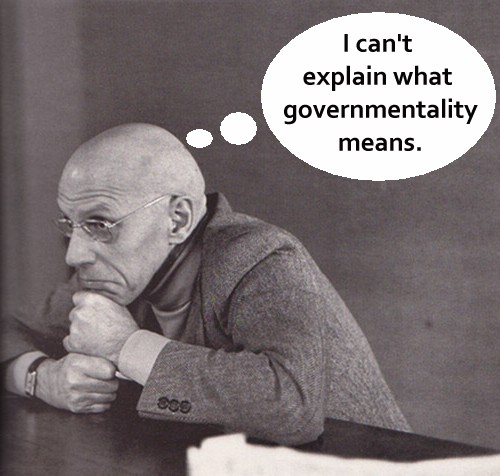
Fig.8
Power is often understood as a means of control, shaping how data and information function as resources to regulate (Floridi, 2010). As discussed in Chapter 1, the monarchy under Henry VIII exemplified a centralised form of Sovereign power. In Chapter 2, the Jacquard loom represents a shift in control within manufacturing as automation replaces workers, redefining power dynamics in textile manufacturing. Michel Foucault challenges the notion of power as solely centralised. He did not believe that democracy would bring total freedom or equal power for all individuals. Nor did he assume that the decline of sovereign power marked the end of power altogether (Fendler, 2014). Foucault sought to analyse how power operates within democratic systems, where governance is in the hands of the people. Governmentality, a term he coined, has been understood and applied in many ways (see Fig.8). Even Foucault's own definition varies across different lectures over his career (Blau, 2013). In its simplest form, it blends the ideas of governance and mentality. This definition can feel unclear because it focuses more on how power is exercised rather than what governmentality is. Foucault's point is that power is not only concentrated in central authority, such as the state. Instead, power is spread across a network of institutions, practices, and individuals, in whom it is also internalised. In some interpretations, the users of digital platforms can hold power over the platform owners. Rivalling the owners themselves aligns with Foucault's idea of power being distributed and not solely concentrated in one place.
Modern power and persuasion can be seen to function through subtle nudges rather than overt force, shaping user behaviour and decision-making through personalised advertisements, algorithmic recommendations, and digital interfaces. These mechanisms align with corporate and state objectives, often without individuals' explicit awareness, leveraging data-driven insights to influence choices. "Data can be polluted- for example, by synthetic data, in the same ways that water can be polluted" (Olson, 2024) Here, Olson refers to the rise of synthetic data, artificially generated information used to train machine learning models or fill gaps in datasets. While synthetic data can be beneficial in protecting privacy and overcoming data scarcity, it also introduces risks. One of the main concerns is that synthetic data might not fully capture the complexity and nuances of real-world data, leading to inaccuracies (Olson, 2024).
Just as polluted water is unsafe for consumption, tainted or misleading synthetic data can distort algorithms and erode trust in digital systems. Data has become one of the most valuable resources in the digital age, on par with traditional commodities like oil or water. This can be seen in the rise of data poverty, where individuals lack access to sufficient data or the means to participate fully in the digital economy. Some telecommunications companies, such as Three Network, have responded by offering free SIM cards and data banks without requiring contracts. While these efforts acknowledge the essential nature of data, they also underscore growing inequalities in its distribution. Geopolitical competition for data resources intensifies, with nations and corporations vying for control over data infrastructure. Raising questions about the future of resource allocation: Will access to data become a dividing line between the empowered and the disenfranchised?
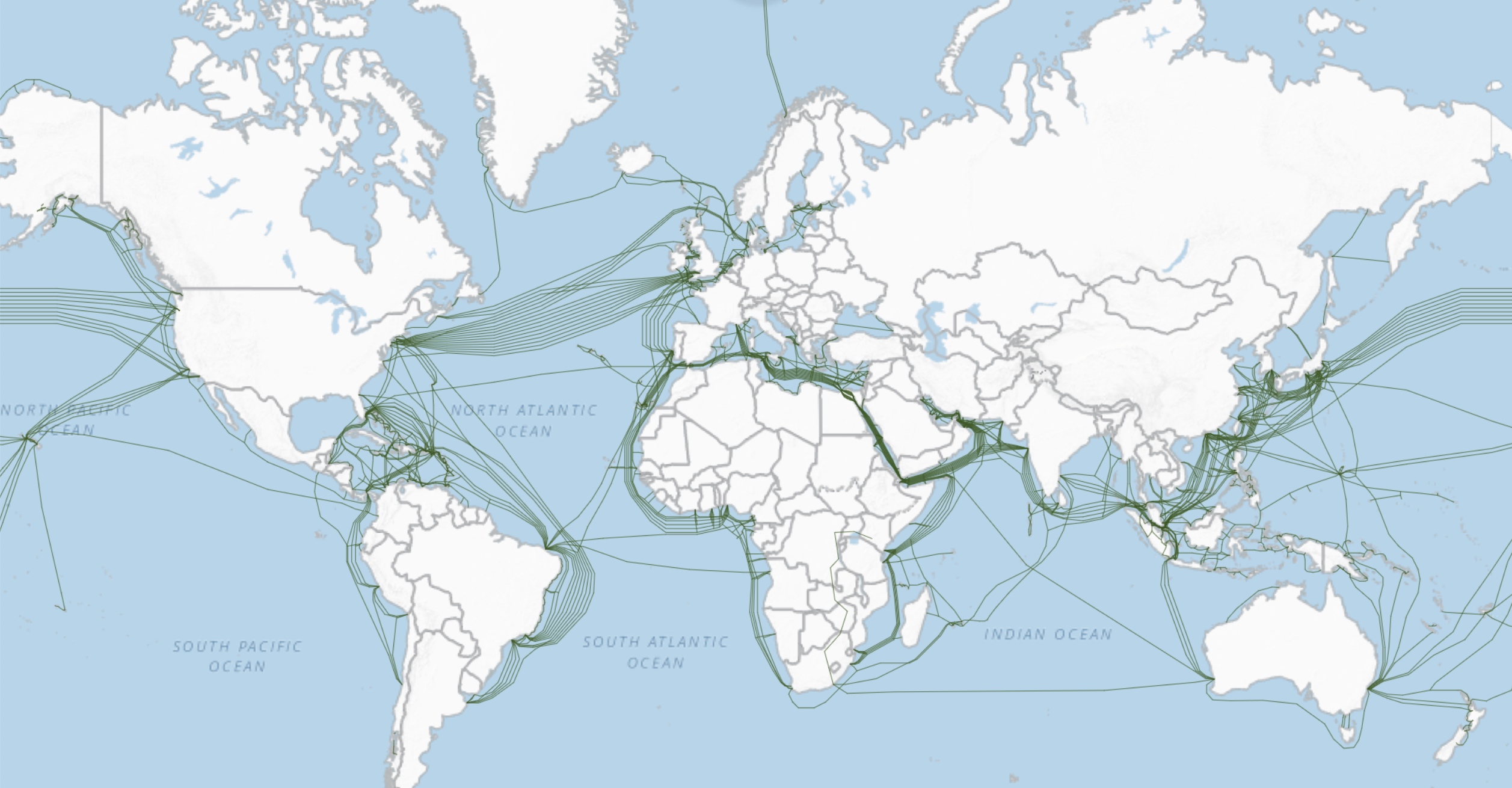
Fig.9 A map of the world's undersea cable
Access to physical data infrastructure, such as servers, fiber-optic cables, and satellites, is crucial in determining who can benefit from the digital economy. These elements form the backbone of global data connectivity, enabling the seamless transmission of information across vast distances. However, their uneven distribution exposes significant disparities in geopolitical data access. For example, regions with extensive fiber-optic networks (Fig.9) enjoy high-speed, reliable internet, which fosters innovation and economic growth. In contrast underdeveloped areas often lack this inclusion, leaving communities unable to compete in the digital marketplace (Olson, 2024). Additionally, control over satellite constellations and undersea cables allows leading nations and corporations to dominate global data flows. This unequal access perpetuates a cycle in which the digitally privileged consolidate their advantages, while others remain marginalised. Without equitable investment in physical infrastructure, the promise of an inclusive digital era risks being overshadowed by deepening digital divides. By embedding users within surveillance, commodification, and abstraction systems, virtual infrastructures challenge traditional notions of selfhood and autonomy. The digital economy has shifted the focus of labour from manual to mental tasks. Early technologies, such as the Jacquard loom, automated physical labour. In contrast, today's digital systems demand constant cognitive engagement.
The line between work and leisure has blurred, as individuals are always "on," In this context, humans have become products of the tools we've created. Digital infrastructures promise convenience and extract value from users' time and personal information. As these systems evolve, we must ask: Are we working for technology, or is it working for us? To navigate this digital landscape responsibly, we must critically examine the systems we rely on and advocate for ethical design principles that prioritise user empowerment. Speculative fiction provides a perspective on the trajectory of technological determinism. These narratives highlight the risks of ceding too much power to digital systems, encouraging us to reflect on our current trajectory's ethical and social implications.
Data Concluded?
Through historical analysis, philosophical inquiry, and technological critique, it becomes clear that while digital infrastructures have transformed information storage and distribution. Reinforcing structures of power and control within distribution that have long governed knowledge.
From ancient cuneiform records to digital databases, data has always functioned as more than a mere tool for recording reality; it has been a means of shaping reality. Whether inscribed in clay tablets, printed on paper, or encoded into binary, data has historically shaped societal hierarchies, mediated access to power, and determined who can participate in knowledge production. While the shift from material to digital formats has amplified efficiency and scale, it has also abstracted information from its material origins, making the forces that shape its control increasingly invisible.
Despite the promises of democratisation that accompanied the rise of digital technology, the mechanisms of data governance today mirror historical patterns of information control. The censorship of the printing press under Henry VIII, which sought to enforce a state-sanctioned version of truth, finds its modern counterpart in algorithmic content moderation and surveillance capitalism. Where once the church and state determined the distribution of knowledge, today, corporate entities, like META, and algorithmic infrastructures dictate what information is amplified, obscured, or monetised.
Furthermore, the increasing reliance on binary systems, where complex realities are reduced to computationally efficient structures, has introduced a new dimension to the metaphysics of data. While the binary logic of digital computation has enabled unprecedented advancements in automation and AI, it has also narrowed the scope of human experience to machine-readable categories, often stripping away context, nuance, and interpretability. The transition from knowledge inscribed in material form to data encoded in machine language raises pressing questions about agency, authorship, and control.
Through this exploration a key tension has been the question of determinism versus agency in the digital age. Digital infrastructures shape user behaviour through predictive algorithms and the monetisation of attention. Platforms like Facebook, Instagram, and TikTok actively shape what we see and how we engage with the world. This echoes the concerns of technological determinism, which suggests that our interactions with digital systems are not entirely self-directed but are instead guided by forces beyond our control.
Yet, history has also demonstrated that no information control system is absolute. The printing press, once a tool of state power, ultimately fueled the Protestant Reformation and radical shifts in knowledge dissemination. Similarly, despite their capacity for surveillance and control, digital platforms are also sites of resistance. The same data-driven infrastructures that enable mass surveillance have also been used to organise social movements and challenge dominant narratives. Thus, the digital transformation of data has introduced new control structures.
To progress, we must critically engage with the philosophical dimensions of data governance. Advocating ethical frameworks that prioritise transparency and user autonomy. This requires not only technical solutions but also a broader cultural shift, one that acknowledges the ways in which data shapes our understanding of reality. The question is not just whether data is controllable but who controls it and to what end. The future of digital infrastructures will be determined by technological advancements and by the social and political choices made today. Whether we remain bound by historical patterns of information control or reclaim data as a force for collective empowerment depends on our willingness to challenge and critique the systems that shape our digital world.
Bibliography
Books
Atherton, D. and Bugler, J. (1984) From Compass to Computer. London: Macmillan.
Aristotle (1928) Metaphysics, 7.1039b. In: W.D. Ross, trans. The Works of Aristotle, Volume 2. London: Oxford University Press.
Bottazzi, R. (2020) Digital Architecture Beyond Computers: Fragments of Cultural History of Computational Design. London: Bloomsbury Visual Arts.
Eco, U. and Fentress, J. (1997) The Search for the Perfect Language. London: Fontana Press.
Fendler, L. (2014) Michel Foucault. London: Bloomsbury.
Floridi, L. (2010) Information: A Very Short Introduction. Oxford: Oxford University Press.
Foucault, M. (1995) Discipline and Punish: The Birth of the Prison. New York: Vintage Books.
Fry, H. (2018) Hello World: How to Be Human in the Age of the Machine. London: Doubleday.
Heim, M. (1994) The Metaphysics of Virtual Reality. New York: Oxford University Press.
Ifrah, G. (2000) The Universal History of Numbers. New York: Wiley.
Murdoch, I. (2003) Metaphysics as a Guide to Morals. London: Vintage.
Negroponte, N. (1995) Being Digital. New York: Knopf.
Pasquinelli, M. (2023) The Eye of the Master. London: Verso Books.
Plant, S. (1998) Zeros + Ones. London: Fourth Estate Limited.
Warner, J.C. (1999) Henry VIII's Divorce: Literature and the Politics of the Printing Press. Woodbridge: Boydell Press.
Online Articles and Sources
Antonelli, Guardian staff reporter (2025) 'Mark Zuckerberg's End to Meta Fact Checking is a Desperate Play for Engagement', The Guardian. Available at: https://www.theguardian.com/technology/2025/jan/10/mark-zuckerberg-meta-factchecking
Blau, A. (2013). When Foucault Says fouc-all: Part 1. [online] BlauBlog. Available at: https://adrianblau.wordpress.com/2013/06/07/when-foucault-says-eff-all-part-1
Hofstadter, D.R. (1982) 'Metamagical Themas', Scientific American, 247(3), pp. 18-34. Available at: https://doi.org/10.1038/scientificamerican0982-18
Jowett, B. (2024) 'Plato on Writing', Umass.edu. Available at: https://people.umass.edu/sharris/in/e491ho/PlatoWriting.htm
Kaplan, J. (2025) More Speech and Fewer Mistakes. [online] Meta. Available at: https://about.fb.com/news/2025/01/meta-more-speech-fewer-mistakes/
Loades, D.M. (1964) 'The Press under the Early Tudors: A Study in Censorship and Sedition', Transactions of the Cambridge Bibliographical Society, 4(1), pp. 29-50. Available at: https://www.jstor.org/stable/41337104
Mark, J. (2022) 'Cuneiform', World History Encyclopedia. Available at: https://www.worldhistory.org/cuneiform/
Olson, S., ed. (2024) Toward a New Era of Data Sharing. National Academies Press eBooks. Available at: https://doi.org/10.17226/27520
Rosen, Guardian staff reporter (2025) 'Signature Moves: Are We Losing the Ability to Write by Hand?', The Guardian. Available at: https://www.theguardian.com/news/2025/jan/21/signature-moves-are-we-losing-the-ability-to-write-by-hand
Tapia, A. (2003) 'Graphic Design in the Digital Era: The Rhetoric of Hypertext', Design Issues, 19(1), pp. 5-24. Available at: https://doi.org/10.1162/074793603762667665
Walter, D. (2014) 'The Ancient Book of Wisdom at the Heart of Every Computer', The Guardian. Available at: https://www.theguardian.com/books/2014/mar/21/ancient-book-wisdom-i-ching-computer-binary-code
Zeldenrust, L. (2024) 'You're Dead to Me: Printing in England', BBC Radio 4, 6 Jul. Available at: https://www.bbc.co.uk/programmes/m0020xhm
Databases
Cammarosano, M. (2020) 'Cuneiform Writing Techniques', CDLI Wiki. Available at: https://cdli.ox.ac.uk/wiki/doku.php?id=cuneiform_writing_techniques