
How have Gen Z social media platforms impacted the ways people connect through knitting and crochet practices?
Casting On
Knitting and crochet are two of the many crafts that have been practised as an expression of love and a way to forge meaningful connections through the investment of one's time and patience in making them. Such handicrafts have been present for thousands of years with examples of early hand-knit creations dating as far as the 5th century. (The history of hand-knitting · V&A, no date).
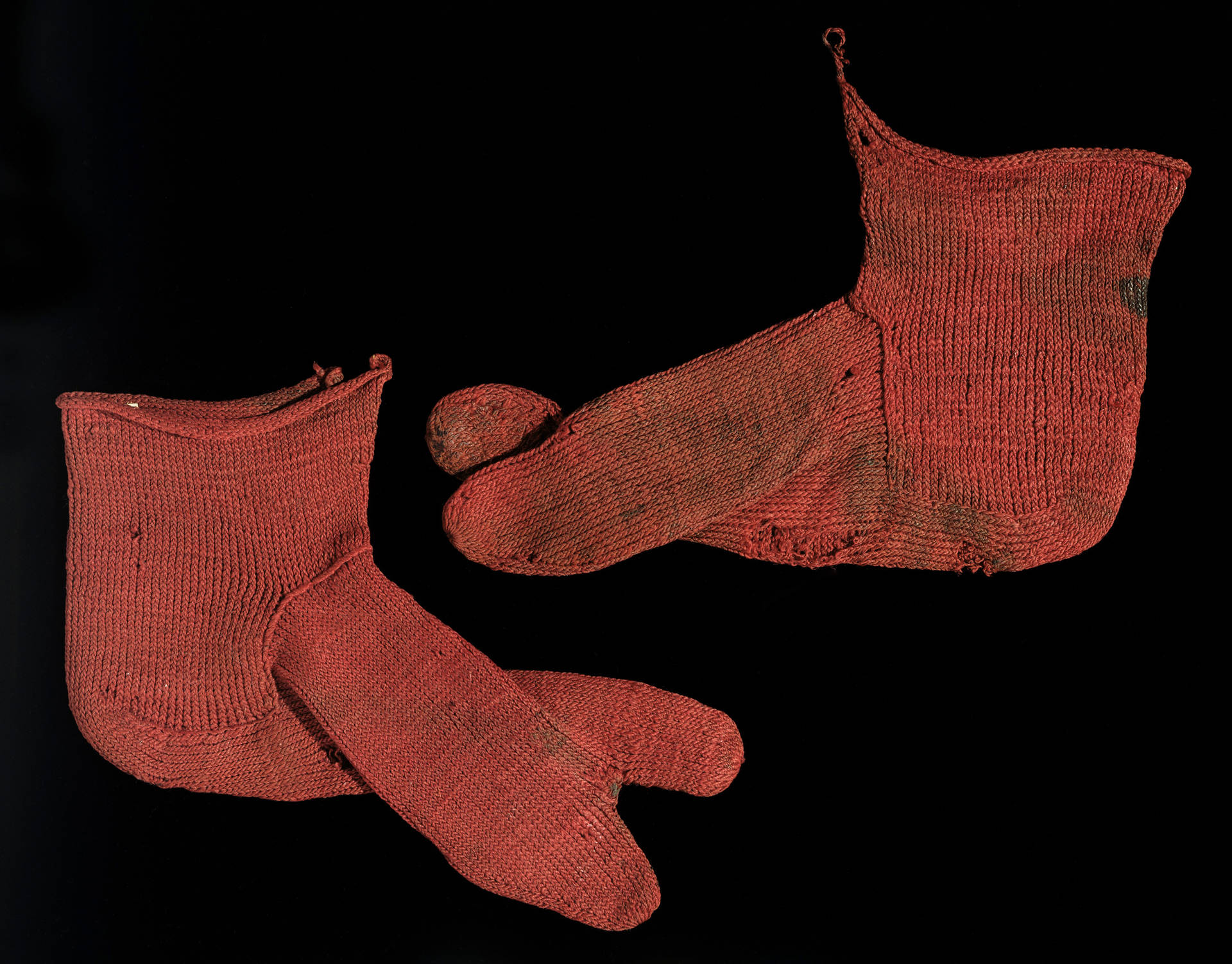
Figure 1: Pair of Socks, 250 - 420
Early history shows that many of the first knitters were men. In Mary Thomas's Knitting Book, she mentions the concept of a knitting guild - these guilds were established as early as the 14th century and were 'exclusively for men.' (Aspinall, 2019) At this time knitting was viewed as a highly respected and professional craft. Many people relied on skilled craftsmen such as weavers and knitters to create garments and clothes. Knitting held great importance within society as one of the more popular skills.
In contrast to knitting which uses two or more needles to create interconnected loops to form a fabric, crochet uses a singular hook to interlock loops of yarn to create fabrics or objects. The origins of crochet seem to be less clear compared to knit however evidence shows that it was first recorded around the 1800s (Weft focus - the history of crochet, 2022) and became more popular in the 1960s to 70s.
As time went on both men and women were very much involved in the craft, but by the 20th century it had become more associated with women and domesticity - events such as World War 2 had affected this where women were able to knit as a contribution to war efforts, whilst men went to the military. (Aspinall, 2017)
The development of technology and the increase of machinery has also played a part in the decrease of the craft. With machinery coming into place to do the labour humans would have done, it became a lot cheaper and more efficient to make and buy items such as clothing, rather than to make it at home by hand.
Due to the recent history behind these crafts, many people within societies have devalued them, which meant many people stopped partaking in these skills. Crafters more recently, view knitting and crochet as a 'hobby.' A hobby can be defined as a craft that is done in one's own time for pleasure. By the mid-nineteenth century, crafts like knitting were viewed as 'a pleasurable and useful pastime' (19th Century Knitting, 2016) which juxtaposes the earlier history of knitting where these fibre crafts were seen as a professional craft to society.
In my family, my grandmother learnt how to sew and crochet from the nuns in her school. As she became more experienced, it became a way of making a living for her family. These skills were then passed down to my mother, who still practised these skills in her spare time and then eventually to me. Traditionally, these skills have been passed down from generation to generation through practice, writing and teaching. With the development of modern technologies, such as knitting machines, people have stepped away from learning such time-consuming crafts and have decreased in popularity. On the contrary, other modern technologies, such as the internet and social media have allowed these crafts to become more known and accessible. Gen Z social media platforms have become a place to learn and archive many different skills and connect to fellow fibre artists.
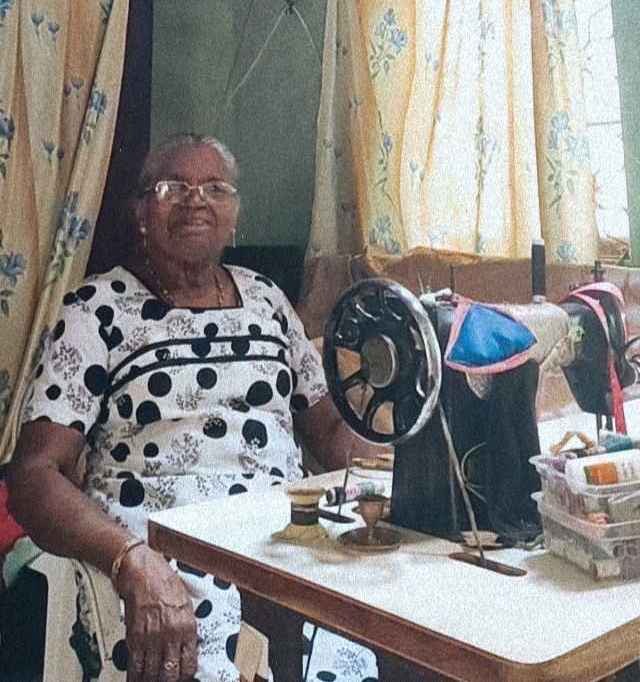
Figure 2: Photo of my grandmother, Nazarena Colaco, at her sewing machine
'Gen Z' refers to people born between 1996 and 2010. An article by McKinsey and Company defines Gen Z's identity as being 'shaped by the digital age, climate anxiety, a shifting financial landscape, and COVID-19.' (McKinsey and Company, 2024).
In this essay, I aim to investigate how Gen Z social media platforms, such as Instagram and TikTok, have created a space or medium where users can explore and preserve traditional craft skills such as knitting and crochet and further create communities where knitting and crochet are appreciated.
Chapter 1: The Knit and Purls of Life
Knitting and crochet as a discipline
Knitting and crocheting are crafts that have been practised for generations and continue to be practised today. Whilst crafts like these have seen a decrease in popularity and importance in recent times, the process of knitting and crocheting can serve as a significant metaphor for us to reflect on in our own lives. In the book 'Making is Connecting', David Gauntlett discusses how crafts can become a 'continuous part of everyday life.' (Gauntlett, 2018) Gauntlett explains how by using craft activities like knitting and crochet, we can learn from the experience, the act of making and the control we have when crafting, to inform and shape our daily life experiences and relationships.
The making and creating of handicrafts, such as knitting and crochet, can be perceived as an act of 'giving' for loved ones and further an act of service and unity to the community and relationships one can form. Moreover, the transferring of knowledge and skills that these crafts offer, allows us to take part in building a community and the preservation of these skills - both in person and online.
The Fastness of Society, Life and The Digital vs The Slowness of Craft
In Carl Honoré's book 'In Praise for Slow', he describes people these days as belonging 'to the same cult of speed.' (Honoré, 2004) We are always rushing to get somewhere or to finish something. Everything feels like there is a time limit and we think about quickness and time efficiency. Honoré further explains that if we are not aware of excessive amounts of speed and 'fastness' in our lives, this will become a 'price to pay.' (Honoré, 2004) This 'price' may mean an individual's mental and physical health.
With crafts like knitting and crochet, people are having to partake in the process of making, which takes more time and thought, rather than just being a consumer and buying. Perhaps through slowness one can become more 'aware of details and decisions which underpin everyday things and experiences' (Gauntlett, 2018) which in the end allows them to appreciate things and gain pleasure out of the process.
This experience through craft can be a good reflection on our daily lives and make us think about the things we can also take more time to do. Similarly, we could also look at nature as an example of slowing down, relieving stress and bringing us back to reality away from the fast, digital world we live in. An article by Mind, explains that involving parts of nature in your daily life can benefit your physical and mental well-being and further states it can help one feel more relaxed as they take time out but also feel more connected to the community in partaking in activities that allow this. (Mind, 2021)
In Martina Margett's exhibition review of 'Taking Time: Craft and the Slow Revolution', she asks us to reflect and reconsider 'the virtues of slowness in the twenty-first century, a digital age in which speed is still regarded as progressive.' (Margetts, 2010)
Here, she suggests that quick and immediate results are more associated with modern technology and progression whilst being slow may suggest being left behind, not catching up to recent modernisation and being less efficient. We can see this heavily reflected today, especially within the new generation. With Gen Z being surrounded by the internet and social media, we see this link to the idea of FOMO ('the fear of missing out'), in the case of trends. Social media platforms such as Instagram and TikTok create a way for Gen Z to stay up to date on everything and allow them to maintain constant connections to people and trends. This further reinforces the idea that digital culture and technology are more associated with fastness, efficiency and modern advancement.
While fibre crafts such as knitting and crochet have been transformed over the years by the increased technology, they remain as crafts that most people continue to create through slow making. The act of making through crochet and hand knitting takes time, having to cast on stitches and count them meticulously to then make a finished piece. The slowness of this craft serves as a contrast to our current lifestyles, but maybe there is something we could learn from this.
With knitting and crochet, the slow design does not only mean literally making slowly but Morris describes it as "taking joy in the act of making the stitch". (Morris, 2020) She explains that focusing on each stitch and the progress can allow one to find peace and mindfulness for oneself.
In a recent project titled Pillow Pause, I explored the contrast between the fastness within urban lives, such as consumerism and busy schedules, to the slow, meditative nature of crafts such as knitting and crochet. This involved placing knitted, typographic pillows in busy parts of the city, such as on public transport and further observing interactions from the public with the pillows and the messages on them, which included "In the rush, could this be the pause you've been looking for?"
Through findings in this project, the limited engagement with the pillows implied how people are disconnected from their surrounding environments, especially in urban areas where people are more likely to prioritise their smartphones and technology.
Glued onto their phones in the fast-moving tube or taking pictures in the bustling Piccadilly Circus, people are more than ever consumed in their own lives and social media, echoing the words of Honore 'When you forget to slow down, there is a price to pay.' (Honoré, 2004)
These observations reinforce the idea that people, particularly Gen Z, feel the need to keep up with trends and social media. TikTok and Instagram endorse this fast media consumption through short-form content, which contrasts with the slower and more methodical pace of crafts such as knitting and crocheting. Maybe we are all guilty of indulging in the fastness of life, work and technology, not being able to take some time off for ourselves and our bodies.
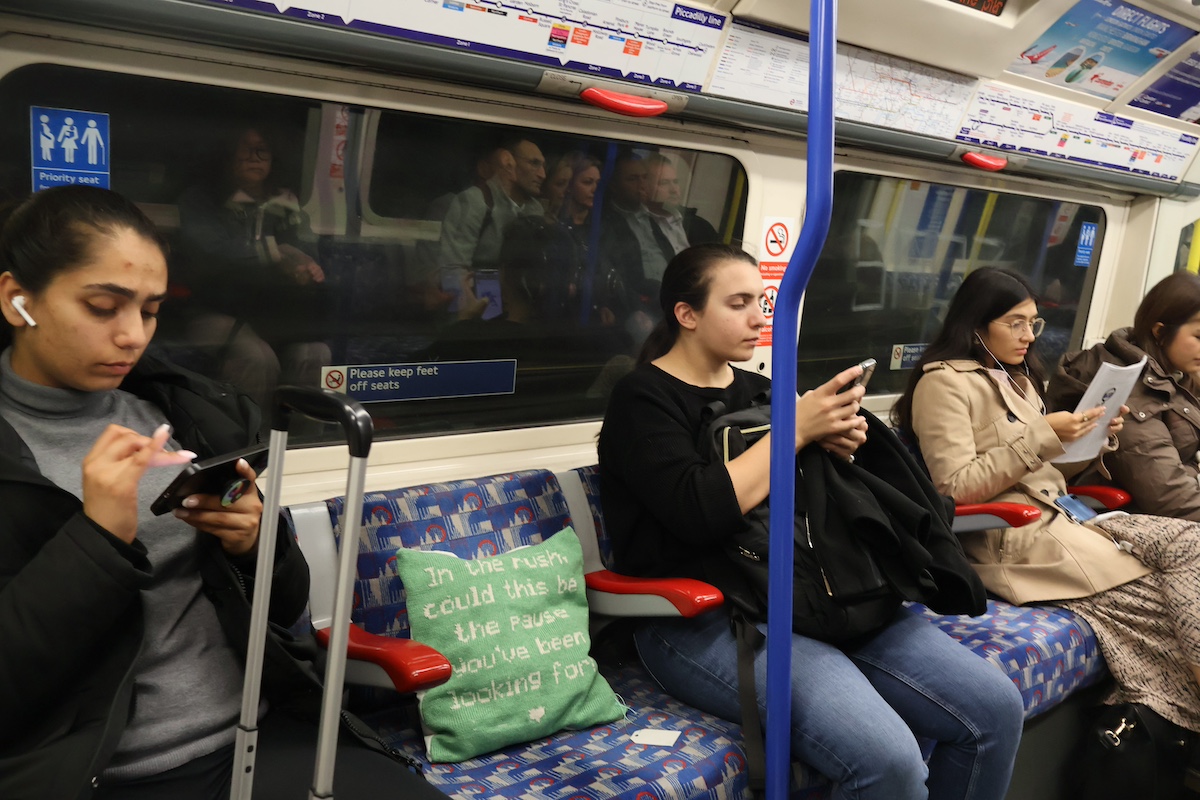
Figure 3: Typographic Pillows on the tube
Mental, Spiritual and Communal Benefits of Knitting and Crochet
In "Knitting for Well-being", Corkhill explains the study on repetitive movements in animals to enhance their release of serotonin and suggests how this can be similar in humans especially, with the involvement of repetitive crafts such as knitting and crochet. The rhythm of knitting has been described as 'instantaneously calming'. Along with the 'portability' of the craft, people can take their woollen works in progress with them anywhere to de-stress and keep calm. Corkhill et al., 2014)
In "The Knitting Sutra", Susan Gordan Lydon compares Buddhism, where enlightenment is achieved through the repetition of prayer, to the rhythmic movements of knitting, and other crafts like this. Through the repetition of pattern, she states 'its beauty deepens and grows each time it is repeated." (Lydon, 1997) The growth of the pattern and beauty may also be interpreted as growth and beauty one can develop in their own life and spirituality, as a lot of these rhythmic patterns can help people find inner peace. 'Knitting calms the monkey down' (Lydon, 1997) - here Lydon compares the 'monkey' to the Buddhist view of the mind as a 'drunken monkey.' (Hopeservicefellowship, 2020), implying how people's minds are constantly thinking, stressed or busy. In the age of social media many of us, arguably especially Gen Z audiences, have our minds engrossed online alongside other stresses in our daily lives, almost leading all of us to reflect this idea of a 'drunken monkey' where our minds cannot rest and reinforcing this idea of constantly being caught in the fast nature of life. Rhythmic and slow crafts like knitting may allow one to find peace and relaxation within themselves helping them to calm and slow down.
Crafting Communities and Traditions
Crafting groups exist to bring people who share a common interest together. Fibre crafts have groups such as quilting and knitting groups. Contrary to the knitting guilds that were set up by men, in the early history of knitting. Knitting groups more recently have been created for all. Some examples of knitting groups in London are Stitch 'n Bitch, which is a name used to refer to many social knitting groups since World War 2 (Hiyahiya S history of knitting the source of the Stitch N Bitch, no date), and Black Girl Knit Club, a crafts group that started in 2019 intending to diversify craft spaces and create an 'inclusive space for black women and women of colour.' (Kludje & Koranteng, no date)
These groups act as a way for participants to have a creative outlet and create connections with other people. Being able to connect to other people and building a community out of a shared love for the craft becomes significant in an individual's well-being. Knitting groups can create a space for people to make friends and combat feelings of loneliness, anxiety and isolation (Morris, 2023) by being part of something.
Knitting groups as such can also be seen as a way of archiving craft methods through the act of sharing and the transfer of skills and knowledge, but also a way to maintain and preserve these skills for the next generations. Crafts like knitting and crochet hold a lot of cultural significance, for example, in Norway, knitting has become an important part of culture and society. (McKinna, 2022) Patterns such as The Marius Pattern have been preserved and archived through teaching and books. Margaretha Finseth mentions how Norwegian knitting has been a skill that has been 'gladly passed from mother to daughter' (Finseth, 2020) showing the familial significance of the practice and creating bonds within families and culture. Before mass production, children were also taught how to knit in school, showing its importance to Norwegian society and culture as a craft. While it is not taught in schools anymore, knowledge of these crafts is still being preserved and even expanded through the internet and social media.
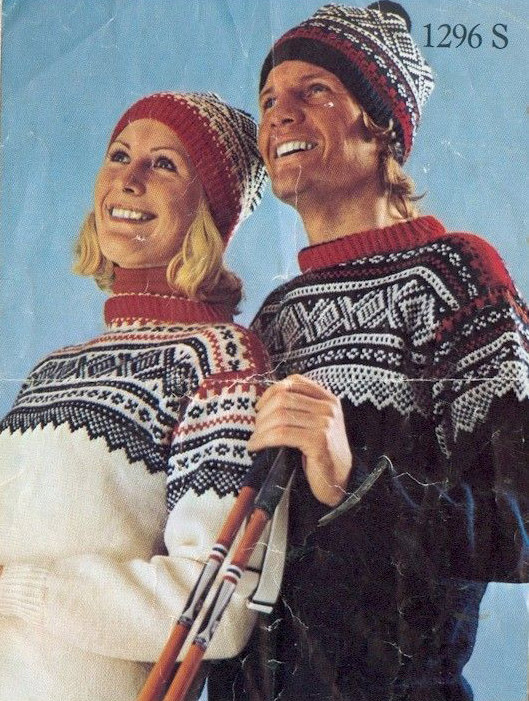
Figure 4: Norwegian Marius Sweater
Chapter 2: Casting on, Into the Digital
Digital Revival of Knitting and Crochet
With the popularity and technological advancements in smartphones and social media, we can see how crafts such as knitting and crochet have resurfaced.
Knit and crochet were once decreasing in popularity due to machinery and the devaluation of feminine work and crafts, is now seeing a resurgence in interest again. The internet and social media have played a big part in this, especially with younger audiences, creating and sharing content. In a recent article titled "How Knitting Became Cool", Cassidy George talks about how the internet has become a 'vital resource' (George, 2022) in introducing the craft to newer and younger audiences and keeping these craft traditions preserved and alive.
In the 21st century, the internet and social media have become an unavoidable part of everyone's lives and have had a significant impact on Gen Z audiences, growing up with this technology and the internet in their lives. Many crafters such as knitters and crochets are also included within this. From sharing patterns to video tutorials, the internet and social media acts as an archive in preserving these techniques and information that people do not know about. Many crafters have also used the internet and social media, as tools to further develop businesses and connections to others online. Dr Karen Yair highlights five keyways makers and craft organisations are using social media to 'benefit the craft sector' such as 1. Selling, 2. Adding Value 3. Building Audiences, 4. Positioning and 5. Networking. (Yair, 2012) These key functions allow business and individuals to grow their presence, connect to communities and learn from others. Platforms such as Instagram and TikTok enable knitters and crocheters to sell their work and showcase it to a large online audience. Being able to promote and preserve crafts on these social media platforms is an important role in sustaining the craft in a digital world.
Social Media to Facilitate Knitting and Crochet
The various social media platforms that exist today have made it possible for audiences to explore and expand their knowledge of crafts such as knitting and crochet. With approximately 94% of Gen Z using social media (M., 2024) it only becomes natural for a big portion of this group to discover these crafts and want to interact and create content.
Instagram and TikTok are popular amongst Gen Z audiences. Both Instagram and TikTok, as well as YouTube, rely on algorithms to boost user engagement with posts and videos made on the platforms. Dorcas Adisa describes algorithms as 'rules, signals and data' that 'determine how content is filtered, ranked, selected and recommended to users.' (Adisa, 2023) These algorithms can affect the ways in which people are able to see content through social media and what gets recommended to them. They rely on users liking and watching content that interests them, to then further learn and continue to show them posts that would interest them.
Instagram and TikTok make use of this algorithm through their respective platforms, making it easy to reach large audiences through this. With so many users creating content with reels and posts, sharing their work online, allows people to very quickly see information and not spend too much time on it. Reaching a big audience so quickly can allow creators to gain popularity with their projects.
A lot of 'Gen Z' audiences use these social media platforms and have grown up with the internet in most of their lives which has made them well versed in them.
With Instagram and TikTok being short-form content platforms, however, this does mean that content posted can be quick to forget, lose and is hard to find again. Because it is based on trends and people's current interests, it can change in popularity with the current online trends.
Many crafters also use these platforms to share their work and gain an audience. Both platforms have been successful ways for crafters to gain and attract the attention of users for their businesses as well. These platforms act as a personal archive of crafters' ideas, creations and interactions with knitting and crochet.
Ravelry is another platform solely dedicated to fibre arts such as knitting and crochet. Established and created in 2007, it has over 9 million users today, according to its website (About Ravelry, no date). Whilst Ravelry is not as popular as other social media websites, it still boasts a huge community of fibre artists who can interact with each other on the website, for not only Gen Z but other generations such as Millennials and Gen X.
The website is split into 3 main areas; the database, which includes millions of patterns for users to look through and use; a notebook, for users to keep track of their projects and work; and the community, with features such as following and making friends with other users on the site and a forums directory. Ravelry makes it easy for individuals to connect with one another through their interests and love of the craft without having to go through the trouble of filtering through 'hashtags' and searches to find their communities like they would on Instagram or TikTok.
Ravelry's database also creates a digital archive for users to easily access patterns and content which would be harder to find without Ravelry or the internet in general. The website's database has created a community and resource of its own to share amongst users and let them explore and bond through sharing patterns.
Crafting Communities Online
Through the Internet and social media, crafts like knitting and crochet have been able to expand their audience to become more diverse, especially amongst younger, more 'tech savvy' generations such as Gen Z. With the internet, users and crafters can connect online and create friendships and connections. - Users can join forums and discuss and share different knitting and crochet techniques with each other. Users can create content and share it with other fellow crafters, and in return, receive likes, comments and potential friendships.
Discovering knitting and crochet through social media platforms such as TikTok and Instagram has allowed the audience for the craft to become more diverse. Through the internet and social media, it is being introduced to a new and younger generation, whose views are more progressive and inclusive. This has led to more people of different demographics, all around the world picking up the craft. - We have seen a rise in men knitting and crochet. Whilst in earlier history, crafts such as knitting were common for men, with knitting guilds being exclusive to men, it became progressively viewed as a feminine craft due to factors such as the Industrial Revolution and the World Wars. (Aspinall, 2017) Since the introduction of the internet and the use of social media, there has been an increase in men picking up traditionally 'feminine' crafts within 'needlework', as reported by 'LoveCrafts', especially during the pandemic. (Crummy, 2021)
A significant person who has made a mark in the knitting community is Tom Daley. The Olympic swimmer had drawn people's attention and made headlines during the Tokyo Olympics where he was seen knitting on the poolside. (Lindrea, 2021) With Tom Daley's influence as an Olympic swimmer and a queer male, it attracted the attention of audiences that would not be typically interested in fibre crafts. Lindrea suggests that the attention on Daley has almost brought back the craft as a 'new trend' - a lot of Gen Z content and users are driven by these trends that are constantly changing and allowing people to discover different types of media and content. (Lindrea, 2021) Daley's knitting has 'encouraged more men to get involved' reinforcing the idea that audiences can be influenced by celebrity endorsements and representation. (Wood, 2022)
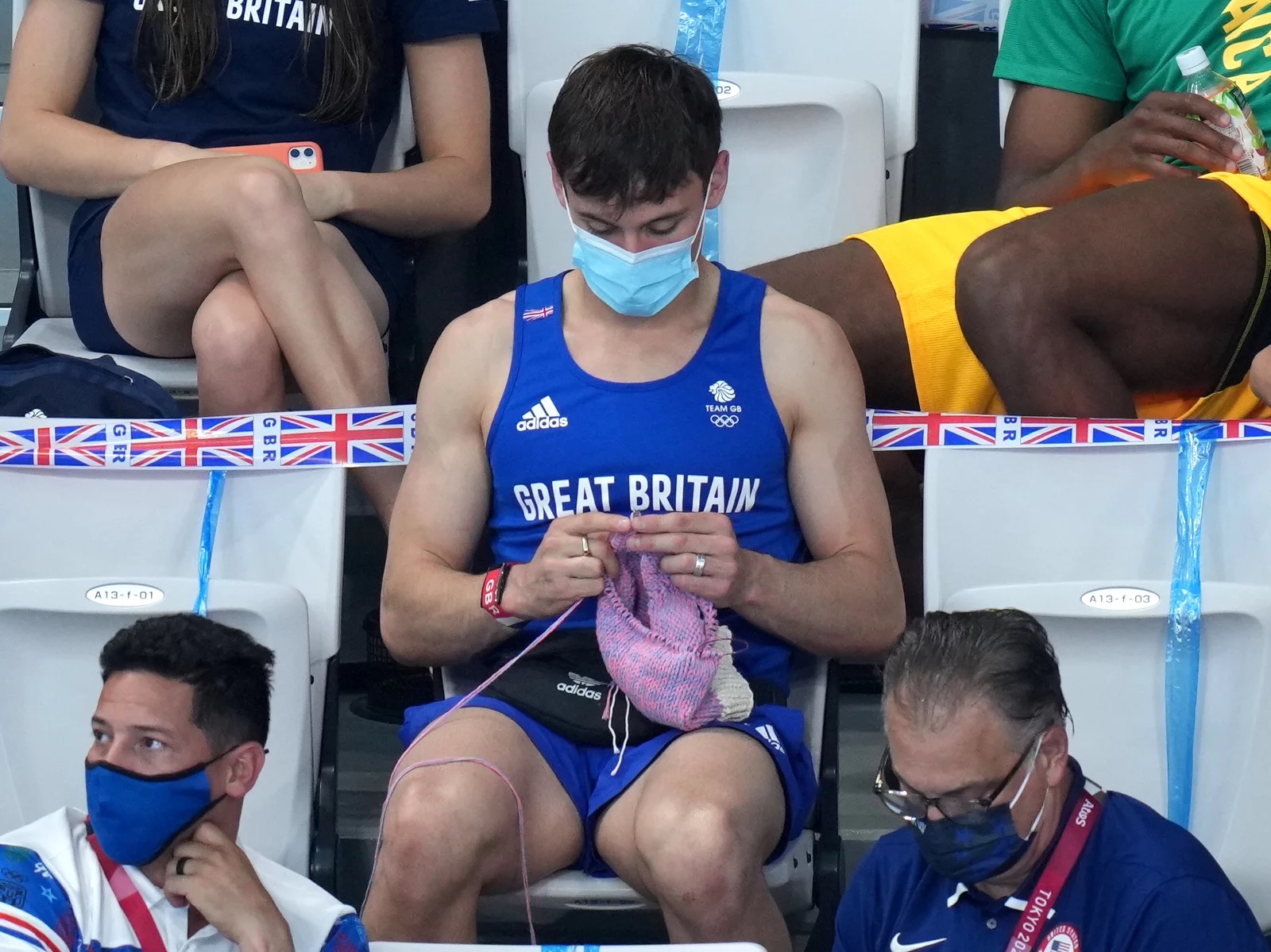
Figure 5: Tom Daley knitting at the Tokyo Aquatics Centre at the Olympic Games
This representation is important in the traditionally female-perceived and dominated craft as it allows a more male and queer audience to see they can pick up this craft too without fearing the traditional gender barriers of society. Instagram and TikTok have allowed users to discover 'influencers' that can further inspire one's self-identity and interests. David Gauntlett explains how a person's self-identity can be shaped by 'thousands of inputs and influences.' (Gauntlett, 2020) Modern media outlets have allowed these inputs and influences to diversify, resulting in individuals being able to discover a wider range of interests compared to what the older media could offer them.
Tom Daley being a queer individual has created more mainstream representation for male crafters within the LGBTQ+ communities. Modern social media platforms have allowed people to broaden their views of what the average knitter or crocheter looks like and not be bound by the stereotypes society has placed upon the craft - this also includes race, age, gender and sexuality.
The 2020 coronavirus pandemic, aided in the revival of crochet and knit practices, a period where physical and social interactions have become limited, many people had to pick up small hobbies that could be done within the home. The internet changed the way people connected through knitting and crochet. Confined in our homes with minimal contact with the outside world and community, many people turned to the internet and social media to communicate with others and create their online communities. Many people documented their experiences; the hardships people were facing and how they were now using craft to help themselves and keep them active.
The internet became such a significant part of creating a community in a time when people were not able to engage with the 'in real life' community. Maryann R. Carins states how respondents, in a study 'missed in-person connection.' (Cairns et al., 2020) The same study showed how the college-aged respondents, who would've been within the Gen Z generation, 'increased their usage' on social media platforms like Instagram. (Cairns et al., 2020) These social media websites serve as a crucial way of staying connected to people, family, communities and the world. For knitters and crocheters, this became a new place to connect with like-minded crafters whilst also keeping in check with their well-being. Fibre arts such as crochet and knitting are known to have many benefits for individuals' well-being and stress relief, as explained by Vannessa on The Knitting Network, such as lowering blood pressure and reducing depression and anxiety. (Knitting & Crocheting: The Health and Wellbeing Benefits, 2020) It is no wonder why people turned to crafts such as these to keep them company during these unprecedented times.
Using social media platforms to create, share and communicate projects and ideas people were working on became, and still is, an important part of the community and creating connections.
Chapter 3: The Threads That Weave Us Together
From online connections and communities to the in-person ones. Which one is more valuable when it comes to making connections, or can they work together? Should we encourage more in-person interactions and connections with crafts such as knitting and crochet?
Tactility of Yarn VS the 2D Interface of The Digital
Knitting and crochet are tactile crafts. Yarns used for fibre crafts, come in different materials, textures, sizes and colours, making it a sensory experience for crafters. Having the experience of feeling material as you work with it, can be stimulating yet calming for the crafter, allowing them to immerse themselves in the making of the object. In the text Replacing the Myth of Modernism, Bruce Metcalf talks about the involvement of the senses in craft and the tactility of this. He describes this tactility as offering a 'distinct pleasure.' (Metcalf, 1993) This 'pleasure' may refer to the bond a crafter makes with the object they are creating. It may also further imply and reinforce the idea of the emotions a crafter may receive from the activity. Whether it is the satisfaction of finishing the object, or the therapeutic feelings created during the process. Crafters can connect with themselves and their craft as an inner reflection and practice.
However, the interface of the internet and social media juxtaposes fibre arts such as knitting and crochet. Modern and digital technologies tend to be shown through a flat screen. Whilst this technology has been revolutionary, we have lost the tactility in creating and making things. The user may become a passive user with no further interaction with the content.
Within social media, we can define two main types of users - active and passive. A study comments on the differences between social media users. One is "active communication between friends" and interaction with content. The other is "passive observation through aggregated streams of social news." (Meier & Krause, 2023) The latter is associated more with loneliness and 'lower life satisfaction.'
Erum Salam explains how studies show that Gen Z users interact with social media more passively than other generations. TikTok and Instagram are some social media platforms that most people use today and have a lot of short-form content that is very easy to consume in less than a few minutes. Salam further explains how this passive social media use can be linked with 'declines in well-being.' (Salam, 2023) From these studies, we can see how on one hand, this flat and non-confrontational interface of the internet and social media is restricting people's abilities to socialise and make connections. However, this is not the case for all users and many people have been able to find communities and create connections through social media and the internet.
Whilst videos like these can be inviting to come join in with the craft, not everyone would feel encouraged. Just pictures and video lack the sensory engagement which is practised in person when crafting. And by the nature of short-form content, it would not be much of a surprise when people just plainly swipe to the next post without a second thought.
Furthermore, we could also see this being reflected in more modern industrial practices. With fibre crafts, industrial machinery that could be made by hand, do not carry the same intentions and personalisation behind the object. With fibre crafts, machinery such as knitting machines, could be seen to do this to a certain extent. Through being able to feel the material, crafters can engage with emotions, leading to a better understanding of themselves and building a connection with the wider community with whom they interact. This could be the people they make the objects for or even people they craft with, such as through knitting groups. However, what does one do when they do not have access to these craft groups or a community they can connect to?
Geographical accessibility of offline groups
Knitting groups or clubs can act as a great space for people to connect with each other in person. Despite the overarching term as a 'knitting group', they invite many different fibre crafters.
Many female-dominated knitting groups started in the mid-20th century (primarily white and upper class), as it was considered more of a feminine craft and a way for women to connect and discuss topics at the time. (Stitch 'n bitch anyone? ~ may17.org, 2014) More recently, knitting groups have become more open to anyone who has an interest in fibre crafts. For example, within the UAL Stitch 'n Bitch Society, the members consist of a diverse range of people from different backgrounds, age groups and genders. Social media being available to a wide range of audiences has allowed these crafts to be explored by many different people.
Most of the knitting groups available in the UK are based in London (We are UK hand knitting, no date) Because of the population, it makes sense why there may be so many groups available in London however, what does one do when they live somewhere where these groups aren't as available?
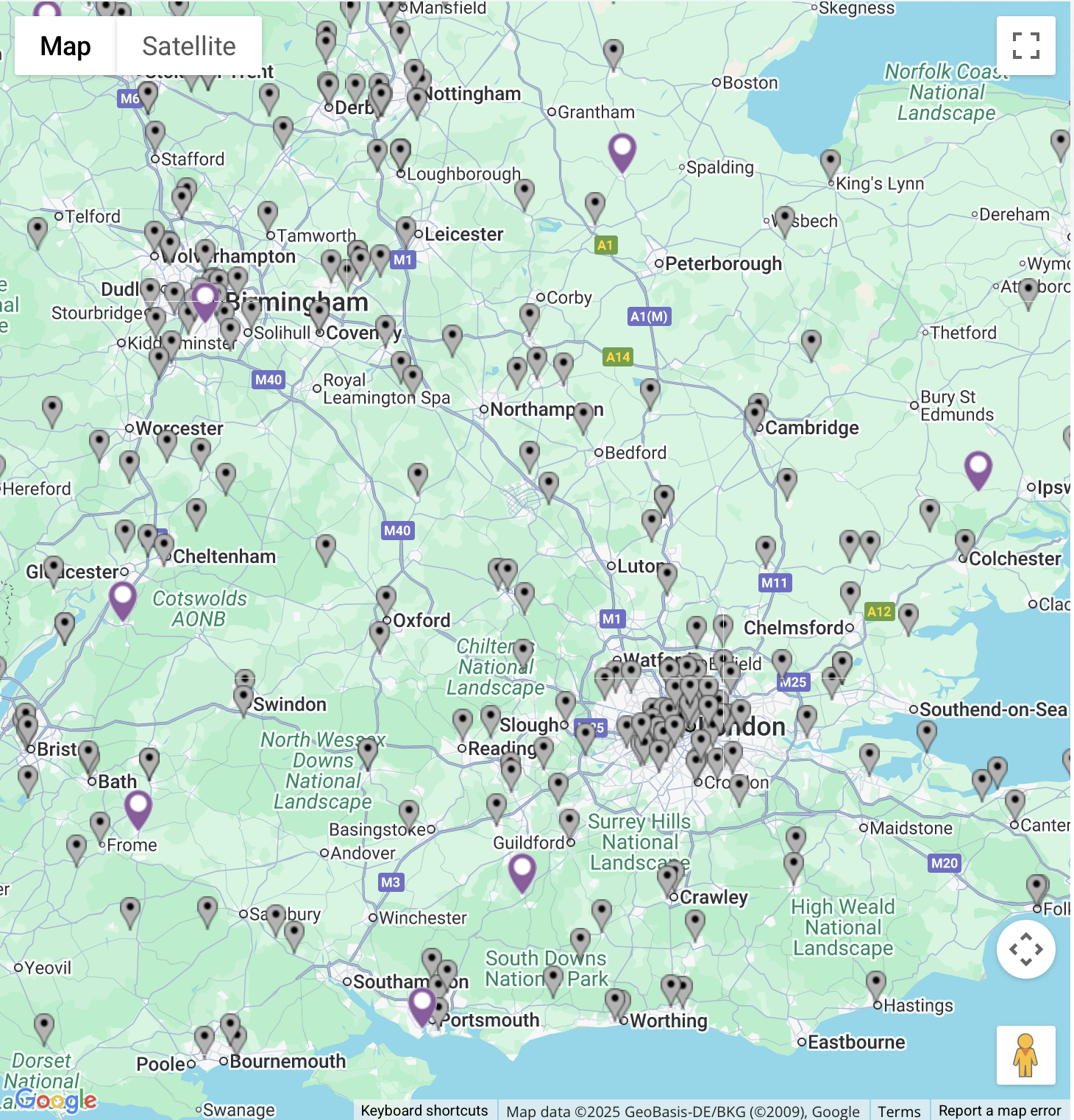
Figure 6: Map showing the knitting groups on UKHandKnitting
Swindon, a nearby town, has a total of two knitting groups. Both groups are targeted towards an older audience and have a fee to attend - these factors may make crafts groups inaccessible for people who cannot afford it, but they also lack diversity, making it less inviting for people who do not fit into that group to join. With only two groups in the town, it makes it difficult for people to attend if they do not have an accessible way to get there.
Like Swindon, other places outside London or the UK may have similar issues. How does this affect crafters and how does this change the interaction and connection to community for them?
Social media has been significant in fostering communities with knit and crochet, removing these geographical barriers to make the craft more accessible worldwide. Instagram and TikTok can quickly reach many users through their algorithms. Which allows people to find others with similar interests. Social networking sites, such as Ravelry, have also created dedicated spaces for fibrecraft communities.
With the internet and social media knitters and crocheters, globally can access online communities and connect with like-minded individuals from the comfort of their homes. 'Distance is no longer an issue of such importance as it was in the pre-internet age.' (Seargeant & Tagg, 2014) People no longer need to be in person to find someone who they can relate to or learn from rather, they can now just go online to Instagram, TikTok or other social media platforms and instantly connect with thousands of people all over the world.
'The PussyHat Project" by Jayna Zweiman and Krista Suh (2017) shows how fibre crafts can influence real-world interactions through their online presence. The pink hat was created as a social commentary on Donald Trump's misogynistic comments. The simple pattern was promoted and distributed online through the internet and social media platforms. As of the 25th of January 2017, there were over 60,000 Instagram posts tagged with #pussyhat or #pussyhatproject (Team, 2023), showing just how fast it circulated. The pattern is free and archived on the internet, which means that anyone could access it and make it themselves all around the world.
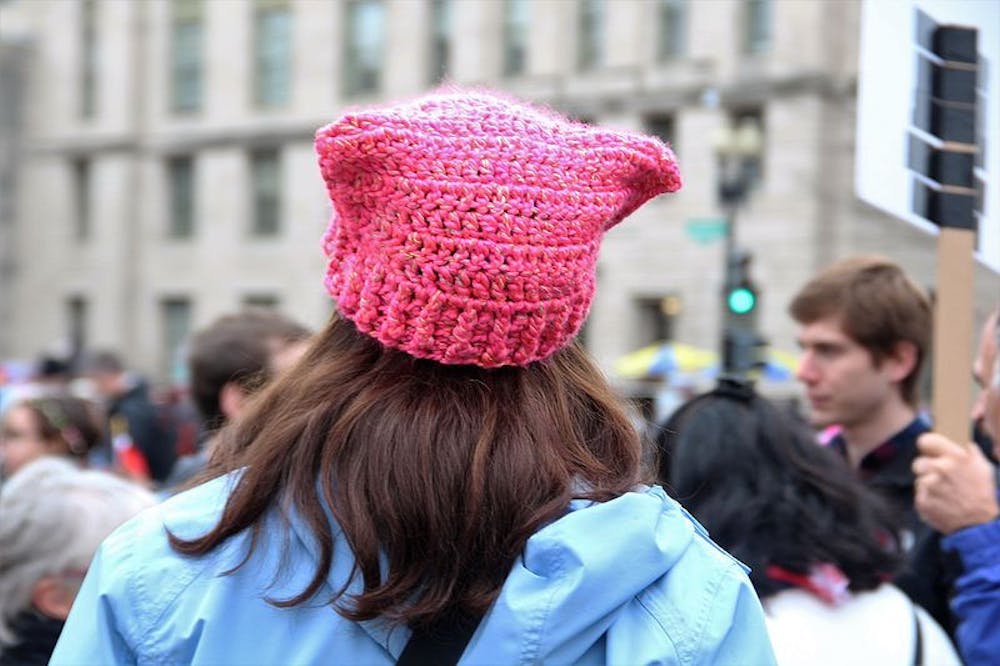
Figure 7: Pink Pussy Hat
On the 21st of January 2017, people in Washington DC went out for the Women's march, with around 400,000 - 500,000 people taking part. Many people wore these hats as a sign of support for women's rights. This event shows us the power knitting and crochet has in uniting people together in activism and social justice. All these people came together to protest for women's rights, showing care for each other and for what they believe in. The softness of the fabric contrasts with the power and the strong social activism the people are showing in this march. The pink colour conveys more feminine associations, claiming back power to women and the people.
We can see how through projects like this people can use crafts like knitting and crochet, for social activism or as Betsy Green calls it - Craftvism. (Greer, 2014) The intersectionality of craft and activism can be a way to connect people together.
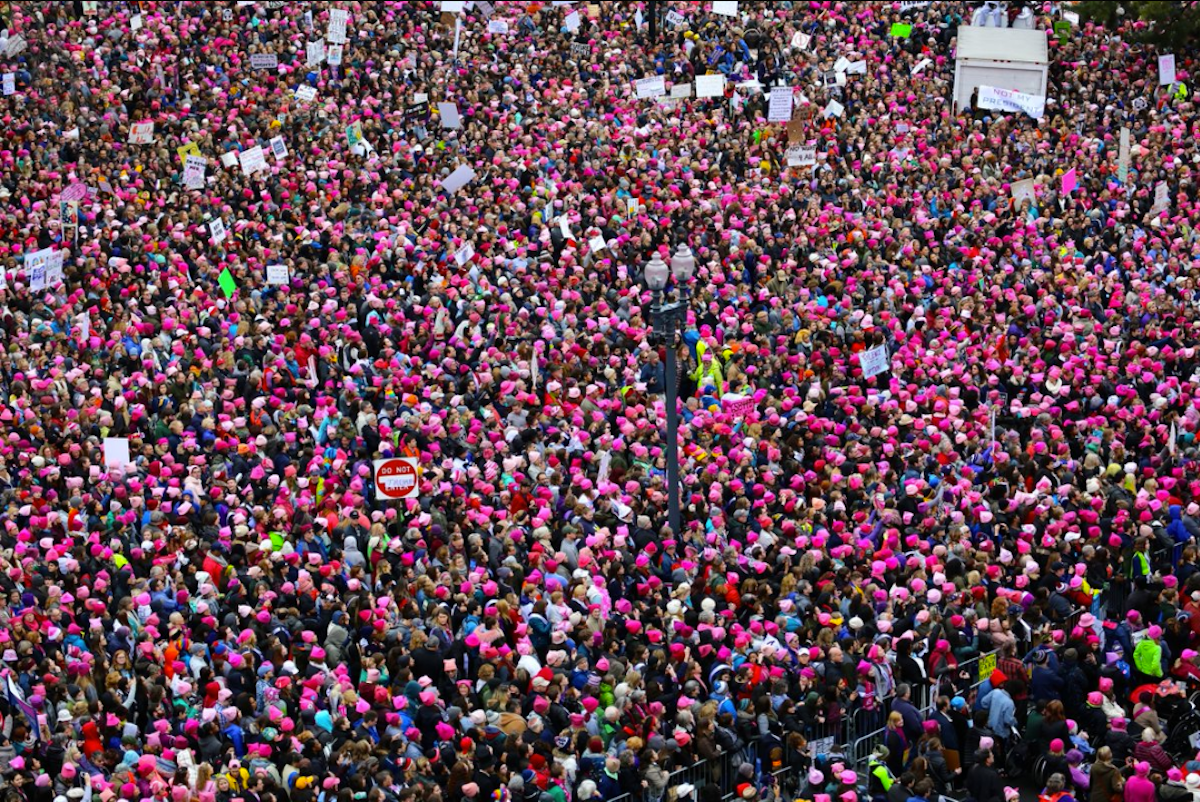
Figure 8: Women's March in Washington D.C
Casting Off
This essay set out to explore how Gen Z social media platforms have changed the ways people connect through knitting and crochet practices and how this has influenced the ways in which these skills are preserved.
Through the rhythmic and repetitive movements of knitting and crochet, it can positively impact an individual's well-being. The slowness of these crafts in contrast with the fastness of work and technologies can serve as a way for people to step out of the rush and into the calm, benefitting their minds and the body. Whilst some modern technology, such as machinery, can be seen to reduce the popularity of these crafts, other modern technology and advancements such as social media have positively impacted knitting and crochet. Crafters use social media such as Instagram, to explore craft from the comfort of their devices, connecting with people all over the world to create communities that may have not existed offline. Social media has also allowed new representations of the 'traditional' knitter or crocheter, which has diversified the audience for the craft and allowed more people from different demographics to become interested in the craft. The global presence of social media has allowed knitting and crochet to survive in a technological society where such crafts were losing their importance.
Whilst physical and in-person interactions of fibre crafts are highly important for one's mental health and social well-being, the internet has allowed users to connect through their love for craft, on a much larger scale than ever before - highlighting the importance of the physicality of these crafts but also the digital accessibility of the internet. Where some people may not be able to access in-person communities, social media platforms like Instagram and TikTok have allowed them to connect to online communities and are able to create friendships and connections with others.
Though knitting and crochet have associations with intergenerational crafting and hold strong links to the home and heritage, Gen Z audiences and social media platforms have created a new digital realm where users can interact and connect through its interface. Challenges remain, such as the fragility of the internet and how easy it is to lose information, people and communities and we may speculate about our reliance on the internet and social media. On one hand, we might not agree with this change in dynamic within the craft, as it loses the importance of emotions that may have been passed down through in-person learning. Despite this, we cannot reject modernisation in this increasingly digital world. By embracing the digital interface and media, we can allow dying crafts like knitting and crochet to be preserved - both through the techniques and methods, as well as the preservation of the love for the craft.
Bibliography
19th Century Knitting (2016) Knittypedia. Available at: https://web.archive.org/web/20170928011748/http://knittypedia.com/2016/02/22/19th-century-knitting/ (Accessed: 12 January 2025).
Adisa, D. (2023) How to rise above social media algorithms, Sprout Social. https://sproutsocial.com/insights/social-media-algorithms/#:~:text=In social media%2C algorithms are,we see on social media. (Accessed: 24 December 2024).
Apsinall, M. (2017) The surprisingly manly history of knitting, The Crafty Gentleman. Available at: https://www.thecraftygentleman.net/2015/08/16/the-manly-history-of-knitting/ (Accessed: 14 January 2025).
Aspinall, M. (2019) The history of knitting and the Knitting Guilds, The Crafty Gentleman. Available at: https://www.thecraftygentleman.net/2015/08/16/history-of-knitting-guilds/ (Accessed: 02 January 2025).
Broz, M. (2024) How many videos are on YouTube in 2025?, Photutorial. Available at: https://photutorial.com/how-many-videos-on-youtube/ (Accessed: 22 December 2024).
Cairns, M.R. et al. (2020) 'Covid-19 and human connection: Collaborative research on loneliness and online worlds from a socially-distanced academy', Human Organization, 79(4), pp. 281-291. doi:10.17730/1938-3525-79.4.281.
Corkhill, B. et al. (2014) 'Knitting and well-being', TEXTILE, 12(1), pp. 34-57. doi:10.2752/175183514x13916051793433.
Crummy, C. (2021) 'it was seen as an elderly white lady thing to do': Meet the new generation of male knitters, The Guardian. Available at: https://www.theguardian.com/lifeandstyle/2021/apr/10/it-was-seen-as-an-elderly-white-lady-thing-to-do-meet-the-new-generation-of-male-knitters (Accessed: 14 January 2025).
Daley, T. (2024) Knitting is Tom Daley's Therapy, YouTube. Available at: https://www.youtube.com/watch?v=6wwXGOki--c (Accessed: 14 January 2025).
Elsworth, C. (2006) It's getting bitchy in knitting circles, The Telegraph. Available at: https://www.telegraph.co.uk/news/worldnews/northamerica/usa/1510240/Its-getting-bitchy-in-knitting-circles.html?ICID=continue_without_subscribing_reg_first (Accessed: 14 January 2025).
Finseth, M. (2020) Norwegian knitting designs: A collection from some of Norway's knitting designers. Tunbridge Wells: Search Press.
Fitria, N., Al Hadromi, F. and Ekmarinda, E.Y. (2024) 'Fomo and its effect on gen Z performance', Advances in Economics, Business and Management Research, pp. 142-146. doi:10.2991/978-94-6463-346-7_27.
Gauntlett, D. (2018) Making is connecting: The Social Power of creativity, from craft and knitting to Digital Everything. Cambridge, UK: Polity Press.
Gauntlett, D. (2020) New Video on 'identity' for UK A and AS level students, David Gauntlett - Creativity, digital media, tools for thinking. Available at: https://davidgauntlett.com/digital-media/new-video-on-identity-for-uk-a-and-as-level-students/ (Accessed: 14 January 2025).
George, C. (2022) How knitting became cool, BBC News. Available at: https://www.bbc.com/culture/article/20200630-how-knitting-became-cool (Accessed: 22 December 2024).
Greer, B. (2014) Craftivism: The Art of Craft and activism. Vancouver, BC: Arsenal Pulp Press.
Hiyahiya S history of knitting the source of the Stitch N Bitch (no date) HiyaHiya Europe. Available at: https://hiyahiya-europe.com/posts/hiyahiyas-history-of-knitting-the-source-of-the-stitch-n-bitch (Accessed: 14 January 2025).
Honoré, C. (2004) In praise of slow: How a worldwide movement is challenging the cult of speed. Toronto: A.A. Knopf Canada.
Hopeservicefellowship (2020) Buddhism, and the mind as the druken monkey., Depressed Anonymous. Available at: https://depressedanon.com/buddhism-and-the-mind-as-the-druken-monkey/ (Accessed: 08 January 2025).
How nature benefits mental health - mind (2021) Nature and mental health. Available at: https://www.mind.org.uk/information-support/tips-for-everyday-living/nature-and-mental-health/how-nature-benefits-mental-health/ (Accessed: 22 December 2024).
Jessica and Cassidy (no date) About ravelry, Ravelry. Available at: https://www.ravelry.com/about (Accessed: 18 January 2025).
Kludje, S. and Koranteng, V. (no date) Our vision, Black Girl Knit Club. Available at: https://www.blackgirlknitclub.com/our-vision (Accessed: 14 January 2025).
Lindrea, V. (2021) Tom Daley knits while watching Olympic springboard final, BBC News. Available at: https://www.bbc.co.uk/news/uk-58047795 (Accessed: 14 January 2025).
Lydon, S.G. (1997) The knitting sutra: Craft as a spiritual practice. San Francisco: HarperSanFrancisco.
M., Y. (2024) 10+ essential gen Z statistics for Businesses & Marketing, BusinessDasher. Available at: https://www.businessdasher.com/gen-z-statistics/#:~:text=Approximately%2C 94%25 of Gen Z use social media today.&text=The average Gen Z spends,10.6 hours online each day. (Accessed: 22 December 2024).
Margetts, M. (2010) 'Taking time: Craft and the slow revolution', The Journal of Modern Craft, 3(3), pp. 373-375. doi:10.2752/174967810x12868890612565.
McKinna, F. (2022) Norwegian knitting culture: Alive and thriving, Living A Nordic Life. Available at: https://www.livinganordiclife.com/post/norwegian-knitting-culture (Accessed: 14 January 2025).
Meier, A. and Krause, H.-V. (2023) 'Does passive social media use harm well-being?', Journal of Media Psychology, 35(3), pp. 169-180. doi:10.1027/1864-1105/a000358.
Metcalf, B. (1993) Replacing the myth of Modernism, BRUCE METCALF. Available at: https://www.brucemetcalf.com/replacing-the-myth-of-modernism (Accessed: 14 January 2025).
Morris, C. (2020) Slow knitting, Slow Crochet, and mindfulness, KnitPal. Available at: https://knitpal.com/blogs/knitpal/slow-knitting-slow-crochet-and-mindfulness (Accessed: 05 December 2024).
Morris, C. (2023) Benefits of knitting and crochet groups, KnitPal. Available at: https://knitpal.com/blogs/knitpal/benefits-of-knitting-and-crochet-groups (Accessed: 14 January 2025).
Passive social media use linked to higher levels of loneliness and psychological distress | bournemouth university (2023) Passive social media use linked to higher levels of loneliness and psychological distress. Available at: https://www.bournemouth.ac.uk/news/2023-06-30/passive-social-media-use-linked-higher-levels-loneliness-psychological-distress (Accessed: 14 January 2025).
Salam, E. (2023) Social media particularly damaging to mental health of Gen Zers, says study, The Guardian. Available at: https://www.theguardian.com/media/2023/apr/28/social-media-mental-health-gen-z (Accessed: 14 January 2025).
Seargeant, P. and Tagg, C. (2014) The language of social media: Identity and community on the internet. Houndmills, Basingstoke, Hampshire: Palgrave Macmillan.
simplydaisy (2015) How to Crochet for Absolute Beginners: Part 1, YouTube. Available at: https://www.youtube.com/watch?v=aAxGTnVNJiE&t=390s (Accessed: 14 January 2025).
Stitch 'n bitch anyone? ~ may17.org (2014) may17.org. Available at: https://may17.org/stitch-n-bitch-anyone/#:~:text=The term dates back to,be relaxing but also expressive. (Accessed: 14 January 2025).
Team, G. (2023) The power of the Pussy Hat: Fashion Activism in the age of Social Media, Glossy. Available at: https://www.glossy.co/fashion/the-power-of-the-pussy-hat-fashion-activism-in-the-age-of-social-media/ (Accessed: 14 January 2025).
The history of hand-knitting · V&A (no date) Victoria and Albert Museum. Available at: https://www.vam.ac.uk/articles/the-history-of-hand-knitting?srsltid=AfmBOop_DfIqVWBlMfA-lVehFa9pxZReWCDFEeJCKMD5u_kFeumqnuX9 (Accessed: 17 November 2024).
Thomas, M. (1987) Mary Thomas's knitting book. London: Hodder and Stoughton.
Vanessa (2020) Knitting & Crocheting: The Health and Wellbeing Benefits, The Knitting Network. Available at: https://www.theknittingnetwork.co.uk/blog/health-benefits-of-knitting-and-crochet (Accessed: 14 January 2025).
We are UK hand knitting (no date) Home. Available at: https://ukhandknitting.com/ (Accessed: 14 January 2025).
Weft focus - the history of crochet (2022) Trowbridge Museum. Available at: https://trowbridgemuseum.co.uk/weft-focus-the-history-of-crochet/ (Accessed: 02 January 2025).
Widarahhesty, Y. (2020) 'Otsukaresamadeshita!: A critical analysis of japan's toxic work culture', International Journal of East Asian Studies, 9(1), pp. 32-47. doi:10.22452/ijeas.vol9no1.3.
Wood, Z. (2022) 'Tom Daley Effect' spurs men to take up knitting amid home crafting boom, The Guardian. Available at: https://www.theguardian.com/lifeandstyle/2022/jan/09/tom-daley-effect-spurs-men-to-take-up-knitting-amid-home-crafting-boom (Accessed: 14 January 2025).
Yair, K. (2012) How makers and craft organisations are using social media ..., How makers and craft organisations are using social media effectively. Available at: https://www.craftscouncil.org.uk/documents/874/How_makers_and_craft_organisations_are_using_social_media_2012.pdf (Accessed: 22 December 2024).
List of Figures
- Pair of Socks, 250 - 420 (no date) The history of hand-knitting. Available at: https://www.vam.ac.uk/articles/the-history-of-hand-knitting?srsltid=AfmBOop_DfIqVWBlMfA-lVehFa9pxZReWCDFEeJCKMD5u_kFeumqnuX9 (Accessed: 18 January 2025).
- Crasto, V. (2022) Photo of my grandmother, Nazarena Colaco, at her sewing machine
- Crasto, V. (2024) Pillow Pause.
- Gundersen, M.P. (2020) Norwegian Marius sweater., The Marius Sweater: An Icon of Norway. Available at: https://www.lifeinnorway.net/marius-sweater/ (Accessed: 22 June 2025).
- Gidden, J. (2021) Tom Daley knitting at the Tokyo Aquatics Centre at the Olympic Games, Tom Daley Is Knitting His Way Through The Olympics. Avilable at: https://www.npr.org/sections/tokyo-olympics-live-updates/2021/08/02/1023738433/tom-daley-knitting-olympics (Accessed: 22 June 2025).
- Map Screenshot (no date) Why belong to a group? Available at: https://www.ukhandknitting.com/why-belong-to-a-group (Accessed: 18 January 2025).
- Renia, E. (2017) Pink Pussy hat, Jayna Zweiman '01 brings her 'Pussyhats' to campus. Available at: https://www.browndailyherald.com/article/2017/03/jayna-zweiman-01-brings-her-pussyhats-to-campus (Accessed: 20 January 2025).
- Women's March at Washington D.C. (2017) The Sea of Pink. Available at: https://www.pussyhatproject.com/blog/2017/2/17/the-sea-of-pink (Accessed: 20 January 2025).