
What contributors are there to the epidemic of misogyny and sexism in the UK, and to what extent is social media to blame for the rise?
This essay explores topics that some readers may find upsetting, such as sexual violence against women and girls.
Introduction
The U.K. is currently facing an unprecedented rise in Violence Against Women and Girls (VAWG); so much so that in the summer of 2024, it was declared a National Emergency for the first time in a report by the National Police Chiefs' Council (NPCC, 2024). Their use of 'epidemic' itself highlights the urgency required to get this spiralling problem under control, but also the infectious and destructive nature of misogynistic behaviour towards women in our communities.
In its usual content, misogyny relates to hatred directed at women on the sole basis of gender; in this text, victims of misogyny can encompass anybody who does not identify as 'male', as I recognise there are many more gender identities than the male and female binary. However, the term 'VAWG', does refer specifically to official statistics that only include victims who identify as female.
There are approximately 3,000 reported VAWG offences each day, affecting 1 in 12 women, with 2.3 million-1 in 20-male perpetrators of VAWG (NPCC, 2024). This is just the "tip of the iceberg", as described in the 2024 NPCC report, as the estimated number of unreported crimes is significantly higher.
The National Framework for Delivery stated that crimes related to Violence Against Women and Girls are "rooted in misogyny", which is why the need to address cultural problems of sexism and misogyny is paramount (NPCC, 2024). Over time, constant use of harmful rhetoric towards women creates a general acceptance among social groups of the violent behaviour directed at them (Regher, 2014).
To understand how we can uproot misogyny, we need to examine its origins. The following section, the contextual review, will draw on various feminist perspectives on women in the workplace to discuss how its feminisation has created a rising fear among men that they are being replaced and experiencing a loss of traditional masculine identity.
Subsequently, this text delves into three chapters, the first of which will review feminism's achievements in the last century and present how, despite legislative changes, there has been a consistent failure to unify the community through feminism and tackle misogyny and sexism.
Chapter 2 discusses the modern resistance to feminism and women's rights movements in the UK, as well as the rising misogyny epidemic and its effect on VAWG. Misogyny is not limited to the U.K.; it is a global issue, likely spread through online networks. Therefore, this paper will note how ideas around 'toxic masculinity', pushed by international influencers such as Andrew Tate have been cited by the police as a leading contributor to this behaviour and rise in crime (Gillett, 2024).
Once we understand the roots of misogyny, we can ask: what is allowing it to grow deeper into new territory? Chapter 3 will investigate the effects of the digital age on our culture and how profit from social media platforms takes precedence over our safety. I will argue how the Internet is contributing to the rise in harmful ideologies and how these worldviews can lead to real-life consequences, especially for women.
Contextual Review
"Man once made himself the point of everything. She was his helpmate and assistant, working in support of him, according to his plans." Sadie Plant, Zeros and Ones: Digital Women and the New Technoculture (1997).
In Zeros and Ones: Digital Women and the New Technoculture (1997, p58), Plant analyses how women have seemingly always been presented as the subordinates of men-the other, the lesser, the second-trapped under the great thumb of mankind. She poses how men placed themselves over women in the workplace, as the creator, with her as merely his assistant.
Mary Astell's Some Reflections upon Marriage (1700) was perhaps the first to question why this was, writing, "If all Men are born Free, how is it that all Women are born Slaves?". Here Astell questions Christianity's role in justifying women as men's subordinates, as in Genesis 1:1, God makes Eve with the intention to be Adams's "helper" and informs her Adam will rule over her. It could be argued that this questioning of patriarchal structures stemming from religion led to the early fight for gender equality (LeGates, 2001, p.9).
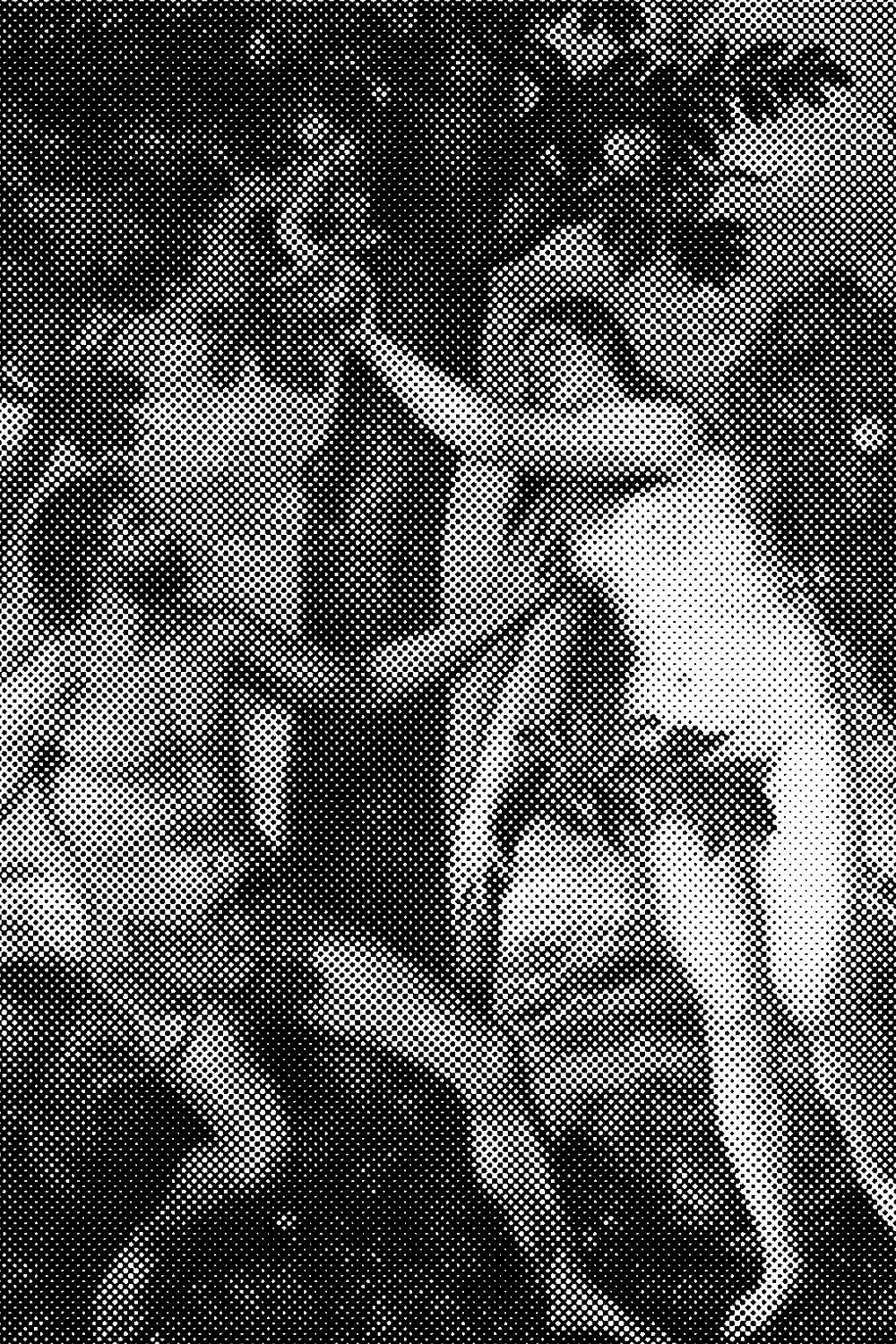
Titian (C.1550) The Fall of Man [Oil, Canvas]
However, returning to Zeros and Ones: Digital Women and the New Technoculture (1997), Plant suggests that women had perhaps shifted away from this secondary role in the 20th Century technological industry. Stating "they have not made some trifling contribution to an otherwise man-made tale", she argues that women were the "simulators, assemblers and programmers of digital machines" (Plant, 1997, p37). As Plant explains here, contributions made by women in other industries have also been downplayed, stolen and overshadowed by men, which is why much of history seems to proclaim them as the builders, even when women were present.
In her essay Messy History vs Neat History: Toward an Expanded View of Women in Graphic Design (1994), Martha Scotsford proposes a shift to a more feminist approach to recording graphic design history, as the current methods had meant male narratives dominated over female contributions, leading to women being "omitted from the history books" (Carson and Pajaczkowska, 2001). Here, Scotford acknowledges that the way history is documented skews in favour of men's work, arguing that often women are not credited or acknowledged appropriately for their contributions.
Whilst both Plant and Scotsford are correct that women had always been in the workforce to a considerable degree without receiving due credit, it is also true that women had often been relegated to the sidelines. As they struggled to attain their rights in the 20th Century, women often worked in unskilled positions such as domestic roles, teachers and shopkeepers; they were unlikely to hold positions of power (Alexander, 1995 p15). In the labour market, women were the subordinates of men, as had always been the case domestically (Haavio-Mannila, 1969). Even after the emancipation of women from home, some experts feared that women's integration into workplaces could "lead to conflicts within the family" and cause a "reformulation" of the gender norms (Haavio-Mannila, 1969).
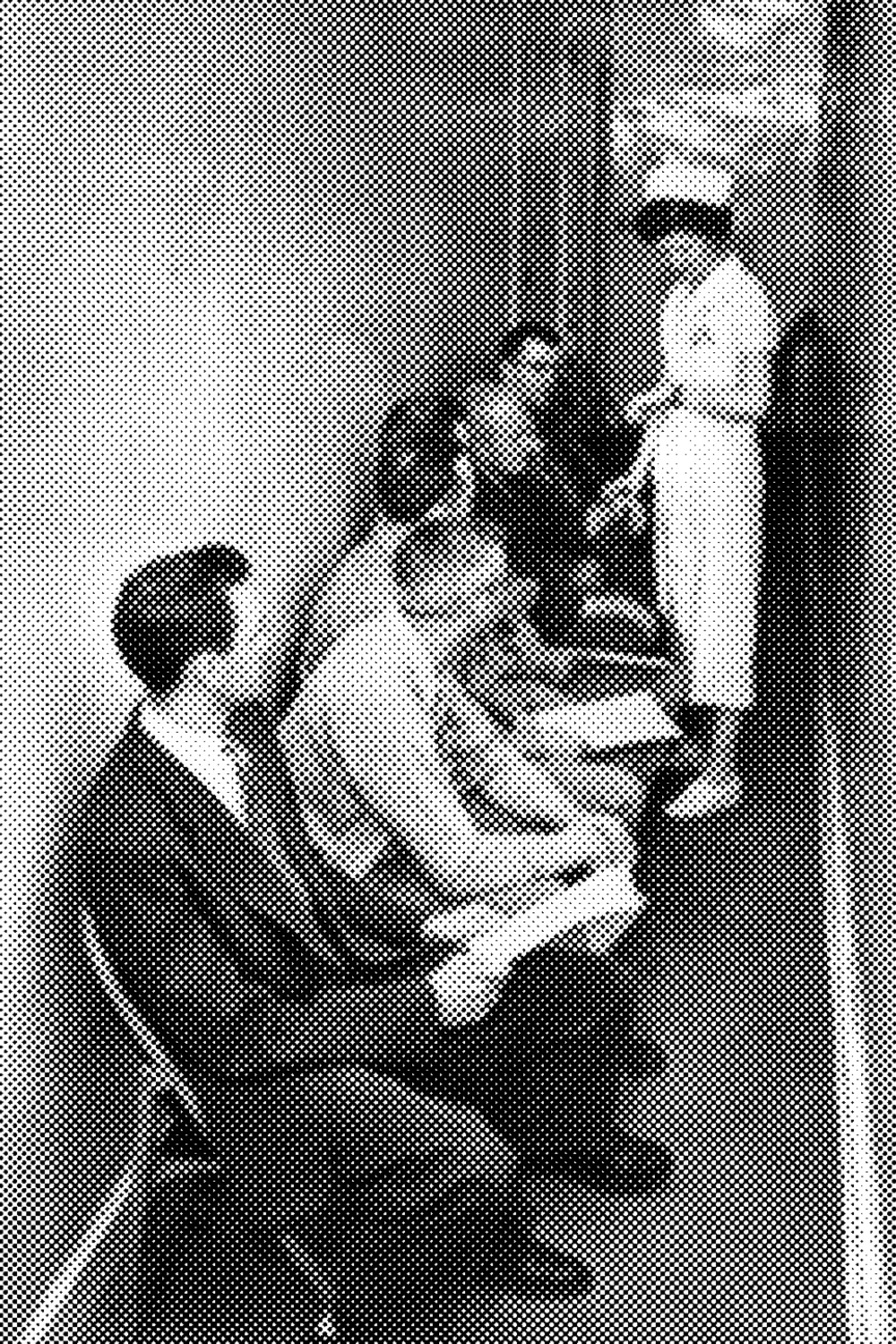
National Archives. (1953-1959) Industrial Nurses Specialise in Preventive Care. [Photograph]
Similarly, in Zeros and Ones: Digital Women and the New Technoculture (1997), Plant describes an inevitable "tipping of the scales", where "men will be outnumbered by their female counterparts" in the UK and US technological industries by the end of the 20th century. However, this prediction proves to be wrong, as in the UK, women make up just 24% of the tech workforce (Boles, 2023). Similar concerns were held in the Graphic Design industry, with American designer Ellen Lupton writing in her essay, Underground Matriarchy (1994), that there was a "danger in mapping out an underground matriarchy" as women "will replace the old boys' network" that had excluded them. Here, Lupton describes this prospect of women replacing men at the top of the design industry as a danger, stating that to "recast" the "traditional pantheon" with new "shining stars" is not what she aims to suggest. Lupton argues that a swinging pendulum of power shifts between men and women is not the answer to better equality generally, as exclusion cannot be our retaliation to being excluded.
In Fire with Fire (1993, p1), Naomi Wolf described a seismic shift in power during the 1990s from men to women, coined a "genderquake", that led to more women in professional environments (Wilkinson, no date). The feminisation of the workforce has continued into the modern day, with around 50% of the labour force now being female in the UK (Boles, 2023). Despite this surface equality, there are still major imbalances in various industries, including Graphic Design, where 63% of students are women, but just 17% of those in the industry hold creative director positions (Cowan, 2024). More generally, the Fawcett Society's biennial Sex and Power Index (2022) revealed that women are outnumbered by men 2:1 in positions of power in the U.K. This data highlights how, while the workforce itself is balanced, higher roles and certain industries are still not offering equal opportunities for women; more women at work does not automatically equate to equality.
Despite these imbalances in the workplace, in the U.K., young men are currently watching women excel past them in education compared to 50 years ago: "Women are much more likely to go to university than men and have been for many years. They are also more likely to complete their studies and gain a first-class or upper-second-class degree", (Bolton and Lewis, 2024). This suggests that higher education is becoming increasingly accessible to women, and progress is being made toward closing gender gaps.
In the documentary Blurred Lines: The New Battle Of The Sexes, Martin Daubney, a former right-wing politician and journalist, describes how "female success is giving men an identity crisis" because "young men are angry that there are no jobs for them, there is no traditional gender role, they see women going by them in the fast lane". Daubney describes young men as "frightened", and this fear of change, along with a lack of identity, is what leads to resentment of female success. Similarly, in Down Girl: The Logic of Misogyny (2017), Kate Manne, describes men as feeling "accustomed to unjust privilege", so to them, "equality feels like oppression". These experts are suggesting there is a general feeling of victimhood among men because of the perceived changes happening around them.
Germaine Greer, Australian feminist writer of The Female Eunuch (1971), also discussed this issue in the 2014 in the documentary Blurred Lines: The New Battle Of The Sexes, stating that "If men have always needed women to be in a subservient, filial, ancillary position when they [women] stand up and call attention to themselves, it produces reactions which are difficult to manage". It could be argued, therefore, that progress for women has toppled men from their position in a hierarchy that has been in place for centuries and that they have inevitably grown comfortable with. Greer suggests that men are not happy about losing their assumed power under patriarchy and want women back under their control.
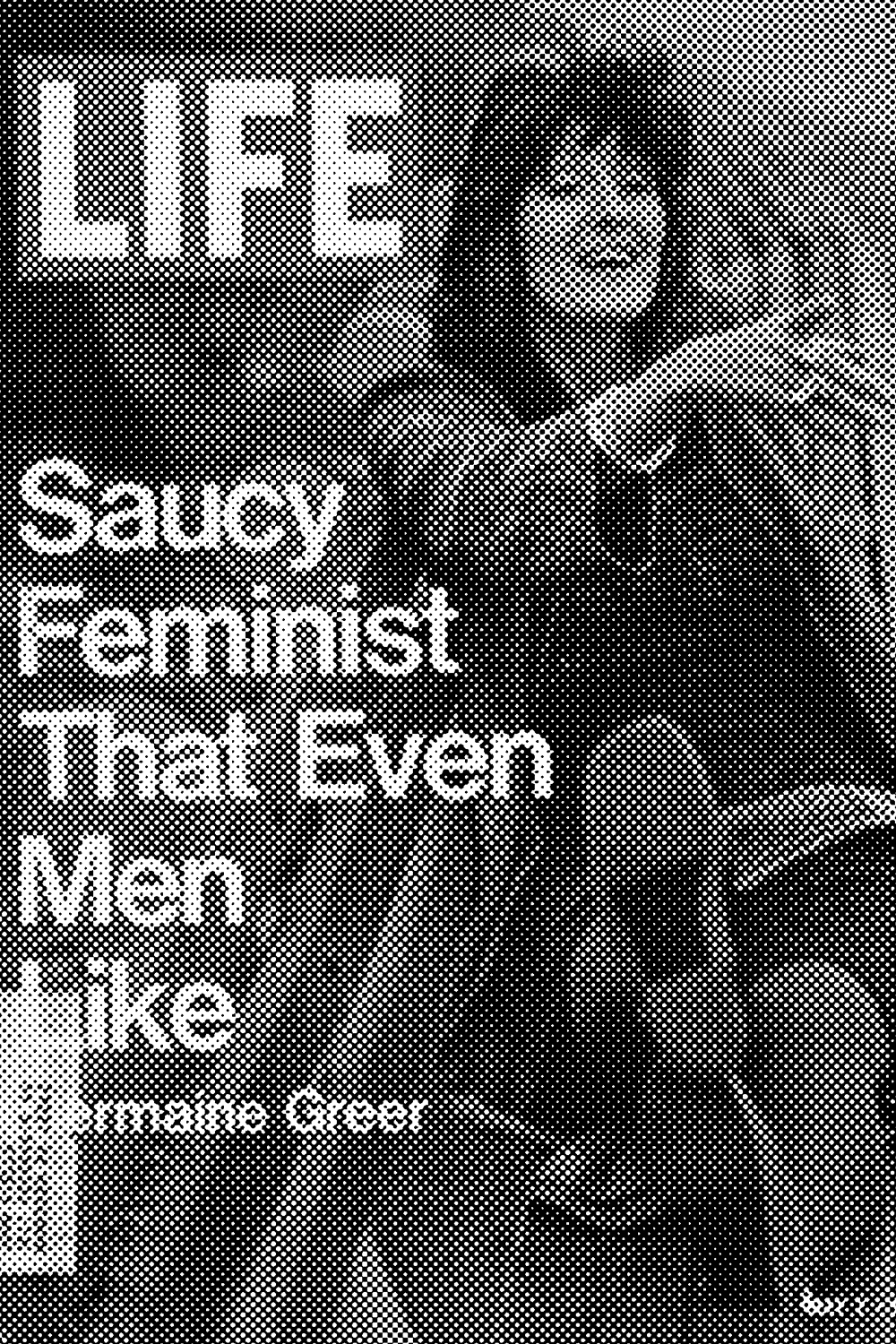
Life Magazine. (1971) Germaine Greer.
In Zeros and Ones: Digital Women and the New Technoculture (1997), Plant shares a similar opinion, stating that "before feminisation, the majority of the workforce was male, so they are going to feel disturbed and disrupted by the shift more drastically" (Plant, 1998, p39). From this perspective, it appears that this is not a new occurrence but instead, a feeling that has been growing for decades; so, what has changed in the cultural landscape that could be causing this feeling to spread more now? One major factor is the growth of social media and the power it has to amplify and spread misogynistic narratives.
One example of this is Mark Zuckerberg, owner of Meta, who recently appeared on the podcast, The Joe Rogan Experience (2025), stating that workplaces had been "culturally neutered" and need more "masculine energy". Despite his claims, it is estimated only 15-17% of Silicone Valley engineers are women, (Blurred Lines: The New Battle Of The Sexes, 2014). Zuckerberg's comments are not grounded in fact. Men largely outweigh the female workforce in certain industries, particularly in information technology. His inflammatory statements try to frame women as the problem and cater to an audience more likely to accept his misogynistic and sexist viewpoint. The demographic of The Joe Rogan Experience is 80% male, with 51% aged 18-34 (Edison Research, 2024). This is coincidentally the same demographic that is more likely to be involved in online fringe groups and commit VAWG offences (NPCC, 2024).
While some experts argue that the progress women have made towards equality can make some men bitter and fearful, the data shows how, in reality, women are not really taking over the workforce. There are still so many contributing factors preventing them from breaking the glass ceiling fully despite them being on average, more equipped for work compared to male counterparts. For example, although women are more likely to get a first-class degree, they are also less likely to end up in highly skilled and paid work (Bolton and Lewis, 2024). So why is this fear still there? Perhaps this relatively small amount of progress is still enough to strike panic that women are getting too powerful, especially as an increasing amount of young women align themselves with feminism compared to other demographics (YouGovUK, 2023).
Chapter 1: Feminism: What Did It Achieve?
"Revolution is not a one-time event." Audre Lorde, Learning from the 60s, (1982)
We can observe gender rights progression in the last century through the mobilisation of women in stages, known as waves of feminism, a term first defined by American feminist writer Martha Weinman Lear in her 1968 New York Times Article, The Second Wave of Feminism, (Women's History Museum, 2021). By Lear's definition, each 'wave' attempts to encapsulate peaks and troughs in women's activism throughout history and the changing sets of unifying issues that were tackled by each generation. Lear's 'wave' metaphor is useful, as although it is difficult to pinpoint the exact dates of each feminist surge, it allows us to reflect on what each generation achieved and analyse the influences for women to mobilise against gender oppression.
In the UK, first-wave feminism is largely agreed to have begun in the mid-1800s and lasted until the 1920s, being defined historically almost entirely by the suffrage movement (Rampton, 2008). In 1918, the government granted women over thirty to vote, as thanks for their contribution to war efforts. For many, this change was adequate, and the first wave lost its momentum (Kent, 2014). After a 40-year hiatus of sorts, feminism saw its revival through the second wave, which was arguably at its peak from the 1960s to the 1980s under a backdrop of social, political and economic turmoil such as the civil rights and anti-war movements unfolding in the U.S. (Rampton, 2008). Beyond gender, views around authority were changing, which created a shift in culture for feminism to springboard off (Rudnick, Smith and Lee Rubin, 2009, p. 174).
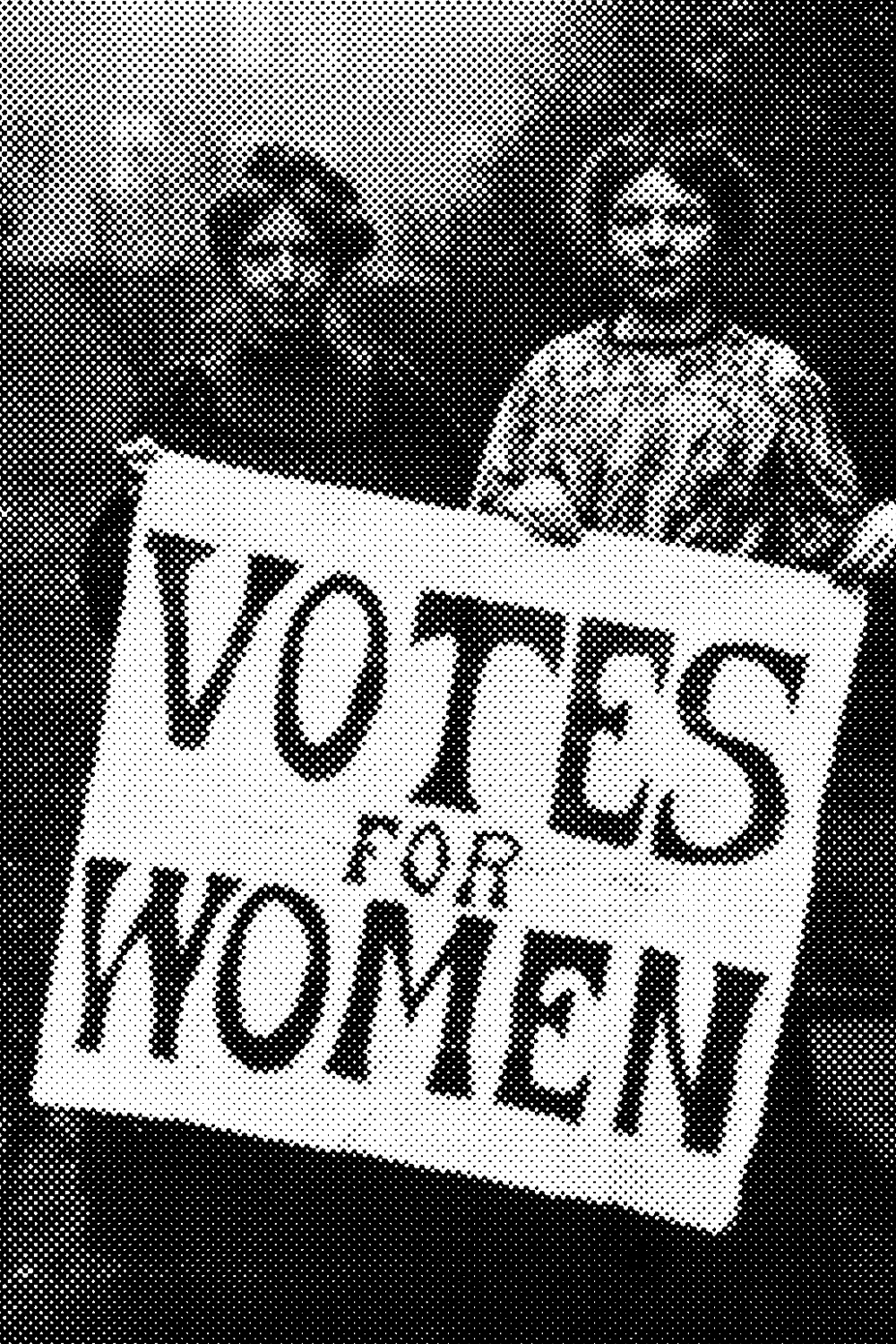
Wikipedia. (1906) Annie Kenney and Christabel Pankhurst of the WSPU.
Influenced by the U.S., a leading women's rights group, the Women's Liberation Movement (WLM) formed a UK branch, defining its initial demands around the workplace, women's health and the home (Griffin, 2017). After incessant campaigns, the Equal Pay Act was introduced in 1970, and five years later, so was the landmark Sex Discrimination Act (Francis-Devin and Ferguson, 2020). Once these were achieved, the WLM movement expanded its demands, covering issues around lesbian discrimination, financial and legal independence in 1974 and sexual harassment and violence in 1978 (Griffin, 2017).
Another important factor in the second wave was the publication industry, as the proliferation of feminist books opened new conversations around sexual freedom that had not been mainstreamed before (Gerhard, 2001 p8). Defining feminist writings of the time, such as The Second Sex by Simone de Beauvoir (1949), The Feminine Mystique by Betty Friedan (1963) and A Bunny's Tale (1963), Gloria Steinem fuelled criticism of gender, patriarchy and domesticity while introducing new perspectives on sexual liberation (National Womens History Museum, 2020). As a result, the second wave focused more broadly on a variety of issues covering social, economic and sexual equality (Johanssen, 2022, p57).
However, many of the feminist figureheads and much of the work being produced in the first and second waves came from predominantly white, heterosexual, able-bodied, middle-class women, leading to criticism of the canon being dominated by one narrative and disinterested in achieving true equality and representation for all women (LeGates, 2001; Johanssen, 2022 p57). In response, minority feminist writings such as bell hook's Aint I a Woman (1981) and Audre Lorde's The Master's Tools Will Never Dismantle the Master's House (1979) became extremely influential contributions to second-wave feminism.
From their feminist theory came the introduction of intersectionality, the idea that different forms of inequality, such as race, disability and sexuality, can intersect and exacerbate each other (Crenshaw, 1989). In The Master's Tools, Will Never Dismantle the Master's House (1979), Lorde writes, "I am black, and I am lesbian, and what you hear in my voice is fury not suffering". In the essay, Lorde expresses her frustration at racism and homophobia within the feminist community, simultaneously calling for the unification of women through their differences-of class, race, or sexuality-as what the patriarchy fears most is female community and solidarity.
Lorde proclaims that the lack of intersectionality within feminism damages and weakens the entire movement. Intersectional feminist thinking laid the foundations for the third wave, beginning in the 1990s. However, Lorde's essay remains relevant today, in an era of feminism considered to be more progressive and inclusive than what came before, there is still classism, racism, ableism, ageism, homophobia and transphobia within feminist communities. One example of this is the trans-exclusionary feminist (TERF) movement, which has grown "exponentially" through online spaces and publicity brought by "visible TERFs" such as J.K Rowling (Bassi and LaFleur, 2022). TERF feminists claim that "trans womanhood is a patriarchal invention to infiltrate women's spaces and undermine the feminist movement" (Bassi and LaFleur, 2022). Lorde's argument is still relevant today as without the unity of all women and acceptance of each other's differences, feminism will always be fighting a losing battle, as we have fallen at the first patriarchal lesson, "divide and conquer" (Lorde, 2018).
Due to technological advancements since the 2010s, many feminists agree we have shifted into a fourth wave, which we consider to be modern feminism (Mohajan, 2022, p. 2). Fourth-wave feminism is considered to be the most intersectional yet and is defined by the shift to social media platforms to engage in activism (Chamberlain, 2017, p.3; Johanssen, 2022, p58).
While the internet has amplified negative aspects of the feminist community, it has also sparked new discussions, enabled feminism to reach larger audiences and engaged the next generation by making feminism accessible and trendy (Barker and Jursz, 2019, p.96). The virality of the MeToo movement is one example of this. The phrase was first used on MySpace in 2006 by Tarana Burke, a black activist and sexual assault survivor, but went viral in 2017 when actress Alyssa Milano tweeted, "If all the women who have been sexually harassed or assaulted wrote 'Me too' as a status, we might give people a sense of the magnitude of the problem". #MeToo became a global movement for women to open up about their shared experiences of sexual abuse and harassment and fight against rape culture in society. The hashtag was used 19 million times on Twitter alone (Anderson and Toor 2018). Here, we can see how the unique qualities that the internet possesses can be used for good by bringing people together, raising awareness, and mobilising against a threat.
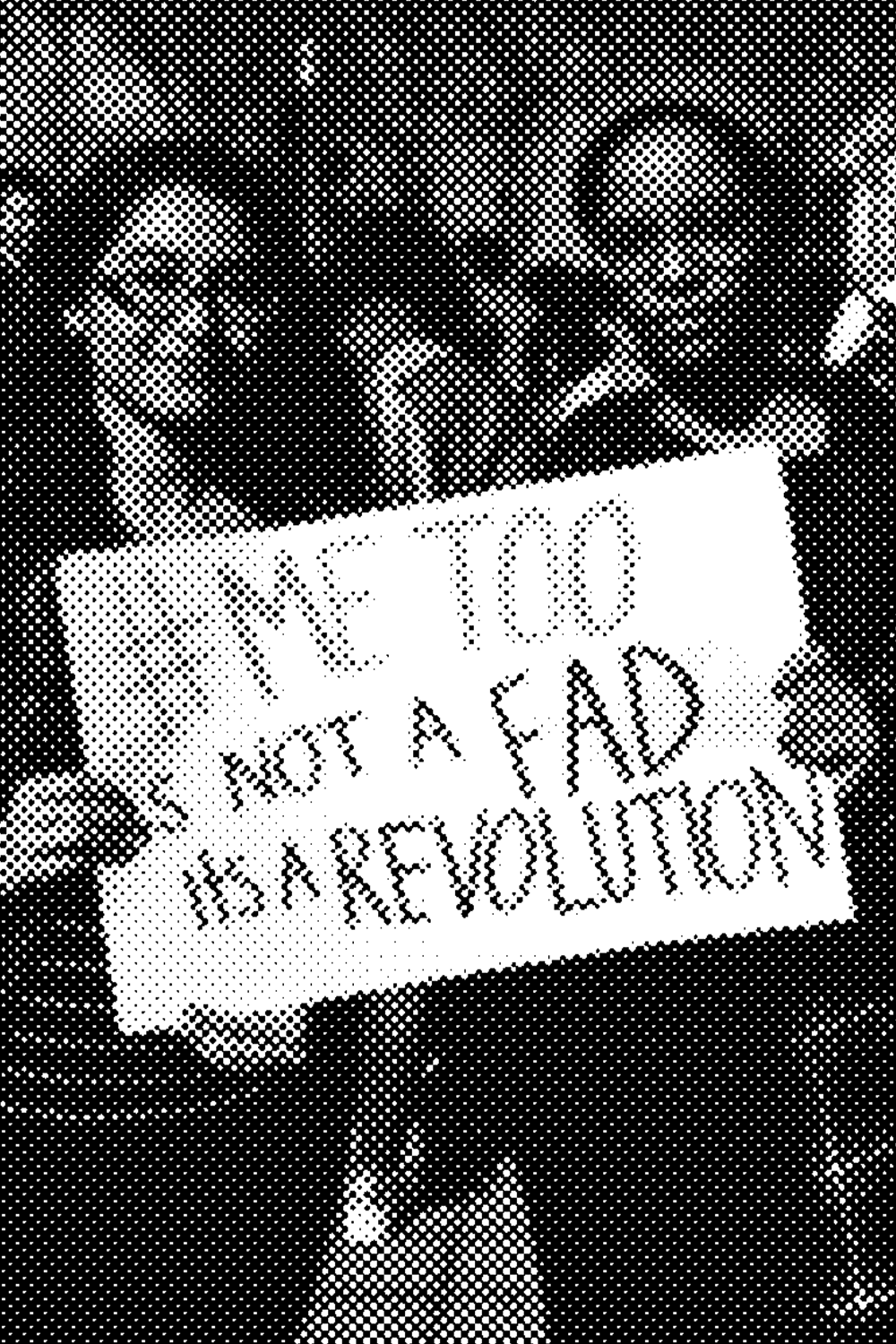
Global Fund for Women. (No Date) #MeToo is not a Fad, it's a Revolution. [Photograph]
Some experts argue that the #MeToo movement intensified discussions around toxic masculinity, a term referring to "behaviour that is considered dangerous, harmful or abusive to others and often to men themselves" (Morgan, 2019; Johanssen, 2022). "Toxic masculinity" and "locker room chat" where called out in the movement as furthering rape culture, and arguably the labels helped people identify and discuss this behaviour openly. Despite this, many do not find this a useful term, as while 47% of young women find it helpful, only 20% of men do (Ipos, 2024). Some experts have identified that perhaps men are viewing feminist campaigns like #MeToo as a personal attack on masculinity and manhood itself and adding to a growing sense of shame around being male (Godwin, 2018).
Chapter 2: Resistance to Feminism and Rising Misogyny
"Sexism is the pond in which misogyny flourishes, and because the water is so murky, you sometimes don't even notice how healthily it grows." Rahila Gupta, Sexism and Misogyny: What's the Difference? (2012)
Feminists have fought for many years in the UK to create a structure where women are protected in the same way as men under the law. But to what extent has the same progress been made culturally in breaking down the harmful sexist and misogynistic mindsets that developed over a long, patriarchal history (Saini, 2023)?
Feminism has become an unfavourable term for people to be associated with, according to a study by YouGov Eurotrack + US, where they investigated how people differed in identifying with feminism. Results for the UK show that when presented with the question "Are you a feminist" just 33% identified as such. Whereas when asked solely the definition, "Do you think men and women should or should not have equal rights and status in society, and be treated equally in every way?" 85% agreed they should. This research highlights that while a majority would agree that women deserve equal rights and opportunity, the labelling of 'feminism' is alienating to many. This can be attributed to the stigma attached to feminism's history and people not viewing modern, fourth-wave feminism as aligned with their views and identity for many different reasons (Scharff, 2019).
In addition, some argue that the legislative accomplishments discussed previously are leading to an increasing number of the public believing feminism has done its job in the UK (Ipos, 2024). King's College's recent Emerging Tensions study showed that 46% of the overall UK public think that attempts to give equal opportunities to women have gone far enough-a significant increase from 29% in 2019-and 13% think they have already gone too far. It is interesting to note from these studies that while 85% agree that men and women should be "treated equally in every way", 46% think that attempts to give equal opportunities to women have gone far enough. This suggests that half of the people studied believe equality for women has been achieved already, as they don't think attempts need to go further.
Research shows that young men in particular are becoming less tolerant of feminism; a 2024 study by Ipsos UK and the Global Institute for Women's Leadership at King's College London found that men are twice as likely to believe efforts to support women's equality have gone too far. This trend would suggest a growing resistance to women, as men are more likely to believe women have already gained too much support for gender equality. The research shows there is an "emerging gender divide" between how men and women view women's rights and hostility over whether women are getting too much equality and power.
Perhaps critics of feminism are unable to overlook the F word, or truly believe equality, or as close as we will ever get to it, has been achieved; perhaps some are tired of hearing about women's issues, or maybe they are scared of what the reality of female empowerment could mean for them. Ultimately, what is often overlooked is that previous feminist victories were for fundamental rights-the suffragettes fought for a political voice and second-wave feminists fought for healthcare, the ability to work, and to own a bank account. But how could feminism be completed, as if it began with an exhaustive list of what equality would look like in the coming decades?
Despite legislative progress, sexist and misogynistic ideologies continue to flourish; in every school, workplace, street, home and in our media. While there is no specific research yet on this rise, many experts agree that it is a growing problem, with Home Secretary Yvette Cooper stating that we are seeing a rise in extremism, including misogyny, "both online and on our streets," that "frays the very fabric of our communities and our democracy" (Catt and Rose, 2024).
Speaking on the rise of VAWG in the UK, Deputy Chief Constable Maggie Blyth stated the police force "know that some of this is also linked to radicalisation of young people online", in particular, young boys by influencers such as Andrew Tate (Gillett, 2024). Tate-a self-proclaimed misogynist, charged with rape and human trafficking in 2024-is known for posting inflammatory content about women and masculinity on social media platforms, such as calling women "intrinsically lazy" (BBC, 2024). A 2023 YouGov study found that "one in six 6-15-year-old boys (17%) have a positive opinion of Andrew Tate", and this number jumps to 1 in 5 among men aged 16 - 29 (Ipos, 2024). These figures show a concerning number of boys and young men with a positive opinion of a man who proudly disrespects and hates women.

Mihailescu, Daniel. (2023) Andrew Tate in Bucharest.
Although Tate has been banned from some of the largest social media platforms, such as X, Instagram and YouTube, there are plenty of other men promoting the same harmful ideology online. Canadian psychology professor Jordan Peterson, for instance, makes videos on YouTube criticising modern liberal culture (Sanneh, 2018). Image 7 shows a Tweet posted in 2023 to Peterson's account, reading, "This is what happens when you give women the vote :)", an obvious jab at women's intellectual capabilities and why they should not be given power to make decisions. More than a quarter (28%) of men who have heard of Peterson have a positive view of him, as do a third (32%) of young men aged 16 to 29 (Ipos, 2024). Here, we can see how a more subtle type of misogynistic language manages to creep into the discourse, with many young men defending Peterson's comments as 'jokes'.
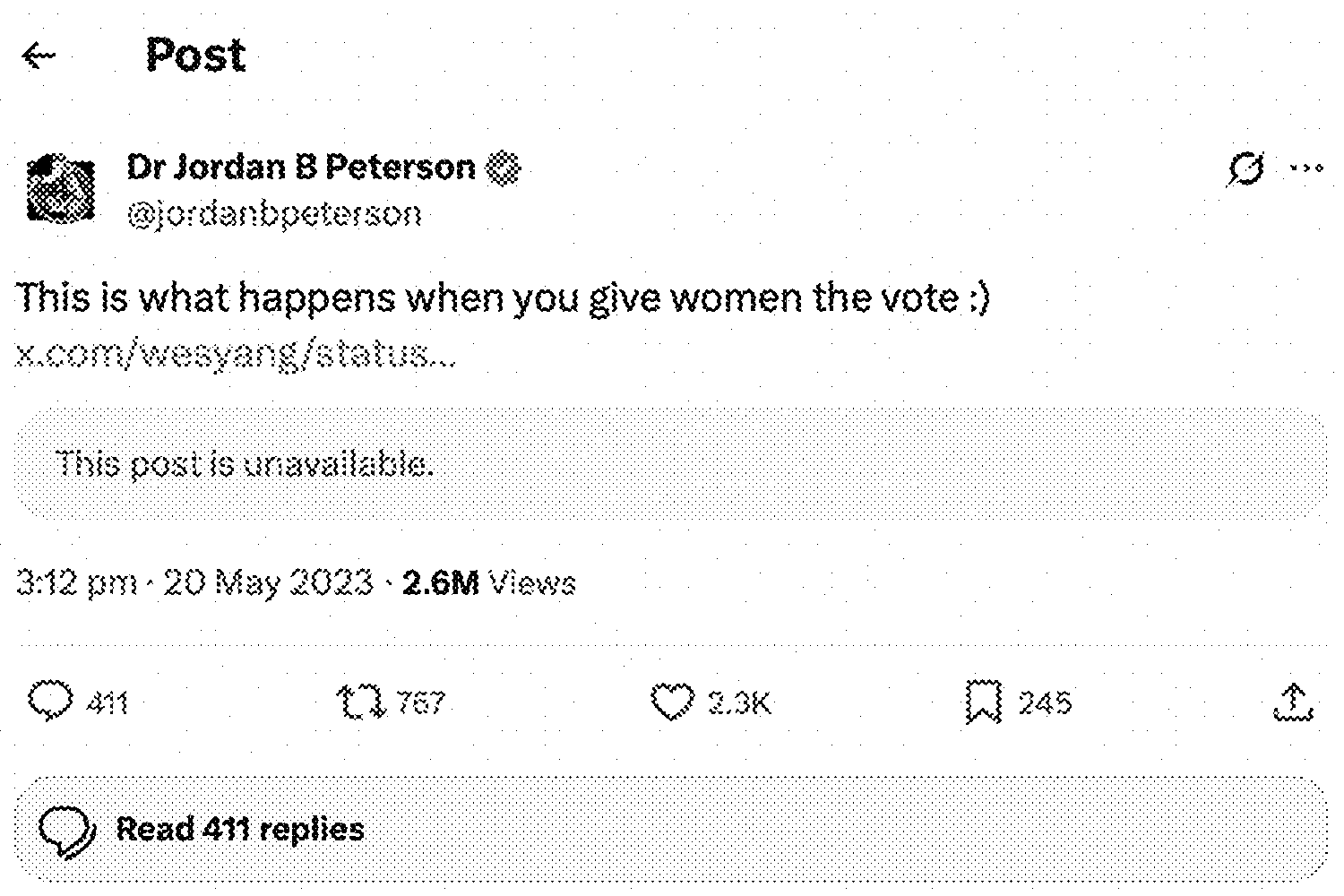
Peterson, Jordan B . (2023) This is what happens when you give women the vote
Psychologist Dr Thomas Ford studies the consequences of sexist humour on behaviour and found that while the beliefs of men who are not sexist are not affected when exposed to sexist humour, men who are already sexist feel more empowered by it (Blurred Lines: The New Battle Of The Sexes, 2014). He stated, "Sexist humour frees the sexist man to express his sexism without fears of reprisals", explaining that by not calling out sexist behaviours and humour, we validate sexist and misogynistic people in the room to continue to behave that way. This then creates a new boundary of acceptable misogyny within groups, and as a result, more and more misogynistic behaviour is normalised in cultures.
During my research for this essay, I spoke with Becki Keating, an Outreach Witness Service Volunteer whose role includes safeguarding sexual assault victims in court. I asked her how she believes we can prevent misogyny from rising and leading to the more serious crime types she sees daily in the courts. She stated that "it all needs to go back to conversations that we have with our children" and that "the only way we are going to get things changed is through having conversations with people". By calling out behaviour when we see it, we break the cycle of normalised sexism. We need to educate boys from a young age on these topics so we can infiltrate harmful views early on before they have taken root in impressionable young brains.
Chapter 3: Misogyny in The Digital Age
"If anything, technologies are only ever intended to maintain or improve the status quo, and certainly not to revolutionize the cultures into which they are introduced." Plant, Zeros and Ones: Digital Women and the New Technoculture (1997).
The proliferation of social media in the 21st century introduced a new form of publishing in the context of "making information available to the public" (Diomidous, 2016; National Archives, no date). Pre-Internet, you would have required a printing press to share your own content and opinions in mass with the world; now, you just need a smartphone-which have also been made highly accessible-internet access, a social media account, and in a few seconds, you can post content to a global audience (Carr, 2010 p179).
Some would agree this level of 'publishing' is a positive step; as it allows for knowledge to become more accessible by facilitating the connection of people and ideas that never would have had a chance to intercept before, enabling discourse and mobilisation (Barker and Juraz 2019, p.95). However, this is also the crux of the issue, as anyone can contribute, even if their intention is harmful; but, to question whether everyone should be able to publish comes into question the contentious topic of free speech, as who deserves to police people's thoughts and opinions?
Arguably, Tech bosses have the power to control content online, as they hold a monopoly on the industry (Hawley, 2021, p.1). It was recently announced in a video message posted to Facebook in January 2025 by Mark Zuckerberg, owner of Meta-the parent company of Facebook and Instagram-that they would be changing their content moderation approach. Meta will be removing its team of moderators in favour of 'community notes', which leaves the users on platforms with the responsibility to comment on a post's accuracy (McMahon, Kleinman and Subramanian, 2025). Zuckerberg even admitted that this change means that Meta platforms are going to "catch less bad stuff". This use of minimising language absolves Zuckerberg from taking any real accountability for the harmful content that will now be more easily posted on his network of social media platforms. He refers to hate speech, extremism, violence, graphic content, fake news and conspiracies, which create division and polarisation in communities globally, as simply "bad stuff" (Pelley, 2021).

Meta/Unpix. (2025) Mark Zuckerburg.
To discuss the change, Zuckerberg appeared on the podcast, The Joe Rogan Experience (2025), stating that "the whole point of social media is to give people the ability to share whatever they want", which is why the company believe the change is necessary, as it will allow them to get back to their "roots around free expression". Meta will reduce restrictions on the topics people can talk about online, especially around "immigration, gender identity and gender that are the subject of frequent political discourse and debate" and, thereby, allow more freedom of speech to their users (Kaplan, 2025). Although, allowing people to post 'whatever' they want potentially creates a lawless, unregulated environment where people can post harmful content with no repercussions. We do not allow this to happen on the streets, so why would we allow it to take place behind a screen? Removing restrictions on these topics specifically leaves vulnerable groups who often experience discrimination as targets, such as minority ethnic groups, transgender people and women. While the structuring itself results in people feeling protected by technology and believing they can get away with things they perhaps would not do in real life, as Meta is seemingly on their side to "share whatever they want" (The Joe Rogan Experience, 2025).
In terms of the UK, an Ofcom report in 2024 found that "48% of the time adults spend online is on services owned by Alpha and Meta", which signifies the vast quantity of time people are investing in viewing content on these platforms. Since the 2000s, we have developed a concerning reliance on technology, with the Office for National Statistics stating, "99% of all adults aged 16 to 44 years in the UK were recent internet users", compared with 51% in 2006 (ONS, 2020). Another Ofcom study shows that in May 2024, UK adults spent 4 hours and 20 minutes a day online, with young adults aged 18-24 spending as many as 6 hours; working out to around one quarter to one third of the entire waking day.
Freestocks . (2018) Phone in hands. [Photograph]
Even though technology is so embedded in our lives, research has found that "people say and do things in cyberspace that they would not ordinarily say and do in the face-to-face world", an effect known as online disinhibition (Suler, 2004, p.1). Disinhibition can be either benign, such as an "unusual act of kindness", or toxic, such as "rude language". This behaviour happens due to a sense of courage, confidence and safety behind screens and the anonymity they bring. This research suggests that the architecture of the internet will always create this reaction psychologically, as we will always feel more protected behind the screen, which is why we need content regulations to strengthen, not be removed.
Violent content, fake news and hate speech are so prolific online; a campaign from Vodafone shows that boys aged 11-14 are exposed to harmful content within 30 minutes, and one-in-10 are seeing it in as little as 60 seconds (Vodafone, 2024). Discussing how violent content moves offline and onto the streets, Dr Kaitlyn Regher, an Associate Professor and Programme Director at University College London for Digital Humanities, stated that "violent, hateful content becomes normalised for young people" as "they hear it and see it again and again and again" (Untold: The Secret World of Incels, 2014). In cases where the viewer is vulnerable in terms of mental health and perhaps experiencing isolation, the cycle can continue and spiral out of control into an obsession (Untold: The Secret World of Incels, 2014).
The 2021 Facebook Files scandal is one example of how the structure of social media itself disseminates misinformation and hate speech. Facebook whistle-blower Frances Haugen collected over 10,000 documents showing that Facebook knew about the harm their platforms were causing to "societies around the world" through "hate speech, divisive political information and misinformation", but either did not take action or failed to be transparent with the information shared with the public. (Pelley, 2021).
In the 2021 Facebook Enforcement Report, the company claimed the platform proactively took down "over 90%" of hate speech; however, internal documents contradicted this. Facebook's own researchers stated that a 2021 study showed they may "action as little as 3-5% of hate and about 0.6% of violence and incitement" on Facebook (Dwoskin, Newmyer and Mahtani, 2021). This evidence showed that Zuckerberg was purposefully evasive about how effective Facebook was at removing harmful content and showed just how easily companies can lie to the public about their operations.
Haugen states that in 2018, Facebook created an algorithm that would amplify "meaningful social interactions" with friends and family over pushing passive content. The algorithm ended up amplifying divisive posts, such as topics about race, as it prioritised high interaction, and more people would share and comment on posts that made them angry (Pelley, 2021). As a result, posts which incite hatred and anger were more likely to trend and gain traction, therefore being recommended to users over positive content, continuing the cycle of harm. Despite this impact being unintentional, Facebook documents show that bosses did not act on the knowledge their algorithm was harmful, as they did not want to interfere with the growth in user interaction, as they would lose profit.
Due to social media being so reliant on user-generated content and engagement, Big Tech bosses like Mark Zuckerberg and Elon Musk are reluctant to restrict and take down posts and accounts; as for them, the more users, the better (Pelley, 2021). This creates a conflict of interest, where owners of social media platforms favour profit and power over ethical considerations. If Big Tech is making its regulations less and less thorough, it is possible that more social media users are going to be influenced by content that is not fact-checked and creates harmful worldviews.
Misogyny and sexism predate the internet and are effects of a long history of gender discrimination that we have come to accept as commonplace. Sadie Plant explains in Zeros and Ones: Digital Women and the New Technoculture (1997) how technologies are introduced to "maintain or improve the status quo", which, in the context of this essay, is an intrinsically misogynistic and sexist society perpetuated by the patriarchy we live in. By Plant's logic, while the internet provides a habitat for rampant extremist views, it did not create them; it only facilitates their continuation and spread further. This is why it is so important to push for more stringent laws for the technological industry, as this problem will only worsen as time goes on. This is especially true with the expansion of AI, which presents a score of new ethical problems, such as targeted algorithms and deepfake pornography (EVAW, 2025).
Conclusion
As crimes related to Violence Against Women and Girls are "rooted in misogyny", we are never going to be able to keep women and girls safe until we uproot sexist and misogynistic behaviour first. This is no small undertaking, and one that requires collaboration between all of our institutional infrastructure. Schools, law enforcement and government need to work together to tackle this issue collectively.
The NPCC has stated that "Violence against women is at such a scale that it cannot be addressed by law enforcement alone" as the behaviour associated with VAWG crimes "begins long before they come into contact with the police" (NPCC, 2024). They are calling for prevention through the implementation of "greater and more consistent sex education for young people", including the topics of "healthy relationships and gender equality", as there is an increase in "the number of children and young adults committing offences" (NPCC, 2024).
In response, Ofsted has stated that "Schools and colleges cannot tackle sexual harassment and sexual violence, including online, on their own" either, stating that, "it is not only their responsibility to solve it. The government will need to tackle this issue through the Online Safety Bill, and other interventions". However, Prime Minister Keir Starmer stated that there is "not some policy lever that can be pulled" in relation to young people, violent crime towards women and online harms (Youngs, 2025)
It seems every structure forgoes its responsibility to keep women and girls safe onto the next, so how do we move forward? If our government is not going to enforce more stringent rules on digital spaces or provide funding to the schools that need it, we need to find a way to educate children and parents on the harms of social media and how best to protect developing minds. Perhaps voluntary and non-profit organisations are the only means to do this without schools being committed with the backing of our government. One example of this is Beyond Equality, who run equality, inclusion and masculinity workshops for schools', universities and workplaces, aiming to "engage all men in preventing gender based violence". Hopefully, by educating young men on what causes misogynistic behaviours, asking why they might have negative associations with feminism, and helping them get in touch with channelling their emotions and understanding mental health, we can help provide points of contact to stop boys withdrawing into harmful worldviews and seeking advice from influencers. Through education, we can eradicate misinformation and negative associations around gender equality and feminism, which could unify the younger generation.
Bibliography
Alexander, S. (1995) Becoming A Woman: And Other Essays in 19th and 20th Century Feminist History. NYU Press.
Anderson, M. and Toor, S. (2018) 'How social media users have discussed sexual harassment since #MeToo went viral', Pew Research Center, 11 October. Available at: https://www.pewresearch.org/short-reads/2018/10/11/how-social-media-users-have-discussed-sexual-harassment-since-metoo-went-viral/ (Accessed: 2 February 2025).
Anonymous (2018) Violence against women in the workplace - time for employers to wake up. Available at: https://www.tuc.org.uk/blogs/violence-against-women-workplace-time-employers-wake (Accessed: 17 November 2024).
Astell, M. (no date) Some Reflections Upon Marriage, https://www.gutenberg.org/files/61143/61143-h/61143-h.htm. Available at: https://www.gutenberg.org/cache/epub/61143/pg61143-images.html (Accessed: 2 February 2025).
Adolescence made free for schools as Keir Starmer meets creators (2025) BBC News. Available at: https://www.bbc.com/news/articles/cx28neprdppo (Accessed: 30 June 2025).
Banet-Weiser, S. (2018a) Empowered : Popular Feminism and Popular Misogyny. 1st edn. Available at: https://ebookcentral.proquest.com/lib/ual/reader.action?docID=5559961&ppg=24 (Accessed: 2 February 2025).
Banet-Weiser, S. (2018b) Empowered: Popular feminism and popular misogyny [electronic resource]. Durham: Duke University Press. Available at: https://ebookcentral.proquest.com/lib/ual/detail.action?docID=5559961 (Accessed: 2 February 2025).
Barker, K. and Jurasz, O. (2019) 'Online Misogyny: A Challenge for Digital Feminism?', Journal of International Affairs, 72(2), pp. 95-114. Available at: https://www.jstor.org/stable/26760834 (Accessed: 2 February 2025).
Bassi, S. and LaFleur, G. (2022) Introduction | TSQ: Transgender Studies Quarterly | Duke University Press. Available at: https://read.dukeupress.edu/tsq/article/9/3/311/319375/IntroductionTERFs-Gender-Critical-Movements-and (Accessed: 2 February 2025).
BBC (2021) 'YouTube removes occultist who influenced murderer of two sisters', BBC News, 30 October. Available at: https://www.bbc.com/news/uk-59103568 (Accessed: 9 December 2024).
BBC News (2022) 'Who is Andrew Tate? The self-proclaimed misogynist influencer', 30 December. Available at: https://www.bbc.com/news/uk-64125045 (Accessed: 2 February 2025).
BBC News (2023) 'Plymouth shootings: Why was Jake Davison allowed a gun?', 21 February. Available at: https://www.bbc.com/news/uk-england-devon-64616215 (Accessed: 8 December 2024).
Beyond Equality (no date). Available at: https://www.beyondequality.org/ (Accessed: 30 June 2025).
Bible Gateway passage: Genesis 3 - New International Version (no date) Bible Gateway. Available at: https://www.biblegateway.com/passage/?search=Genesis 3&version=NIV (Accessed: 2 February 2025).
Blondel, V.D., Decuyper, A. and Krings, G. (2015) 'A survey of results on mobile phone datasets analysis', EPJ Data Science, 4(1), p. 10. Available at: https://doi.org/10.1140/epjds/s13688-015-0046-0.
'Blurred Lines: The New Battle of the Sexes' (2014). BBC2 England. Available at: https://learningonscreen.ac.uk/ondemand/index.php/prog/0700B7EB?bcast=110212721 (Accessed: 30 November 2024).
Boles, B. (no date) As the technology industry continues to grow, so does the number of women working in it. Available at: https://www.techuk.org/resource/as-the-technology-industry-continues-to-grow-so-does-the-number-of-women-working-in-it.html (Accessed: 2 February 2025).
Bolton, P. and Lewis, J. (2024a) 'Equality of access and outcomes in higher education in England', House of Commons Library [Preprint]. Available at: https://commonslibrary.parliament.uk/research-briefings/cbp-9195/ (Accessed: 2 February 2025).
Bolton, P. and Lewis, J. (2024b) Equality of access and outcomes in higher education in England. House of Commons Library, p. 62. Available at: https://researchbriefings.files.parliament.uk/documents/CBP-9195/CBP-9195.pdf.
Booth, R. and editor, R.B.U. technology (2025) 'Meta to get rid of factcheckers and recommend more political content', The Guardian, 7 January. Available at: https://www.theguardian.com/technology/2025/jan/07/meta-facebook-instagram-threads-mark-zuckerberg-remove-fact-checkers-recommend-political-content (Accessed: 2 February 2025).
'BREAKING DOWN VIOLENCE AGAINST WOMEN' (no date) End Violence Against Women. Available at: https://www.endviolenceagainstwomen.org.uk/explainer/ (Accessed: 9 November 2024).
Call to action as VAWG epidemic deepens (no date) National Police Chiefs' Council (NPCC). Available at: https://news.npcc.police.uk/releases/call-to-action-as-violence-against-women-and-girls-epidemic-deepens-1 (Accessed: 9 November 2024).
Campbell, R., Duffy, B., Gottfried, G., Hewlett, K., May, G. and Skinner, G. (2024) 'Emerging tensions? How younger generations are dividing on masculinity and gender equality', p. 38. Available at: https://doi.org/10.18742/pub01-16.
Carr, N. (2010) The Shallows : How the Internet Is Changing the Way We Think, Read and Remember. Atlantic Books, Limited. Available at: https://ebookcentral.proquest.com/lib/ual/reader.action?docID=897771&ppg=29 (Accessed: 2 February 2025).
Carson, F. and Pajaczkowska, C. (2001) Feminist Visual Culture. Oxford, UNITED KINGDOM: Taylor & Francis Group. Available at: http://ebookcentral.proquest.com/lib/ual/detail.action?docID=4523784 (Accessed: 2 February 2025).
Catt, H. and Rose, C. (2024) Misogyny to be treated as extremism by UK government, BBC News. Available at: https://www.bbc.com/news/articles/c15gn0lq7p5o (Accessed: 2 February 2025).
Chamberlain, P. (2017) The Feminist Fourth Wave: Affective Temporality. Springer.
Cowan, K. (2024) How&How launch GetEven to support women in the creative industry, Creative Boom. Available at: https://www.creativeboom.com/news/howhow-launch-geteven-to-support-women-in-the-creative-industry/ (Accessed: 2 February 2025).
Crenshaw, K. (1989) 'Demarginalizing the Intersection of Race and Sex: A Black Feminist Critique of Antidiscrimination Doctrine, Feminist Theory and Antiracist Politics', (1), pp. 139-167. Available at: http://chicagounbound.uchicago.edu/uclf/vol1989/iss1/8.
Diomidous, M., Chardalias, K., Magita, A., Koutonias, P., Panagiotopoulou, P. and Mantas, J. (2016) 'Social and Psychological Effects of the Internet Use', Acta Informatica Medica, 24(1), pp. 66-68. Available at: https://doi.org/10.5455/aim.2016.24.66-68.
Disability and crime, UK - Office for National Statistics (no date). Available at: https://www.ons.gov.uk/peoplepopulationandcommunity/healthandsocialcare/disability/bulletins/disabilityandcrimeuk/2019 (Accessed: 9 December 2024).
Dodd, V. (2021) 'Two Met police officers jailed over photos of murdered sisters', The Guardian, 6 December. Available at: https://www.theguardian.com/uk-news/2021/dec/06/two-met-police-officers-jailed-photos-murdered-sisters-deniz-jaffer-jamie-lewis-nicole-smallman-bibaa-henry (Accessed: 9 December 2024).
Dwoskin, E., Newmyer, T. and Mahtani, S. (2021) 'The case against Mark Zuckerberg: Insiders say Facebook's CEO chose growth over safety', Washington Post, 25 October. Available at: https://www.washingtonpost.com/technology/2021/10/25/mark-zuckerberg-facebook-whistleblower/ (Accessed: 2 February 2025).
Edison Research (2024) Who Joe Rogan Listeners are Likely to Support in the Election, Edison Research. Available at: https://www.edisonresearch.com/who-joe-rogan-listeners-are-likely-to-support-in-the-election/ (Accessed: 2 February 2025).
End Violence Against Women (2025) No Small Change: Making Halving VAWG a Reality. End Violence Against Women, p. 46.
Fawcett Society (2022) Sex and Power Index, The Fawcett Society. Available at: https://www.fawcettsociety.org.uk/news/fawcetts-2022-sex-and-power-index-reveals-that-less-than-13-of-uks-top-jobs-are-filled-by-women (Accessed: 29 June 2025).
Francis-Devine, B. and Ferguson, D. (2020) '50 years of the Equal Pay Act', House of Commons Library [Preprint]. Available at: https://commonslibrary.parliament.uk/50-years-of-the-equal-pay-act/ (Accessed: 2 February 2025).
Fraser, N. (2013) 'How feminism became capitalism's handmaiden - and how to reclaim it', The Guardian, 14 October. Available at: https://www.theguardian.com/commentisfree/2013/oct/14/feminism-capitalist-handmaiden-neoliberal (Accessed: 2 February 2025).
General Assembly resolution 48/104 (1993) Declaration on the Elimination of Violence against Women, OHCHR. Available at: https://www.ohchr.org/en/instruments-mechanisms/instruments/declaration-elimination-violence-against-women (Accessed: 9 December 2024).
Gerhard, J. (2001) Desiring Revolution: Second-Wave Feminism and the Rewriting of Twentieth-Century American Sexual Thought. Columbia University Press. Available at: https://www.jstor.org/stable/10.7312/gerh11204.
Gillett, F. (2024) Influencers radicalising boys in 'terrifying' way, say police, BBC News. Available at: https://www.bbc.com/news/articles/cne4vw1x83po (Accessed: 2 February 2025).
Godwin, R. (2018) 'Men after #MeToo: 'There's a narrative that masculinity is fundamentally toxic'', The Guardian, 9 March. Available at: https://www.theguardian.com/world/2018/mar/09/men-after-metoo-masculinity-fundamentally-toxic (Accessed: 2 February 2025).
GOV.UK (2022) Violence against women and girls national statement of expectations (accessible), GOV.UK. Available at: https://www.gov.uk/government/publications/violence-against-women-and-girls-national-statement-of-expectations-and-commissioning-toolkit/violence-against-women-and-girls-national-statement-of-expectations-accessible (Accessed: 9 November 2024).
Griffin, G. (2017) A Dictionary of Gender Studies. Oxford University Press. Available at: https://www.oxfordreference.com/display/10.1093/acref/9780191834837.001.0001/acref-9780191834837-e-350.
Haavio-Mannila, E. (1969) 'Some Consequences of Women's Emancipation', Journal of Marriage and Family, 31(1), pp. 123-134. Available at: https://doi.org/10.2307/350015.
Hawley, J. (2021) The Tyranny of Big Tech. Simon and Schuster.
'Inside the Secret World of Incels' (2019). BBC2 England. Available at: https://learningonscreen.ac.uk/ondemand/index.php/prog/14200447?bcast=129923968 (Accessed: 1 December 2024).
Ipsos (2024) Masculinity and women's equality: study finds emerging gender divide in young people's attitudes. Available at: https://www.ipsos.com/en-uk/masculinity-and-womens-equality-study-finds-emerging-gender-divide-young-peoples-attitudes (Accessed: 2 February 2025).
Järv, O., Ahas, R., Saluveer, E., Derudder, B. and Witlox, F. (2012) 'Mobile Phones in a Traffic Flow: A Geographical Perspective to Evening Rush Hour Traffic Analysis Using Call Detail Records', PLoS ONE. Edited by R. Lambiotte, 7(11), p. e49171. Available at: https://doi.org/10.1371/journal.pone.0049171.
Johanssen, J. (2022) Fantasy, online misogyny and the manosphere : male bodies of dis/inhibition. London: Routledge.
Kaplan, J. (2025) 'More Speech and Fewer Mistakes', Meta, 7 January. Available at: https://about.fb.com/news/2025/01/meta-more-speech-fewer-mistakes/ (Accessed: 2 February 2025).
Kingsley Kent, S. (1988) 'The Politics of Sexual Difference: World War I and the Demise of British Feminism', Journal of British Studies, 27(3), pp. 232-253. Available at: https://doi.org/10.1086/385912.
Kroløkke, C. and Scott Sørensen, A. (2006) 'Three Waves of Feminism: From Suffragettes to Grrls', in. SAGE Publications, Inc., pp. 1-24. Available at: https://doi.org/10.4135/9781452233086.n1.
Krug, E.G., Dahlberg, L.L., Mercy, J.A., Zwi, A.B. and Lozano, R. (2002) World report on violence and health. Geneva: World Health Organization. Available at: https://iris.who.int/bitstream/handle/10665/42495/9241545615_eng.pdf;jsessionid=902EBEECF2B1889D5AD4F12CF554B2E4?sequence=1.
LeGates, M. (2001) In Their Time: A History of Feminism in Western Society. 1st edn. New York: Routledge.
Lenormand, M., Picornell, M., Cantú-Ros, O.G., Tugores, A., Louail, T., Herranz, R., Barthelemy, M., Frías-Martínez, E. and Ramasco, J.J. (2014) 'Cross-Checking Different Sources of Mobility Information', PLoS ONE. Edited by Y. Moreno, 9(8), p. e105184. Available at: https://doi.org/10.1371/journal.pone.0105184.
Lorde, A. (2018) The master's tools will never dismantle the master's house. London, England: Penguin Classics.
'Louis Theroux's Forbidden America, Series 1, Extreme and Online' (2024). BBC2 Englandv. Available at: https://www.bbc.co.uk/programmes/m0014khc (Accessed: 13 November 2024).
Lupton, E., Haycock, L. and Makela (no date) Eye Magazine | Feature | Underground matriarchy, Eye Magazine. Available at: https://www.eyemagazine.com/feature/article/underground-matriarchy (Accessed: 2 February 2025).
Maddern, K. (2023) 'Incel activity online is evolving to become more extreme, study shows', News, 9 February. Available at: https://news.exeter.ac.uk/uncategorized/incel-activity-online-is-evolving-to-become-more-extreme-study-shows/ (Accessed: 8 December 2024).
Manne, K. (2017) Down girl: the logic of misogyny [electronic resource]. Oxford, England: Oxford University Press, Incorporated. Available at: https://ebookcentral.proquest.com/lib/ual/detail.action?docID=5061698 (Accessed: 2 February 2025).
McMahon, L., Kleinman, Z. and Subramanian, C. (2025) Meta to replace 'biased' fact-checkers with moderation by users, BBC News. Available at: https://www.bbc.com/news/articles/cly74mpy8klo (Accessed: 2 February 2025).
Milano, A. (2017) If all the women who have been sexually harassed or assaulted wrote 'Me too' as a status, we might give people a sense of the magnitude of the problem. [Twitter]. Available at: https://x.com/alyssa_milano/status/919659438700670976?
Mohajan, H. (2022) 'Four Waves of Feminism: A Blessing for Global Humanity', Studies in Social Science & Humanities, 1(2), pp. 1-8. Available at: https://doi.org/10.56397/SSSH.2022.09.01.
Morgan, A. (2019) The real problem with toxic masculinity is that it assumes there is only one way of being a man, The Conversation. Available at: http://theconversation.com/the-real-problem-with-toxic-masculinity-is-that-it-assumes-there-is-only-one-way-of-being-a-man-110305 (Accessed: 2 February 2025).
Morris, J. (2023) Who is a feminist in the West in 2023? That all depends on the question | YouGov. Available at: https://yougov.co.uk/international/articles/45362-who-feminist-west-2023-all-depends-question (Accessed: 2 February 2025).
Munro, E. (2013) 'Feminism: A Fourth Wave?', Political Insight, 4(2), pp. 22-25. Available at: https://doi.org/10.1111/2041-9066.12021.
National Police Chiefs Council (2024) 'Violence Against Women and Girls (VAWG) National Policing Statement 2024'.
National Womens Histoy Museum (2020) Feminism: The Second Wave, National Women's History Museum. Available at: https://www.womenshistory.org/exhibits/feminism-second-wave (Accessed: 2 February 2025).
National Womens Histoy Museum (2021) Feminism: The First Wave, National Women's History Museum. Available at: https://www.womenshistory.org/exhibits/feminism-first-wave-0 (Accessed: 2 February 2025).
NPCC (2024) Call to action as VAWG epidemic deepens. Available at: https://news.npcc.police.uk/releases/call-to-action-as-violence-against-women-and-girls-epidemic-deepens-1.
Ofcom (2024) 'Online Nation 2024 report', p. 116. Available at: https://www.ofcom.org.uk/siteassets/resources/documents/research-and-data/online-research/online-nation/2024/online-nation-2024-report.pdf?v=386238.
Office for National Statistcis (2023) Violence against women and girls - Office for National Statistics. Available at: https://www.ons.gov.uk/peoplepopulationandcommunity/crimeandjustice/articles/violenceagainstwomenandgirls/researchupdatenovember2023 (Accessed: 9 November 2024).
ONS (2020) Internet users, UK - Office for National Statistics. Available at: https://www.ons.gov.uk/businessindustryandtrade/itandinternetindustry/bulletins/internetusers/2020 (Accessed: 2 February 2025).
Pelley, S. (2021) Facebook whistleblower Frances Haugen details company's misleading efforts on 60 Minutes - CBS News. Available at: https://www.cbsnews.com/news/facebook-whistleblower-frances-haugen-misinformation-public-60-minutes-2021-10-03/ (Accessed: 2 February 2025).
Plant, S. (1997) Zeros and ones : digital women and the new technoculture. London: Fourth Estate.
Rampton, M. (2008) 'Four Waves of Feminism', Pacific Magazine. Available at: https://www.pacificu.edu/magazine/four-waves-feminism (Accessed: 2 February 2025).
Ratti, C., Sobolevsky, S., Calabrese, F., Andris, C., Reades, J., Martino, M., Claxton, R. and Strogatz, S.H. (2010) 'Redrawing the Map of Great Britain from a Network of Human Interactions', PLoS ONE. Edited by O. Sporns, 5(12), p. e14248. Available at: https://doi.org/10.1371/journal.pone.0014248.
Roberts, H.E. (1988) 'Review of The Spectacle of Women: Imagery of the Suffrage Campaign, 1907-14', Newsletter of the Victorian Studies Association of Western Canada, 14(2), pp. 16-19. Available at: https://www.jstor.org/stable/27794139 (Accessed: 2 February 2025).
Rogan, J. and Zuckerburg, M. (no date) 'The Joe Rogan Experience'. Available at: https://www.youtube.com/watch?v=7k1ehaE0bdU.
Rottenberg, C. (2014a) 'The Rise of Neoliberal Feminism', Cultural Studies, 28(3), pp. 418-437. Available at: https://doi.org/10.1080/09502386.2013.857361.
Rottenberg, C. (2014b) 'The Rise of Neoliberal Feminism', Cultural Studies, 28(3), pp. 418-437. Available at: https://doi.org/10.1080/09502386.2013.857361.
Rudnick, L.P., Smith, J.E. and Lee Rubin, R. (2005) American Identities: An Introductory Textbook. 1st edn. John Wiley & Sons, Incorporated.
Rutherford, A., Zwi, A.B., Grove, N.J. and Butchart, A. (2007) 'Violence: a glossary', Journal of Epidemiology and Community Health, 61(8), pp. 676-680. Available at: https://doi.org/10.1136/jech.2005.043711.
Saini, A. (2023) The patriarchs: how men came to rule. London: 4th Estate.
Sanneh, K. (2018) 'Jordan Peterson's Gospel of Masculinity', The New Yorker, 26 February. Available at: https://www.newyorker.com/magazine/2018/03/05/jordan-petersons-gospel-of-masculinity (Accessed: 2 February 2025).
Schaff, C. (2019) 'Why so many young women don't call themselves feminist', BBC News, 6 February. Available at: https://www.bbc.com/news/uk-politics-47006912 (Accessed: 2 February 2025).
Scotford, M. (1994) 'Toward an Expanded View of Women in Graphic Design', University of Cincinnati, 28, pp. 367-387. Available at: https://readings.design/PDF/messy-history-vs-neat-history-toward-an-expanded-view-of-women-in-graphic-design.pdf.
Sisterhood (no date) 'Sisterhood Studio'. Available at: https://www.oursisterhood.co.uk/studioprojects.
Soto, V., Frias-Martinez, V., Virseda, J. and Frias-Martinez, E. (2011) 'Prediction of Socioeconomic Levels Using Cell Phone Records', in J.A. Konstan, R. Conejo, J.L. Marzo, and N. Oliver (eds) User Modeling, Adaption and Personalization. Berlin, Heidelberg: Springer Berlin Heidelberg (Lecture Notes in Computer Science), pp. 377-388. Available at: https://doi.org/10.1007/978-3-642-22362-4_35.
Suler, J. (2004) 'The Online Disinhibition Effect', Cyberpsychology & behavior : the impact of the Internet, multimedia and virtual reality on behavior and society, 7, pp. 321-6. Available at: https://doi.org/10.1089/1094931041291295.
Survivors Network (2024) 'The VAWG Epidemic- We Have Always Been In Crisis', 14 August. Available at: https://survivorsnetwork.org.uk/the-vawg-epidemic-we-have-always-been-in-crisis/ (Accessed: 25 January 2025).
The Crown Prosecution Service (no date) Violent crime | The Crown Prosecution Service. Available at: https://www.cps.gov.uk/crime-info/violent-crime (Accessed: 9 November 2024).
Theroux, L. (2024) BBC Two - Louis Theroux's Forbidden America, Series 1, Extreme and Online, BBC. Available at: https://www.bbc.co.uk/programmes/m0014khc (Accessed: 13 November 2024).
Thomas, S. and Davis, A. (2022) 'EVERYTHING IS RACIALISED ON TOP'. Plan International UK. Available at: https://plan-uk.org/file/everything-is-racialised-reportpdf/download?token=bVe1kW6-.
Topping, A. (2021) 'Four-fifths of young women in the UK have been sexually harassed, survey finds', The Guardian, 10 March. Available at: https://www.theguardian.com/world/2021/mar/10/almost-all-young-women-in-the-uk-have-been-sexually-harassed-survey-finds (Accessed: 1s November 2024).
TUC (2019) 'Sexual harassment of LGBT people in the workplace'. Available at: https://www.tuc.org.uk/research-analysis/reports/sexual-harassment-lgbt-people-workplace.
'Untold, the Secret World of Incels' (2023). Channel 4. Available at: https://learningonscreen.ac.uk/ondemand/index.php/prog/3C0A094E?bcast=138457569 (Accessed: 1 December 2024).
Vodafone (2024) 'AI "Aggro-rithms" target boys with harmful content within 60s', Vodafone UK News Centre, 6 February. Available at: https://www.vodafone.co.uk/newscentre/press-release/ai-aggro-rithms/ (Accessed: 29 June 2025).
Weinmar Lear, M. (1968) The Second Feminist Wave - The New York Times. Available at: https://www.nytimes.com/1968/03/10/archives/the-second-feminist-wave.html (Accessed: 2 February 2025).
Whittaker, J., Costello, W. and Thomas, A.G. (no date) Predicting harm among incels (involuntary celibates): the roles of mental health, ideological belief and social networking (accessible), GOV.UK. Available at: https://www.gov.uk/government/publications/predicting-harm-among-incels-involuntary-celibates/predicting-harm-among-incels-involuntary-celibates-the-roles-of-mental-health-ideological-belief-and-social-networking-accessible (Accessed: 3 December 2024).
Why Do You Hate Me? - Series 1: 5. Tackling Online Misogyny (2024). BBC. Available at: https://www.bbc.co.uk/iplayer/episode/m001x795/why-do-you-hate-me-series-1-5-tackling-online-misogyny (Accessed: 8 December 2024).
Wolf, N. (2013) Fire with Fire: New Female Power and How It Will Change the Twenty-First Century. Random House.
Wolf, N., Bindel, J., Power, N., Gupta, R., Cosslett, R.L. and Mamata, B. (2012) 'Sexism and misogyny: what's the difference?', The Guardian, 17 October. Available at: https://www.theguardian.com/commentisfree/2012/oct/17/difference-between-sexism-and-misogyny (Accessed: 2 February 2025).