
How Personal Cameras in the Digital Age are Transforming Photography's Role
Abstract
Photography, as an art form and medium, is fundamentally about observing, recording, and sharing. It provides a means to explore the physical and social constructs of a given location, offering insights into cultural identity through the details captured by the camera. Building on the concept that "clothing is an extension of the skin," as proposed in Marshall McLuhan and Quentin Fiore's (2008) 'The Medium is the Massage', this essay suggests that photography extends the eye, allowing individuals to document and interpret their surroundings. In portraiture, photography is not a translation of appearance but rather a direct 'quote' of it, as demonstrated in the narrative documentary-style works of photographers such as Walker Evans and Martin Parr. Their choices of subject matter and more spontaneous methods of image capture highlight subconscious cultural habits; often visible to insiders but overlooked by outsiders; offering an in-depth commentary on identity and societal norms (specifically in urban areas).
With the rise of personal cameras in the digital age, our society is now a culture based off images. Photography has transitioned from an exclusive art form to a global tool for communication, due to the ease at which we can access the digital world. This development of technology has facilitated photography's integration into daily life, making the professional creative sector more accessible for amateur artists, yet this accessibility has weakened the duration of its impact, and potentially devalued the power of a 'good image'. The essay discusses the effects of the excessive exposure to media on the value of professional photography, suggesting that the abundance of visual content has diminished the appreciation for meaningful, high-quality images.
Drawing from John Berger's (2013) observation in 'Understanding a Photograph' whereby every photograph is a "means of testing, confirming and constructing a total view of reality", this essay explores how the camera, whilst capturing cultural appearances, leaves interpretation of the meaning of the image open to the viewer. Moreover, the accuracy in representation of a photograph and power over the content of an image is challenged within this essay. It is discussed how the photographer behind the lens is in complete control of the 'narration' of the scene we are witnessing as a viewer. Therefore it is important to consider how the absence of what is not shown is just as powerful as what is shown in the image.
The essay also highlights the fluidity of identity and how it is constructed by the environment around us, which is itself shaped by external influences such as politics, traditions, and consumer habits. Adrienne Salinger's (1995) 'Teenagers in Their Bedrooms' series exemplifies the ability of photography to capture these external elements that define identity within the limits of a bedroom. However, the complexities of personality and social constructs make it challenging to condense these details into a singular image.
Ultimately, this essay explores how the medium of photography can accurately preserve and represent societal identity, through the increased use of personal cameras proposed by the technological advancements in the digital age. It is argued that while photography captures reality, its subjective and interpretive nature can challenge the intended meaning and message behind the work. The work of photographer's analysed demonstrates how photography continues to evolve as a critical tool for cultural documentation and expression.
Introduction
Photography is about observing, recording and sharing. Observation consists of time spent in a certain location, noticing both the minute and larger-scale details that create the physical construct of that location. From these details, one can infer a much larger scope of the social identity, or portrait, of this location. After reading 'The Medium is the Massage' by Marshall McLuhan and Quentin Fiore (2008), the point, 'clothing is an extension of the skin', led me to consider how photography is an extension of the eye. In terms of portraiture, photography doesn't translate appearance, it quotes it. Furthering this, within Dziga Vertov's 'Man With a Movie Camera', he states, "I am an eye, a mechanical eye" (Delgado, 2009), which was a highly influential statement made during the development of film and photography. He was suggesting that the camera can reveal deeper truths than the human eye, and is able to combine perspectives due to his concept of Kino-Eye-the belief that the camera is a superior tool for perceiving reality (Delgado, 2009). This is exemplified through the work of photographers such as Martin Parr and Walker Evans, in the way they use the camera as a tool for narration. What they choose to photograph is where the power is held, as their work essentially gives light to the unconscious cultural habits of a place, which are often in plain sight to an insider, yet invisible to an outsider. Older portraits often directly convey specific social characteristics, while contemporary imagery tends to make this distinction less visible, hidden by consumerism and materialism. Our society is now a culture based off images. We need to be supplied with vast amounts of entertainment and media in order to be stimulated. Marshall McLuhan talks about overstimulation in 'The Gutenberg Galaxy (1962), where he highlights how the shift from print (text-based, linear thought) to electronic media (image-based, multisensory engagement) has transformed society. McLuhan argues that in the 'electric age', people are immersed in media environments that demand constant sensory stimulation. This constant need for stimulation has been facilitated by the ever-expanding availability and use of personal cameras, which now means that the power of the photograph is comparatively short-lived to that of before. McLuhan and Fiore (2008) illustrated in 'The Medium is the Massage' how the growth of technology utterly reshapes society, personal lives and sensory perceptions, so that we are effectively shaped by the means we use to communicate. Within graph', John Berger states that, "The industrialised, 'developed' world has turned everything into spectacle, through the use of the camera. The act has become so habitual - the omnipresence of cameras persuasively suggests that time consists of interesting events, events worth photographing. Memory now ceases to be necessary" (Berger, 2013). In the digital age, photography has become a prevalent form of communication, profoundly shaping how individuals and societies understand themselves and others. The growth of personal cameras - whether through smartphones, digital cameras or other interactive devices - has transformed photography from an exclusive art to a medium accessible to nearly everyone, particularly questioning the value of a 'good image'. This shift has had a profound impact on social constructs and collective identity, particularly urban areas, where cultural diversity, social interactions and technological advancements appear (Ratomir, 2022). This writing will explore the redefinition of photography's role as a tool for cultural representation through the works of Walker Evans, Martin Parr and Dominique Nabokov. The findings will be supplemented by readings of 'The Medium is the Massage' by Marshall McLuhan and Quentin Fiore (2008), 'On Photography' by Susan Sontag (2008), and 'Understanding a Photograph' by John Berger (2013).
In Berger's words, "The camera holds appearances unchanging. Yet, unlike memory, photographs in themselves do not preserve meaning" (Berger, 2013). This leads to the exploration of whether photography is the best medium for preserving an accurate depiction of a societal identity. In the most real sense, the camera does capture reality, however the distinction between what is shown and what is not leaves space for interpretation (Sontag, 2008). Documentary style photography like that in the independently published Café Royal Books, run by Craig Atkinson, captures potential unseen British culture and social history, opening knowledge to new audiences. Such photobooks or zines can become a huge preservation of history. They specialise in elements of culture such as genres of music, rave culture, fashion, or certain groups of people. Craig Atkinson's work is much broader; attempting to portray a wide variety of races, beliefs, genders and backgrounds, focusing on both well-known and underrepresented photographers. Atkinson believes these images are "societal and historical artefacts and resources" (Café Royal Books, 2024). The photobooks are consistent and recognisable in style; characterised by black and white images, often full bleed, with the layout and lack of text cohesive in each publication.
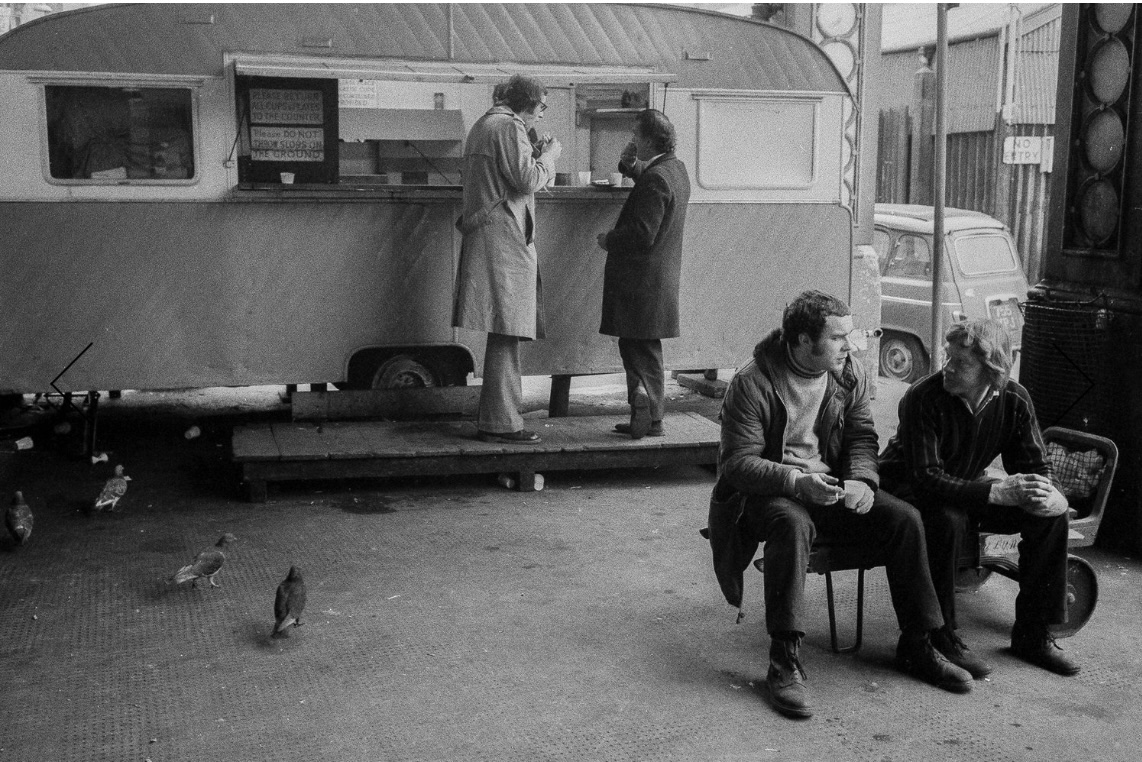
Fig. 1 - Virginia Turbett - New Romantics, London, 1980-81 (Café Royal Books)
A common belief surrounding photography is that the photograph asks for interpretation, and words usually supply it. In Roland Barthes essay "The Rhetoric of the Image" (1977), Barthes discusses how images, particularly photographs, are polysemous - they invite multiple interpretations - and how text serves to anchor meaning to images, therefore reducing ambiguity; "The text directs the reader through the signifieds of the image, causing him to avoid some and receive others; [...] it remote-controls him towards a meaning chosen in advance" (Barthes, 1977). However, I regard the Café Royal Books as a great example for proving that words can actually be redundant in some cases. On the cover, these publications state the time at which the photos were taken and the location/genre or group of people, for example 'Covent Garden, London, 1972', followed by the photographer who took the photos. On the back cover is a short introduction-style blurb giving insight to what the photography may tell us. Other than this small piece of text, there are no other words in the publications. I think there is power in this design choice. We are given a collection of photos to look at, a 'title' stating, in broad terms, what we are looking at, and are then free to interpret the images how we will, using our imagination to understand and analyse what it is we are seeing. Ultimately, the books are never over 36 pages (Cafe Royal Books, 2025), meaning we are gathering only a small excerpt of the social scene being shown. Nonetheless, a specific social construct or identity is always well portrayed.
Martin Parr excels at portraying the many external elements that surround and define us. Not just the things we buy but the clothes we wear, the sports we watch, the political parties we agree with and the traditions we follow (Prodger, 2019). Personalities are by nature fluid; subject to change and adaptation; the way we behave depends on circumstances that surround us. We have public and private personas, conscious and unconscious behaviours. Ultimately, the mix of qualities that distinguish us from others is collective and often short-lived, and ultimately difficult to photograph in a singular image.
Chapter 1: The Potential of the Photographic Medium to Create a Social Narrative
The Power of Media and the Photographer's Role
McLuhan and Fiore (2008) explore how the media we consume evokes unique senses of perceptions. Our perception of a place is often a collective perception, due to the nature of this media. Our preconceived individual perception (that we may accumulate from the people around us such as family members) further alters the way we think and act about a certain place, which in turn impacts the way we perceive the people inhabiting it. The role of the artist, specifically the photographer, is a key part in this concept. Artist's impressions of locations provide a tool of direct attention and enable us to see and understand more clearly the less obvious details of a place. For example, the subconscious social constructs that may be invisible to both an insider and an outsider. Through the work of documentary-style photographers, such as Martin Parr and Walker Evans, we can challenge the way we look at both ourselves and others, alongside the way we consider our relationship with the wider world.
I will explore how the medium of photography is an effective method in portraying a reliable and accurate depiction of the social constructs and hierarchies, specifically within urban areas. McLuhan (2008) highlights that new informational media creates an immensely persuasive 'outside' world. This fairly new concept, established in the last 50 years, allows people from an outside perspective to gain more of an 'insider' viewpoint of certain locations, for example cities. This in turn makes people who have never visited a location feel as though they 'know' the place, possibly making the world more connected.
The power is held in the eye of the photographer, which could be considered as the lens of the camera. What the photographer chooses to point their camera towards is controlling our perception, and photography holds the most visual power. Whether or not the subject becomes the narrator of the image, as the camera 'listens', or the photographer holds the power of being the narrator of the scene is a discussable topic. Without words, which usually supply interpretation for photographs, the meaning of an image can become interchangeable. This highlights the narrative power of a photograph and leans towards the idea of how as a collectable medium, the overlooked threads that construct a place can become more visible. One could argue, the more imagery available, the more insight we are able to receive about a given social group or culture.
Exploring Identity through Photography
An artist, such as a painter, is able to reshape and alter the various possible visual aspects of their artwork until it fully explains what they are intending to represent or embody. On the other hand, a photographer can only capture a millisecond of time in one image. Walker Evans' street photography captures subjects in action, recording gestures that would have been lost otherwise. This sheds light on the intricate work of professional photographers and how the essence of what they do can't be replicated. Evans' images suggest a slight glimpse into his subject's life or personality - their emotions, gestures, clothing. These are the only hints we are getting towards an insight of themselves. This proposes a direct contrast to photographers such as Adrienne Salinger who capture a whole bedroom of belongings, trinkets, colour and individual style to generate identity. Her images, taken over a two-year period, offer an intimate glimpse into the adolescents' individual lives. The portraiture-like work of Salinger from her 'Teenagers in Their Bedrooms' series tells the stories and depicts the personalities of a wide variety of young people taken in the 90's. In her early twenties, she approached similarly aged youths in the street and asked if she could go home with them and photograph their rooms (Fulleylove, 2016). This series is composed of photographs of around 60 teenagers, of whom she spent the day with and listened to their stories. She aimed to address the way people defined themselves, as she believed that before, the only images that existed of teenagers were from an adult's perspective; this power differential bothered her. The essence of self-definition within each image is so clearly stated, almost as though it could be considered a 'self-portrait'. As a viewer, you are invited to explore the relationships between the bedrooms and the owner (which are either sat on the bed or stood in the centre of the image).
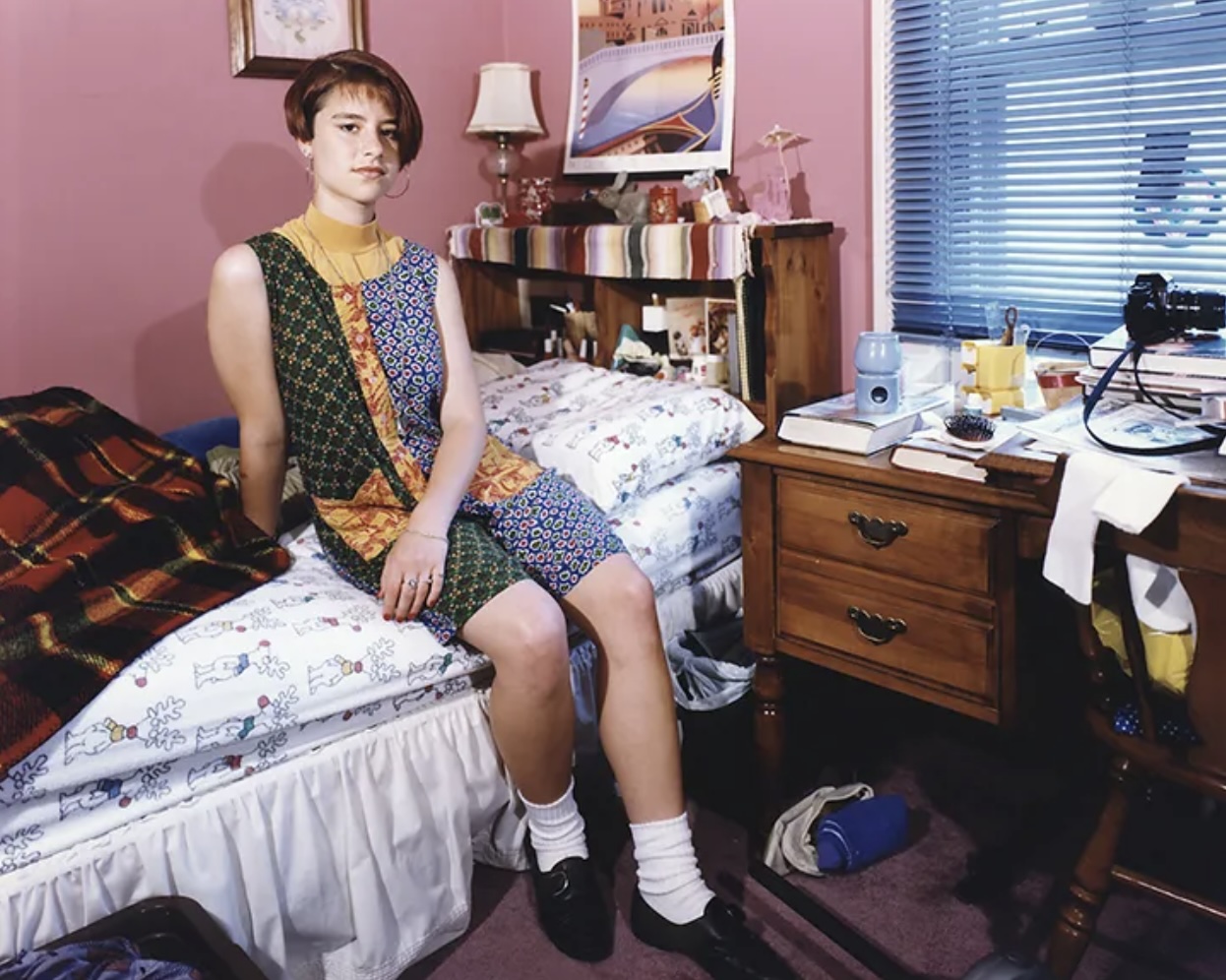
Fig. 2 'Teenagers in Their Bedrooms', Adrienne Salinger
The content in the photographs gives such an insight that even without the interview with the subject alongside, the image narrates itself. Each individual object within the image holds meaning, and as a viewer we are encouraged to use our imagination as to what their identity is comprised of. The way they are placed within their own space also holds power as though they are defined by their space (or is their space defined by them?). It reverses the role of seeking at details captured within photographs due to the vast amount of details on offer for us to consider. Adrienne Salinger's carefully framed, poised and angled images pose a huge difference to the work of Evans in the way that his work is more sporadic and in-the-moment. were not portraits, as they did not engage with the subject or represent their characters. He observed from a distance, and the photographs did not tend towards any single interpretation or message (Campany et al. 2016). This is unlike much of photojournalism published in magazines. "This is where work is involved, because the viewer must pay close attention to notice the details and the note of gestures that tell something of significance. This work of paying attention makes possible the free play of the imagination, stimulating it to find connections suggested by these pictures of everyday people as seen by the photographer who made them" (Campany et al. 2016). Comparatively, the method by which Salinger enters the subjects' personal space suggests that the identity of the youth of the time was more of a contained and carefully constructed one, however the subjects that Evans' captures seem to be more defined by their jobs and how they appear to the public in an outside setting. This links to the concept of the photographer having the most power in defining not only ones' identity, but also the social construct in which they belong, within a photograph. For example, from the images that Salinger displays, we are able to get a sense of the 'genre' or social standing the person belonged to, in essence.
Photographing people's personal spaces allows others to also get a sense of identity for the person, revealing a glimpse of the patterns within their daily life. Interestingly, photographing a moment in time within their space can capture emotion and tell viewers a lot about someone. Visually, do their personal spaces allow us to reconstitute an idea of their identity? Exploring how photography as a medium can capture a more intimate identity, which can often hint towards a larger scale collective identity or political belief. We have a complex relationship with the things which we chose to surround ourselves with. This is an in depth construct that Russel Belk, a business academic, explains in 'Possessions and the Extended self' published in 1988. He explains that our possessions are a major contributor to and reflection of our identities. For example, when we buy furniture or clothing, we are projecting ideas about our social status, preferences and beliefs, explaining that "These same possessions may become part of how we perceive ourselves; we are what we have". Belk (1988) adds that, "Our accumulation of possessions provides a sense of past and tells us who we are, where we have come from, and perhaps where we are going". This emphasises how photography can be used to capture the possessions in which we use to express our identity.
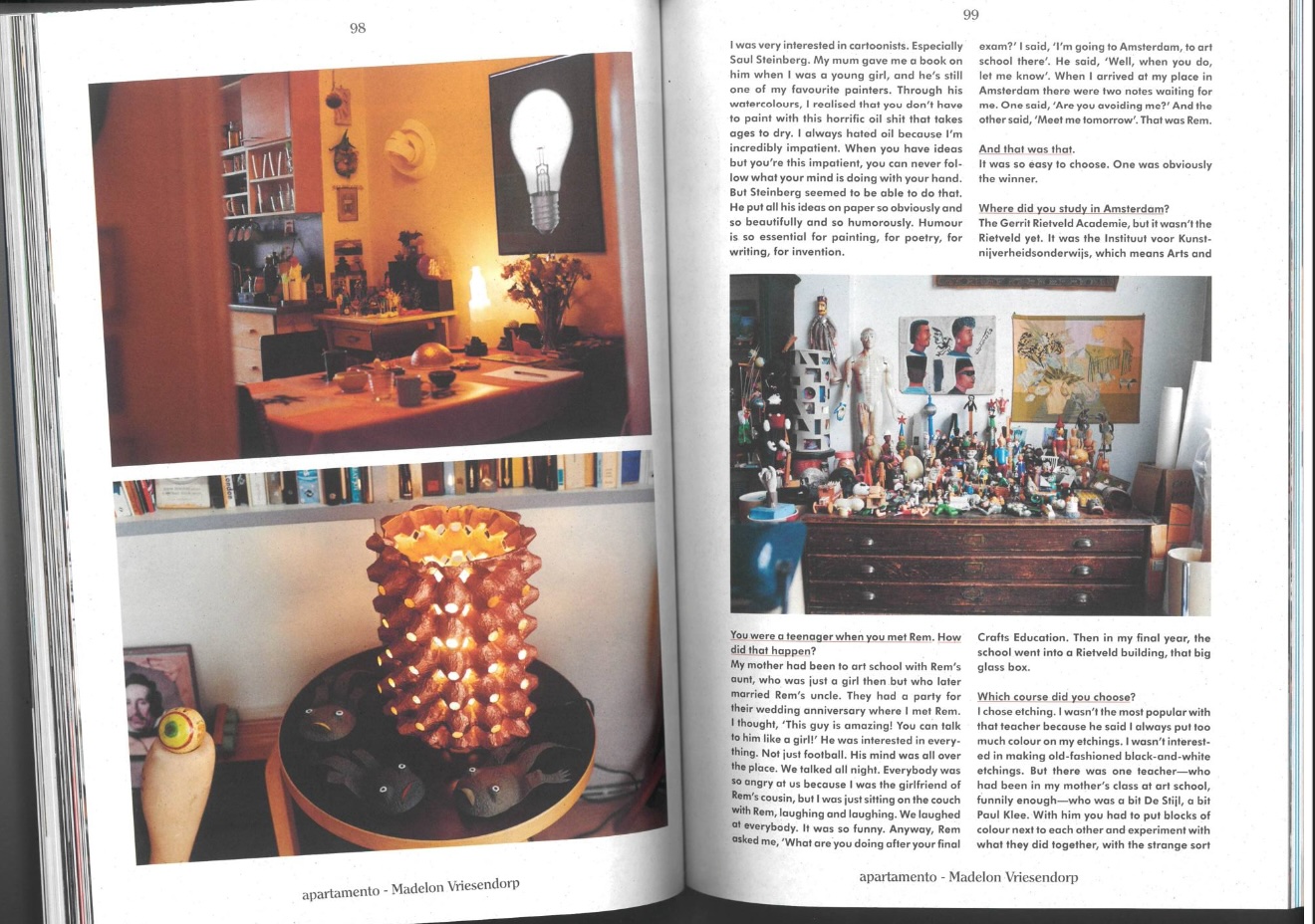
Fig. 3 - Apartamento Magazine, Issue #33
An authentic portrayal of people's lives at home is presented to us in the Apartamento Magazine. It aims to create a more personal feel to the people being interviewed, and the style of photography is often bright and captivating, for example in Issue #33, photography by Grace Ahlbom, the flash film photos encapsulate the warmth of the room and belongings likewise (Alegre, 2024). We get a sense of how people live, rather than focusing on the design or products of their home interiors, essentially creating an imaginative portrait through a photographic understanding of where they work, eat, sleep and create. Similarly, 'Berlin Living Rooms' (2019), by Dominique Nabokov (also published by Apartamento) is one book from a three-part series of photographs of living rooms - previously consisting of Paris (2002) and New York (1998). The interiors are carefully photographed, generating a consistent narrative and recognising her style of image taking. She notices things about the city that are then hinted at in the rooms she photographs. Nabokov used the rare Polaroid Colorgraph type 691 film, and her work reveals the extraordinarily varied living rooms of the city's inhabitants. Black and white 35mm film was used, which accentuates the attention to each object, as though the eye is not distracted by colour. She describes her work as a document, "No rearranging, no adding of bouquets, no use of flood lights. I approached the living rooms like the people I photographed, making a portrait as close to reality as possible" (Nabokov, 2019). It is important to consider however, that Apartamento is an expensive, luxury lifestyle magazine that is carefully curated and aimed at selling an aesthetic, so accordingly we should consider how authentic the imagery can be said to be.
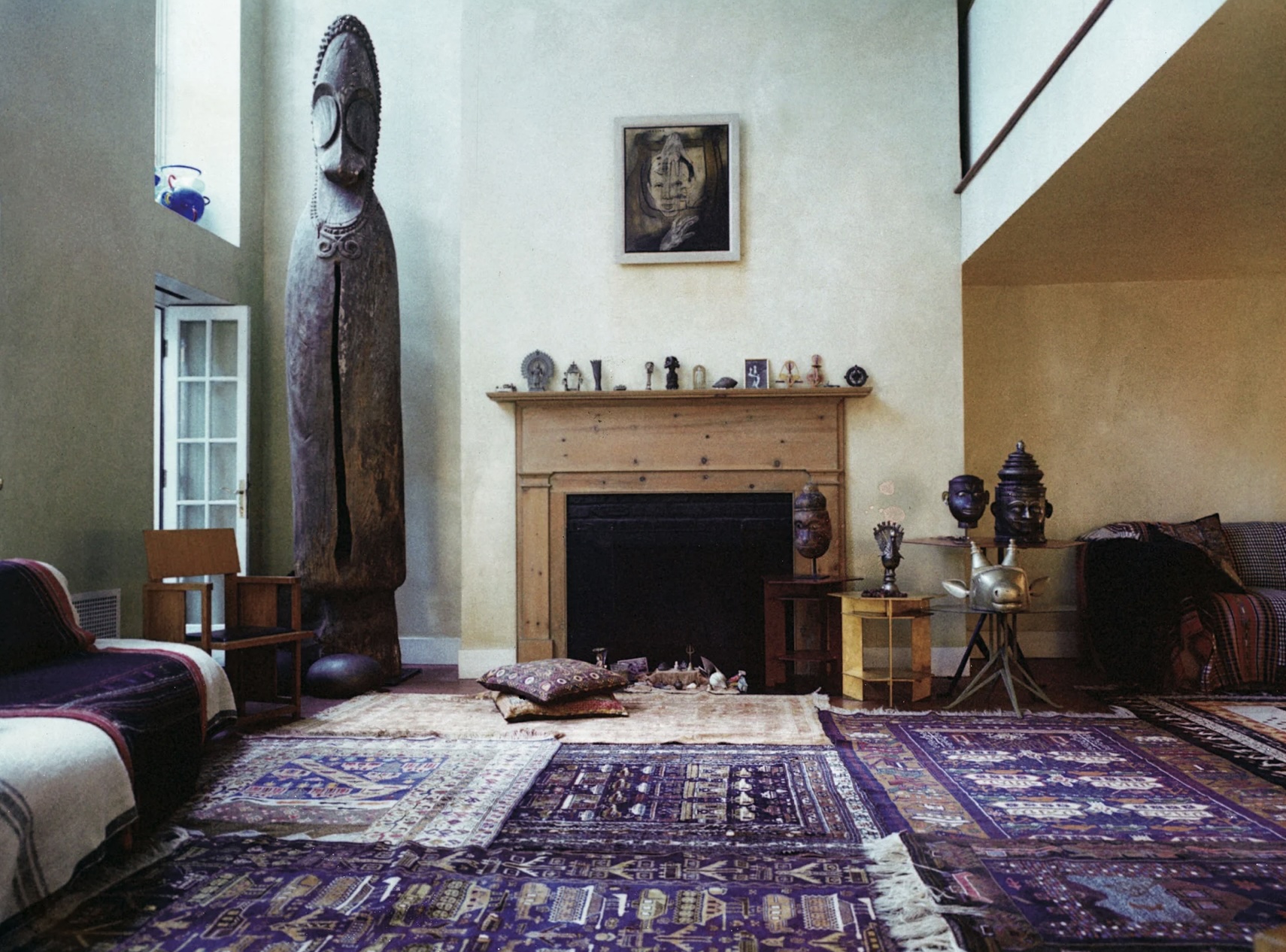
Fig. 4 - Berlin Living Rooms, Dominique Nabokov
A common concept surrounding photography is that the photograph asks for interpretation, and words usually supply it (Berger, 2013). Aiming to challenge this, the work of Martin Parr encourages viewers to interpret his images by considering the collective culture that links them, allowing that to speak for itself. Martin Parr has documented the ways we spend our leisure time, exposing very clearly the consumer culture in which we live. His images focus on the most saturated tourist sites, stemming from his student work experience as a staff photographer in a Butlins holiday camp in Yorkshire. His unique perspective on tourism branches from the microcosm of working-class life that he was presented by there (Prestel, 2015). His photographs capture the manic crowd behaviours of the modern tourist, often documenting the compulsive image capture of sightseers. He states in an interview in October 2014 that, "As well as being a collector of objects I'm a photographer, and that means you collect ideas or scenes, and you try and assemble these and make sense of the world. They are both forms of collecting" (Schilt Publishing, 2010). The characteristic features that underpin his approach is his social perspective, often with a hint of irony and humour, towards the middle and working class. Their consumer entertainment and leisure activities are quite directly showcased as what makes them typically 'British', with uncomfortably close-up photos that clarify his instantly recognisable comedic approach. Parr's images often draw inspiration from both amateur photography and mass media imagery, such as daylight flash and bright, saturated colours (Schilt Publishing, 2010). His book, 'The Non-Conformists' created alongside his wife, Susie Parr, documents the traditional ways of life in Hebden Bridge, a small town in West Yorkshire, in the 1970's. He photographed the chapel and farming communities over a period of 5 years, shedding light on the people that characterise the area and define the spirit of community there (Parr, 2013). The black and white photos captured inhabitants in their comfortable spaces, meeting up with others, suggesting the close-knit community they had. The way in which this work is presented really allows viewers to feel part of the community of the town and gives us a feel for their collective identity.
In the book 'Only Human, Martin Parr', Phillip Prodger (2019) analyses how Parr has "keenly observed how we each construct our identities - through the clothes we wear, the people we socialise with or the rituals in which we partake". His work highlights how understanding how national identity is more relevant now than ever. His work can often be more complex than it seems; he recently began using a telephoto lens to photograph from long distances at the beach, which enables him to go unobserved and to explore new ways of visually organising a scene from a distance (Prodger, 2019). A lot of his images feed into a system of capturing class - he photographs both wealth and poverty in similar ways. His photographs in the series "Luxury" (2009) are an exploration of how the wealthy spend their days at the races. Along with this, a large amount of his images express the art of buying and selling, which show the connections between consumer culture and identity.
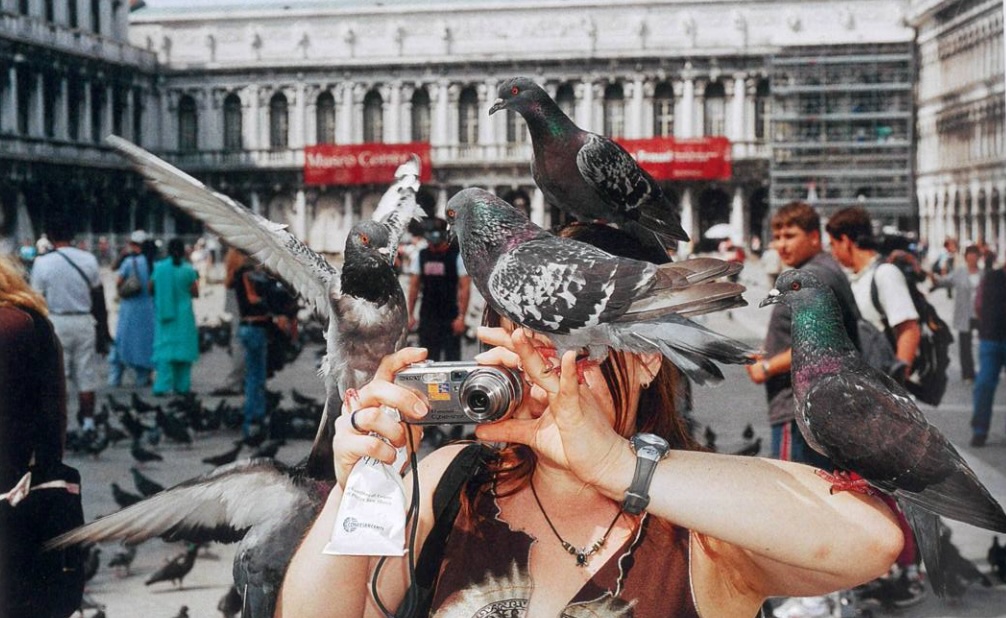
Fig. 5 - Martin Parr
Looking back on the photographs years later adds another layer of nostalgia and meaning, for example looking at Evans' images in 'Labor Anonymous' (2016) allow us to picture and get a sense of what life was like in the 1940's. He aimed to capture the decline of America after the Great Depression, as he was intrigued by the creativity the waste generated (Campany et al. 2016). His photographs were taken on a Rolleiflex camera (creating a negative of 6x6cm, which is far bigger than a usual 35mm negative), meaning he could capture passer-by's without looking directly at the subject, instead he looked down into a box held lower (Campany et al. 2016). The benefits of this type of camera compared to a bulky Graflex was that the shutter would go unnoticed in the street due to the quiet noise (similar to that of Martin Parr), and there would be no delay after the shutter release was pressed. His Cuban photographs explicitly show the dominance of subject over form, which explains the visual neutrality of almost all the images (which have been stripped of photographic effects). Due to many of the images having no centre, the viewer engages with the subject at the eye level of a passer-by, which was achieved by Evans integrating himself into the motion of the street with a subjective point of view (Evans & Mora, 1989).
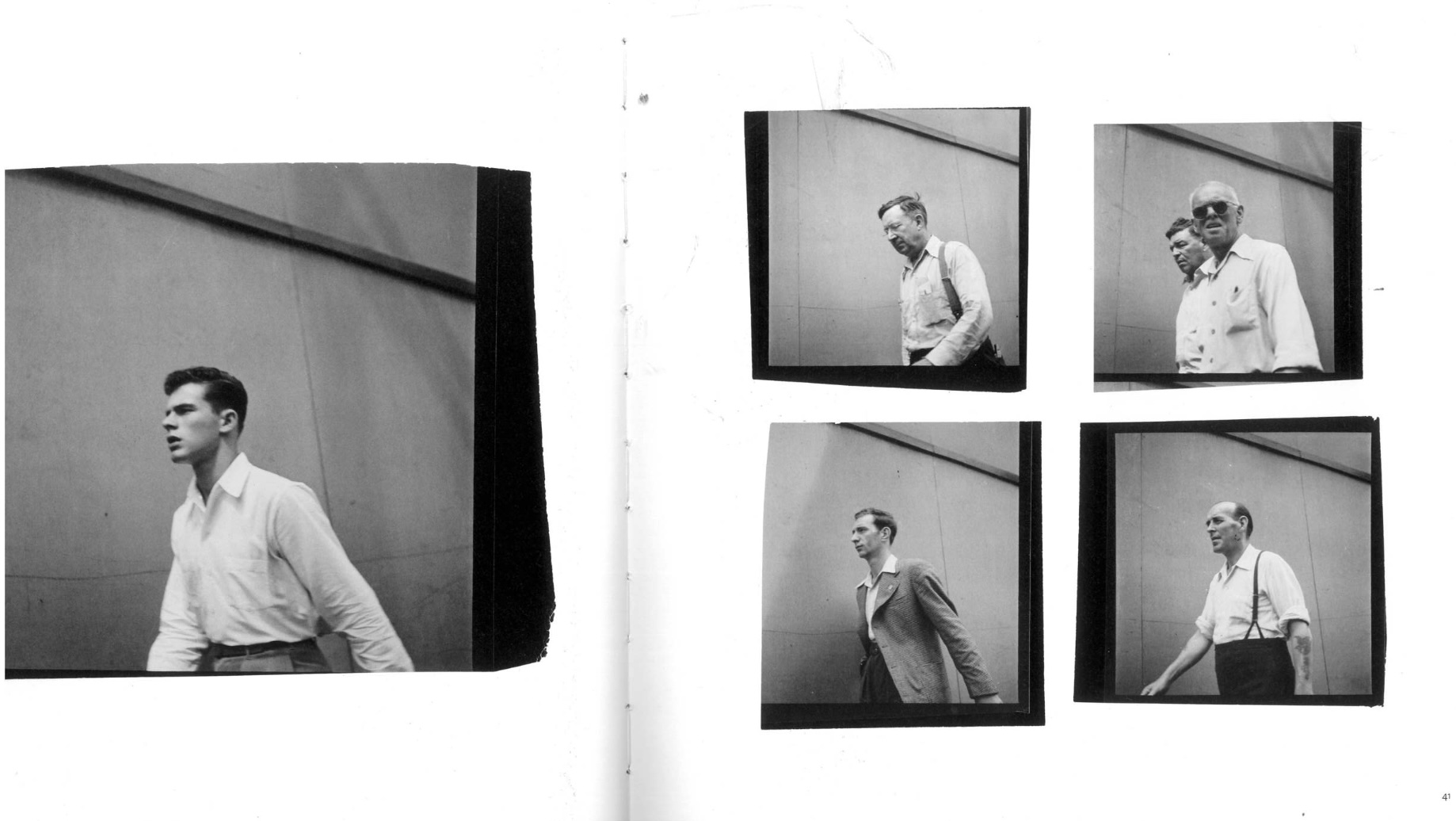
Fig. 6 - Walker Evans
Another example of a photographer's use of narration within portraiture-style imagery is Nick Waplington's 'Living Room' (1991). Waplington is a British artist and his first book, 'Living Room' (Aperture, 2024) provides an important depiction of 1980s working-class Britain. The original edition of Living Room documented the lives of friends, families, and neighbours on a housing estate in Nottingham over the course of a few years. Taken on film, the landscape and portrait images illustrate the everyday life of families, perhaps giving insight or relatability to what working-class family life was like during the time. His work is an interpretation of working-class life, giving glimpses of communal spirit and family life (Aperture, 1991). Waplington's photographs make something intimate public - we don't know anything about the families photographed, however we are left feeling as though we understand their dynamic within the household. The invisible nature of the images creates this intimacy, as though he isn't even there. His photos aren't necessarily about captured moments, they are more experimental and constantly evolving, commenting on each previous image. He sees the interest and simple pleasure in the untidy, chaotic, noisy life of being at home as a family on the weekends. Allowing the viewer an awareness of private life of a certain group of people can challenge the viewers preconceived idea of this group, asking them to imagine something wider than before, and allowing a more in depth, intimate idea to be spread.
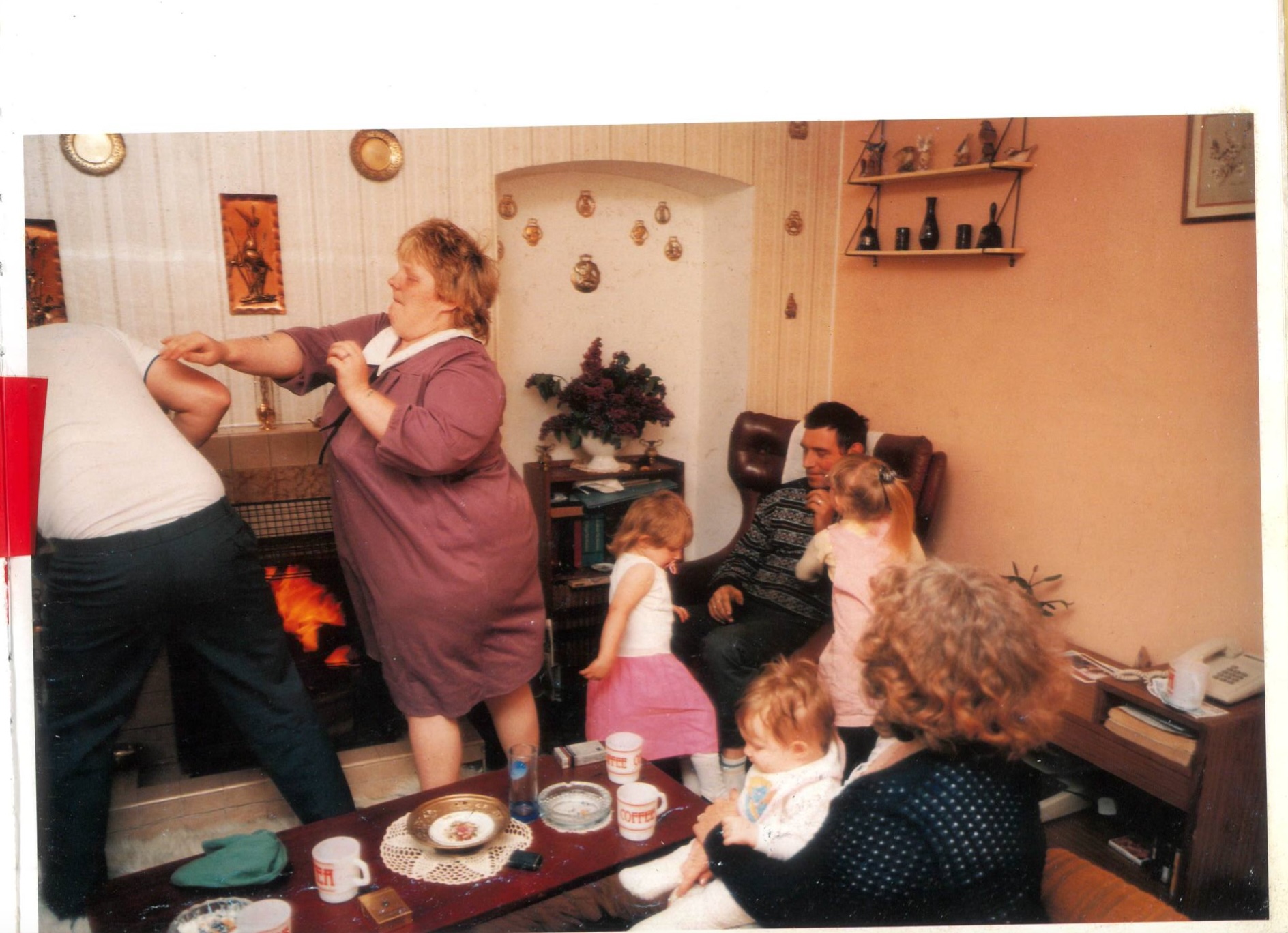
Fig. 7 - 'Living Room', Nick Waplington
Chapter 2: Is the Increasing Use of Personal Cameras Devaluing a 'Good Image'?
The potential of most of the western population owning a mobile device, with an incredibly accessible camera, has meant that photography has transformed from being a professional art form to a global practice. A way to consider this would be to look at tourism. People now feel the need to have reality confirmed and experience enhanced by photographs; within 'On Photography' (2008) Sontag states, "Today everything exists to end in a photograph". She also adds, "Whether or not you were there to witness the scene in the photograph, you experience it through a pseudo-presence" (Sontag, 2008). This explores the concept that we are all now addicted to this aesthetic consumerism of sharing images of the places we have been. Ultimately, having an experience becomes identical with taking a photograph of it, and participating in a public event comes more and more equivalent to looking at it in photographed form. This is potentially impacting the value of the work of professional photographers.
Furthermore, the ease at which we can learn to use a camera or editing software indicates a possible detriment towards the artistic practice of photography that students chose to go into. Photography is part of everyone's everyday life, so it could be argued why pay money to learn how to do it 'professionally', when the resources and knowledge could be available to you at a smaller cost and on your own terms. There is now an increase in photography becoming a self-employed 'hobby' of sorts, rather than it being viewed as a professional career. For example, in Liz Wells "Photography in the Digital Age" (2015), contributors discuss how the accessibility of photographic tools has led to an erosion of traditional career pathways in professional photography, with many practitioners now operating as freelancers (Wells, 2015).  After reading about the works of Walker Evans during the Great Depression (and other similar artist works), it was made clear that in the past, there was more a need for well-known photographers to be employed to capture images from across the world, aiming to gather a certain audience and maintain a specified meaning. Comparatively, today, the artistic world of imagery appears to be more welcoming to younger, less-qualified individuals. As a result, this supports the argument that the widespread use of cameras and an increase in media has positively impacted up-and-coming creatives, rather than professionally trained photographers (as they all end up with a similar level of exposure, despite the 'education' they have had).
New technology fosters and encourages integration and involvement. One could argue this aids exposure for the photographer and gives them a wider audience, yet it could also mean that their work blends into a large group of 'unnoticed' and un-credited art. It is indicated within 'The Medium is the Massage' that it is impossible to understand social and cultural changes of a location without a knowledge of the intentions of the media providing it (McLuhan & Fiore, 2008). This supports the view that the media we are exposed to has a huge influence on our viewpoints of the outside world, and we must have an understanding of the purpose behind the creation of the media before we fully trust the authenticity of what it is proposing.
Modern-day electrical devices are causing a serious dilemma between our claim to privacy and the community's need for interference (McLuhan & Fiore, 2008). The older, traditional methods of artistry (photography included) are severely threatened by new modes of instantaneous electric information retrieval. Alongside this, we have already reached a point where control of where an image finds itself, is out of the creator's hands. In the past, images would have taken months to reach their desired audience; from travelling to the specified location, capturing the scene, developing the image, and creating copies, then delivering the image to whomever it was intended to reach. Today, this process is instantaneous, meaning that a much higher volume of images can circulate. As stated before, this is a drawback to the value of each image, however, increases exposure of the artist's work. An example of the value of taking time to observe and as a photographer, place yourself within the work, is Hrair Sarkissian's series 'Last Seen' (2018-2021), which was exhibited at the Photographers Gallery. This series of photographs capture the space where people who have disappeared due to war were last seen at by their families and loved ones. The silence and stillness that embody the images is powerful in the hard-hitting emotions and memory that comes with these photographs. It gives us a sense of the empty space the missing people have left, and how their absence can be 'witnessed' and felt through the photographs. What is important is to consider how each image is filled with a personal history, rather than a worldwide history encapsulated under the blanket of 'war'. This reflection heightens the idea that there is a much more personal impact to war than a national one. Thoughtful documentation is embodied by each frame being embossed with the person's name and the year they went missing. This well demonstrates the power in placing yourself in a situation in order to create 'good' work, therefore suggesting that modern photography, taken in such spontaneous moments, without an in-depth prior idea of exploration, lacks definition and therefore any strength for change. If spread to the right audiences, photography can be used as a constructive political tool. Perhaps the value of a photograph is therefore where the image ends up, and not in the quality of the physical image. The strength of photography is likely to erode over time, as the exchange of photographic imagery becomes increasingly global, and more personal imagery circulates the photographic world.
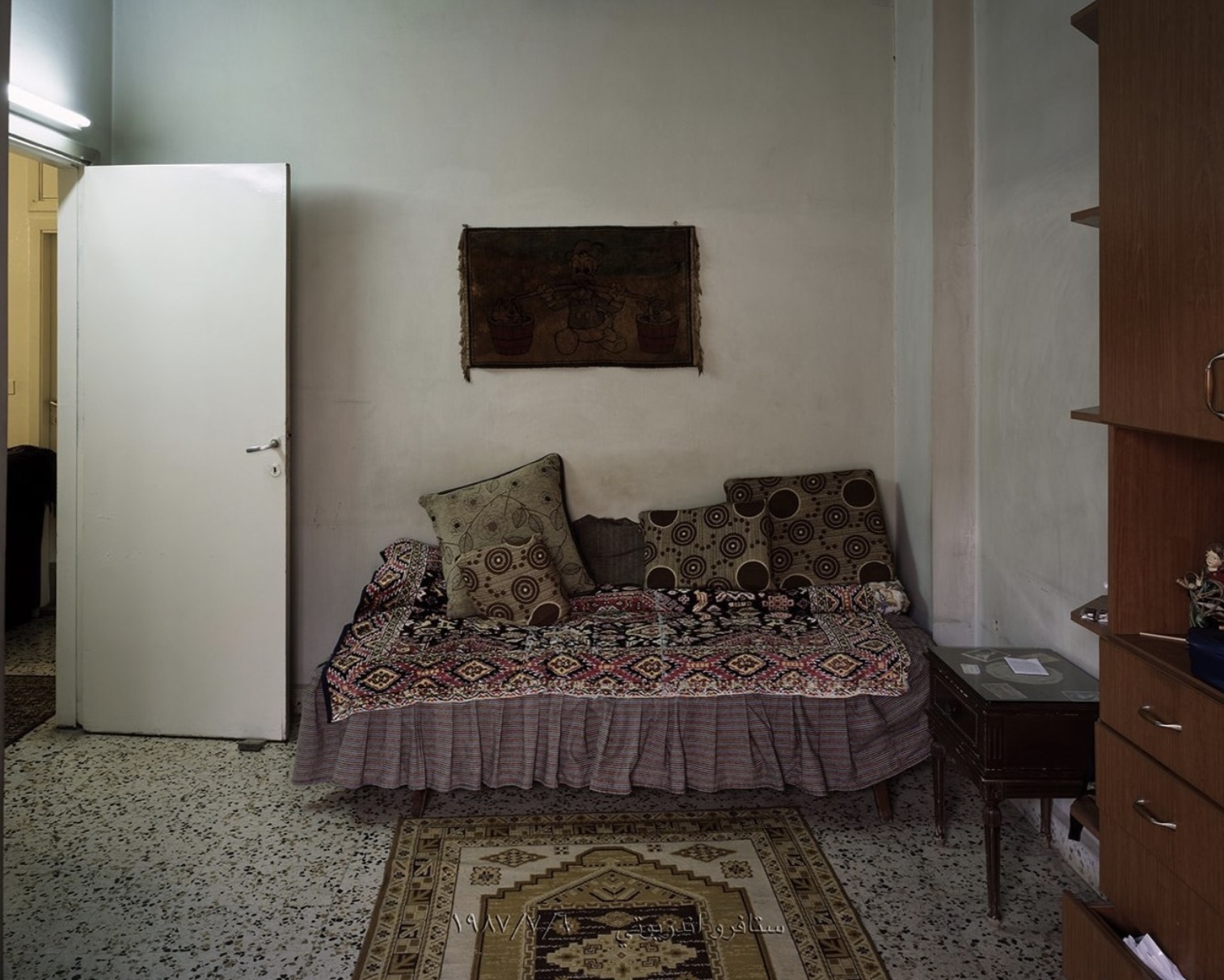
Fig. 8 - 'Last Seen', Hrair Sarkissian
With regards to imagery shaping our sub-conscious perception of people and places, advancements in technology have meant that our informational circle has widened far beyond the limited inner circle we once relied upon. As a result, character is no longer shaped only by our inner circle but by the whole world around us. Our opinions are now subject to the vast amounts of media we intake daily. Due to apps such as Instagram, sharing images has never been more accessible. Consequently, the influence that media has on society today far surpasses that of the 1900's (McLuhan & Fiore, 2008). One should also consider the purposeful restrictions to certain media, once again taking charge over what we consume online.
The photography of Walker Evans serves more as historical artefacts - he extracted elements from the present that future generations would understand as fundamental. He sought to capture advertising, architecture, the clothes that people wore, and major events such as the evolution of the car. This highly contradicts photography today, as each and every person can record anything and everything, subsequently weakening the meaning and individuality of each photograph taken. As examined in John Berger's 'Understanding a Photograph', a photograph is a result of the photographer's decision that it is worth recording that this particular event or object has been seen. If everything that existed were continually being photographed, every photograph would become meaningless (Berger, 2013). This made me consider the question of what gives a photograph meaning? Most sources on photography talk about how a 'good photograph' is a well-composed one, however within this book, Berger states that the formal arrangement of a photograph explains nothing. Photography most often works towards an intended meaning or a course of action, as such in 'Last Seen', aiming to raise awareness of the harsh realities of war across the world. 'Good' photographs are limitless in interpretation and endlessly stimulating, rather than working towards closure. They direct the viewer towards an intended trail of thought, however are never finite or conclusive in interpretation. Hito Steyerl's 'In Defense of a Poor Image' (2009) states that "The poor image tends towards abstraction: it is a visual idea in its very becoming. It is about its own real conditions of existence: about swarm circulation, digital dispersion, fractured and flexible temporalities. It mocks the promises of high resolution and pristine optics. It is one of the visual products of a distributed aesthetics" (Steyerl, 2009) Here, Steyerl implies that the "poor image" is not bound by traditional aesthetic values or definitive meanings-it is open, circulating, and always in flux. This argues that compelling images provoke thought and remain open to interpretation, rather than closing meaning off.
Chapter 3: How Has the Function of Photography Changed in the Digital Era
In 'Understanding a Photograph, Berger (2013) suggests that every photograph is a "means of testing, confirming and constructing a total view of reality" (Berger, 2013). Unlike any other visual image, a photograph is not a rendering, or an interpretation of its subject, but a physical trace of it.
The industrialisation of camera technology has meant that all experiences are translated into images nowadays. Before, only photographers and the wealthy sector of society would have access to cameras. Greatly contrasted today, a wider view of the world is put on display, captured through each and every person's individual lens: their eye. When photography was invented, it had no clear social use, it was an unprovoked artistic activity, however without being given the title of 'art'. Only when the industrialisation of photography arose, was it then applied as art. Photography has consequently become a mass art form (Sontag, 2008).
Walker Evans work was inspired by the photographer of Old Paris, Eugene Atget, who captured the Parisian streets, storefronts and architecture. His images focused on the nooks and crannies, that usually went unnoticed, and the inhabitants of the city (Campany et al. 2016). Influenced by Atget's photography, Evans' acute attention to the details of everyday life, both rural and urban, and to the people going about their lives greatly contributed to establishing the visibility of twentieth century American culture (Campany et al. 2016). Today, with such a widespread range of images available, we don't credit the origin of the image like we used to. Images are circulating the online database at such frequency that consumers don't think twice about who might have created it and whether it's purpose was to be shared in this manner. Therefore, one could argue that, with the mass of images we are exposed to, we aren't as aware as to what is shaping our perceptions of places or people. This infiltrates into the idea of the world becoming increasingly 'smaller' and more interconnected. Reading 'The Medium is the Massage' by Marshall McLuhan and Quentin Fiore made me consider the time-space convergence happening in the world today; describing the decrease in travel time between location due to technological and social advancements in communication and transportation. This affects people's sense of place and belonging, as they feel well connected to places they haven't been, and therefore have opinions on things they haven't witnessed first-hand (McLuhan & Fiore, 2008). Due to the rise in smartphones, and equivalently camera usage, we receive images from all across the world. This could be argued as both a positive and a negative, as it allows us to gain a better understanding of other ways of living, and helps the interconnectivity, yet it also devalues each image we are seeing. One could also consider this idea with the value of the medium in mind. We are being exposed to these images digitally; online rather than in person. This in itself can completely alter the meaning we get from the photograph. Printed images, for example film photos, exhibited in a public space will give a different impression to a viewer, compared to scrolling past an image on Instagram for example, stopping only for a few seconds to study what we are seeing.
Evans aimed to avoid any obvious presence as the author in his photographs: "Things take on a richer appearance and have a deeper effect when they are left untouched, as it were, in their own reality" (Campany et al. 2016). In much photography today, the photographer is the director of what we are viewing, they can dictate our eyes and therefore what we think of what we are witnessing. Photography can give people a view of the past that they were not part of, and essentially furnish evidence. However, despite the presumption of accuracy that gives all photographs authority and interest, the work that photographers do can't always be deemed as 'truth' (Sontag, 2008). This sparks a bigger question of accuracy and reliability within documentary photography specifically. For example, in a recorded interview from 1973, Walker Evans gave an account of the relationship of truth to photography. He was asked, "Do you think it's possible for the camera to lie?" and he replied, "It certainly is. It almost always does" (Campany et al. 2016). His interviews indicate a desire to tell the reality of his time and place in the same way his literary heroes (for example Gustave Flaubert) had told of their worlds in their novels. As humans, we have naturally influenced opinions, and the photographs being taken will be subconsciously influenced by those beliefs. Evans ensured his work did not have this unintentional expression of opinion.
One could argue how the advance in volume of media, specifically imagery, that we are now exposed to is unnecessary and invasive. Do we really need to see how the 'other' lives and goes about their lives? Or does it provide us with a wider knowledge of the world around us, helping us better understand our own routines and collective identity? The wider scope of visual understanding we now consume, and aren't entirely in control of, is encompassing our everyday lives. Is this a good thing?
All media ultimately has control over us, the persuasive nature of the content we consume has the power to alter our opinions and ways we express ourselves depending on what we see of the world around us. We speak, for instance, of 'gaining perspective' (McLuhan & Fiore, 2008), yet is this just society becoming more and more easily persuaded by a fabricated collective perspective? The depth of social, cultural and political publicity that photography can examine leaves little need for much else in terms of media. We are now able to follow what is going on across the world from the comfortability of our own homes.
Conclusion
The photography of Adrienne Salinger and Dominique Nabokov capture a more inwards, personal take on identity and expression; where the home is a chosen environment in which one can express themselves. In a different manner, the photography of Walker Evans and Martin Parr focuses on details within a larger proximity of space, centring in on the people in specific locations rather than the objects or surroundings, as such of Nabokov in 'Apartamento' (2024). Martin Parr specifically investigates what it means to be British in an international context and reflects on a shared cultural and social history that binds us together in moments of change. Questions of social status often arise from the frame, as his images clearly show expression through clothing and the surrounding scene. Questions surrounding the idea of identity and self-expression are the most persistent within photography as a practice. Traditionally, a portrait is a representation of a particular person (Tate, 2024). Based on my analysis in this essay, I believe that the clarity of this definition can be expanded to encapsulate our beliefs and environments around us; there is so much more to our identity than just our simple beings. People portray inner thoughts and feelings through their gestures and expressions, along with what they choose to surround themselves with, whether materialistic or spiritual. Portraits such as those taken my Adrienne Salinger in 'Teenagers in their Bedrooms' (2016) or Grace Ahlbom in Apartamento magazine capture identity in a more complex way; through insight into personal space. Grayson Perry states in 'Only Human, Martin Parr' that, "We are all subconsciously scanning culture continuously for things that validate us; experiences that are in tune with how we already feel and reinforce who we think we are" (Prodger, 2019). Through photographic imagery, we can pinpoint our own character within the wider social constructs of class, gender, heritage and nationality - which are the aspects of society we are subconsciously driven by - we automatically place ourselves into a group based on our surroundings and upbringing.
John Berger (2013) argues that a photographed image is never a mere record of an event; it is deeply embedded within a cultural construction. As he explains, "It belongs to a specific social situation, the life of the photographer, an argument, an experiment, a way of explaining the world, a book, a newspaper, an exhibition". Relating this to contemporary life, Marshall McLuhan (2008) explores in 'The Medium is the Massage' that in a constantly changing world, our perspectives remain short-term and influenced by new technology and media, which demand an inconsistent outlook (McLuhan & Fiore, 2008). Phillip Prodger (2019) further reflects on this, expressing that, "Identity itself is a complex and elusive subject. In the museum of our minds, we may think of ourselves one way, but we are not always the most reliable judges of our own character".
The omnipresence of cameras conclusively suggests that life is composed of moments deemed worthy of being photographed. Once these moments pass, the photograph remains, granting the image a sense of timelessness, as Susan Sontag (2008) discusses in 'On Photography'. Photographic documentation - whether capturing social hierarchies or intimate personal spaces - has always run parallel to portraiture. The subject or space depicted reflects the stylistic and compositional choices of the photographer, revealing layers of social narration (Sontag, 2008). Older portraits often directly convey specific social characteristics, while contemporary imagery tends to make this distinction less visible, hidden by consumerism and materialism (Berger, 2013). Photographers such as Martin Parr highlight this complexity through visual critiques of modern life. At the same time, more intimate photographic documentation, such as the works of Nick Waplington and Adrienne Salinger, invites viewers to gain an 'inside' perspective on what initially appears to be external impressions. These evolving approaches to photography illustrate the dynamic interaction between identity, society, and the medium itself.
The power of the image to create a social narrative is more prevalent now than ever, with the volume of media that circulates online today, meaning that the photographer holds more power than before in controlling what the viewer is witnessing. These advancements in technology means that we are now able to witness a wider grasp of society and envision varying cultural behaviours and social constructs. Naturally, this presents both benefits and drawbacks. The ease at which imagery can influence public perception is subconsciously degrading our value of a 'good image', as we are exposed to such a vast array of media every day. This potentially impacts the work of professional photography due to it being lost in amongst countless 'similar' images. The meaning behind imagery varies widely depending on the artist behind the work and the intention. Alongside this, it changes subject to the viewers preconceived ideas and perceptions, suggesting that the function of photography is forever an interchangeable concept.
Bibliography
Alegre, N, Sosa, O, Velardi, M. (2024). Apartamento Magazine, Issue #33
Avedon, R, Berger, J, Waplington, N. (1991). Nick Waplington's Living Room. Cornerhouse Publications, Aperture Foundation, New York
Bajac, Q. (2010). Parr by Parr. Schilt Publishing, Amsterdam
Barthes, Roland. (1977) The Rhetoric of The Image. Fontana Press
Belk, R. (1988). Possessions and The Extended Self, Vol. 15. Oxford University Press. [online] Available at: https://www.jstor.org/stable/2489522 [Accessed 14 Nov. 2024]
Berger, J. (2013). Understanding a Photograph. Penguin Books Ltd, London
Campany, D, Liesbrock, H, Thompson, J.L. (2016). Walker Evans, Labour Anonymous. Germany
Cheroux, C. (2017). Walker Evans. Paris
Delgado, S. (2009). Dziga Vertov, Man with a Movie Camera and the Phenomenology of Perception. Film Criticism. [online] Available at: http://www.jstor.org/stable/24777403 [Accessed 7 January 2025]
Fulleylove, R. (2016). Adrienne Salinger, Teenagers in Their Bedrooms. It's Nice That. [online] Available at: https://www.itsnicethat.com/articles/adrienne-salinger-teenage-bedrooms-90s-120416 [Accessed 6 Oct. 2024]
Furhana, T. (2014). Relationship, Issue #4. Journal of Creative Pursuit (JoCP)
McLuhan, M. and Fiore, Q. (2008). The Medium is the Massage. Penguin Books Ltd, London
McLuhan, M. (1962). The Gutenberg Galaxy: The making of typographic man. Toronto: University of Toronto Press.
Nabokov, D. (2024). Berlin Living Rooms. Apartamento Publishing. [online] Available at: https://www.apartamentomagazine.com/product/berlin-living-rooms-dominique-nabokov/ [Accessed 20 Nov. 2024]
Parr, M. and Parr, S. (2013). The Non-Conformists. Aperture, New York
Parr, M. and Walker, I. (1986). Resort, Photographs of New Brighton. Dewi Lewis Publishing, Stockport
Prodger, P. (2019). Only Human, Martin Parr. Phaidon Press Ltd, National Portrait Gallery, London
Ratomir. (2022). How Urbanisation is Changing our Social Fabric. [online] Available at: https://www.ratomir.com/blog/how-urbanization-is-changing-our-social-fabric/?utm_source=chatgpt.com [Accessed 2 Nov. 2024]
Salinger, A. (2016). Teenagers in Their Bedrooms. [online] Available at: https://www.itsnicethat.com/articles/adrienne-salinger-teenage-bedrooms-90s-120416 [Accessed 6 Oct. 2024]
Sarkissian, H. (2024). Last Seen. Photographers Gallery. [online] Available at: https://thephotographersgallery.org.uk/dbpfp-2024-hrair-sarkissian [Accessed 13 Oct. 2024]
Sontag, S. (2008). On Phoptography. Penguin Books Ltd, London
Steyerl, Hito. (2009) In Defense of the Poor Image. e-flux, no. 10. [online]. Available at: https://www.e-flux.com/journal/10/61362/in-defense-of-the-poor-image/ [Accessed 5 December 2024]
Wells, Liz. (2015) Photography in The Digital Age. 5th edition, Routledge
Yee, L. (2015). Magnificent Collections: The Artist as a Collector. Barbican Art Gallery. Prestel, London
List of Figures
Figure 1 - Turbett, V. (1981). New Romantics, London. Cafe Royal Books. [online] Available at: https://www.caferoyalbooks.com/shop/p/virginia-turbett-new-romantics-london-198081 [Accessed 27 Nov. 2024]
Figure 2 - Salinger, A. (2016). Teenagers in Their Bedrooms. [online] Available at: https://www.itsnicethat.com/articles/adrienne-salinger-teenage-bedrooms-90s-120416 [Accessed 6 Oct. 2024]
Figure 3 - Alegre, N, Sosa, O, Velardi, M. (2024). Apartamento Magazine, Issue #33
Figure 4 - Nabokov, D. (2024). Berlin Living Rooms. Apartamento Publishing. [online] Available at: https://www.apartamentomagazine.com/product/berlin-living-rooms-dominique-nabokov/ [Accessed 20 Nov. 2024]
Figure 5 - Prodger, P. (2019). Only Human, Martin Parr. Phaidon Press Ltd, National Portrait Gallery, London
Figure 6 - Campany, D, Liesbrock, H, Thompson, J.L. (2016). Walker Evans, Labour Anonymous. Germany
Figure 7 - Avedon, R, Berger, J, Waplington, N. (1991). Living Room. Cornerhouse Publications, New York, Aperture Foundation
Figure 8 - Sarkissian, H. (2024). Last Seen. Photographers Gallery. [online] Available at: https://thephotographersgallery.org.uk/dbpfp-2024-hrair-sarkissian [Accessed 13 Oct. 2024]