
How can community-based design help combat the closures of Grassroots Music Venues (GMVs)?
Abstract
Grassroots music venues (GMVs) are small music venues that play over 144 live music shows across the year and are essential for the UK's live music industry to keep running (Music Venues Trust, n. d). In recent years GMVs have faced mass depletion due to numerous varying factors, gentrification being an umbrella cause. Gentrification is described in The Oxford Dictionary as "the process of improving an area of a town or city so that it attracts people of a higher social class than before" (Oxford Advanced Learner's Dictionary, n.d.). Being defined as an "improvement" to attract people of a "higher social class than before" suggests a form of cultural erasure, removing one form of culture and tailoring it to wealthier tastes. Over the last decade, South East London has seen mass gentrification, which has in turn led to numerous venues having to close or be at risk of closing, and a loss to local subcultures. For venues within South East London, gentrification generates a plethora of issues such as noise complaints, rising rents, licensing issues, and a loss of community and culture.
I will be exploring how community-led design has helped to save GMVs in South East London, by examining three venues: The George Tavern, The Windmill, and The Ivy House. These GMVs have all overcome threats of closure due to gentrification, and design has been used in various ways to amplify their campaigns. Design has been an effective method of spreading awareness to GMV closures and reaches a wider demographic through mediums such as photography, posters, and merchandise. In response to this research question, I have organised an event called 'S.O.S: Save Our Stages' at The Old Dispensary in Camberwell, a GMV in South East London. The S.O.S. gig will utilise the design methods explored within each campaign in this dissertation to determine which stratagies other endangered GMVs should implement in their own campaigns.
Introduction
Grassroots music venues (GMVs) are a vital component, not only to nightlife but also in generating subcultures and experimental approaches to music and art. They are small, often rundown, yet they have a distinctive charming personality. Whether it is through graffiti-ridden walls, damp smells of beer and sweat or the avant-garde performers drowning out any remnants of conversation; these are the characteristics most comforting to local gig-goers (Thompson, 2021, p. 13). Design and music have a symbiotic relationship, which can be used as a tool to save endangered GMVs. Using targeted experimental approaches and referencing music iconography, enabled masses of British household-named artists to rise through grassroots venues such as Oasis, Arctic Monkeys and Adele. They allow artists to grow and hone their skills, expand networks and give them the freedom to experiment in their craft; however, they are rapidly diminishing in London and the rest of the UK.
In 2023 GMVs in the UK faced dire closures with 960 venues being cut to just 835 by the end of the year: that's an average of 2 GMVs closing every week (House of Commons Culture, Media and Sport Committee, 2024). These closures are brought with a grave dystopic future for British music, without GMVs young artists lose the opportunity and accessibility to perform in their local communities, resulting in a huge loss in culture. A major factor in the closures of GMVs is gentrification, which causes a blanket of issues for smaller venues such as: rising rents, noise complaints, licensing issues, and forced expulsion of local cultures. Gentrification occurs when an area is seen as trendy and causes an influx of regeneration, often involving demolishing longstanding buildings and replacing them with private flats; and pushing out deep-rooted working-class communities (Marsh, 2016). London, specifically South East London, has seen mass gentrification in the last decade in areas like Brixton, Hackney and Lewisham. At the same time, South London has seen a rise in its alternative music scene with a flourishing arts community, which ironically attracts gentrification masked by "artwashing".
This writing will delve into three endangered South East London GMVs: The George Tavern, The Windmill and The Ivy House. These venues have all come under threat due to gentrification in some form, and have used different aspects of design to enhance their campaigns: for instance, experimental typography, photography and branding. Community-based design is an integral way of targeting and communicating with specific audiences and can be used as a tool to combat GMV closures by connecting with local audiences through eye-catching visuals and using music iconography. To support this research, I will be putting these design methods into practice, by organising a gig to raise awareness for GMVs and using the same design tactics as these case studies.
Chapter 1: Save the George Tavern
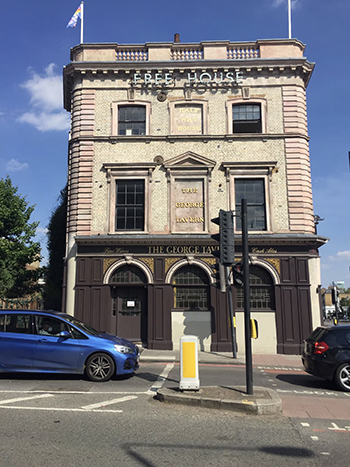
The George Tavern (Forster, n.d.)
The George Tavern is a leading Grassroots Music Venue (GMV), run by artist Pauline Forster, and has faced numerous threats of closure due to gentrification. From 2007 to the present day; Forster has opposed around 300 development plans (Kelly, 2023). A realised development plan was Botanical Lofts, a modern, clean-aesthetic, luxury apartment building adjacent to The George Tavern. IPE Developments alongside Tower Hamlets Council built Botanical Lofts; it represents East London's rising gentrification and caused concern for Forster. The new flats would result in an abundance of noise complaints leading to a forced closure (Kelly, 2023). Botanical Lofts' clean aesthetic contributes to gentrification's forced expulsion of alternative and expressive aesthetics (Deptford is changing, 2020), which The George Tavern characterises and celebrates. If The George Tavern were to close, it would be a damaging loss to the local community, forcing out years of heritage and cultural arts as it is "a beacon for both emerging and established artists" (Forster, n.d.). To prevent this, Forster fought for a 'Deed of Easement': a legal document that protects The George against detrimental noise complaints from tenants in Botanical Lofts (Forster, n.d.). However, this specific document only protects The George from Botanical Lofts specifically and does not include any other new developments. In this situation an 'Agent of Change' policy is required to protect standing GMVs from a new property development; as it "puts the responsibility for noise management measures on the 'agent of change' i.e. the incoming individual or business" (The Mayor of London's Music Venues Taskforce, 2015). This is vital for a GMV to survive in newly gentrified areas because it will reduce noise complaints and prevent licensing restrictions from being put on smaller venues. These are all contributing factors of gentrification and are the leading issues as to why GMVs are closing. To raise awareness of these issues Forster created the 'Save The George Tavern' campaign which has been running since 2008, and used various design methods and strategies to excel the campaign over time.
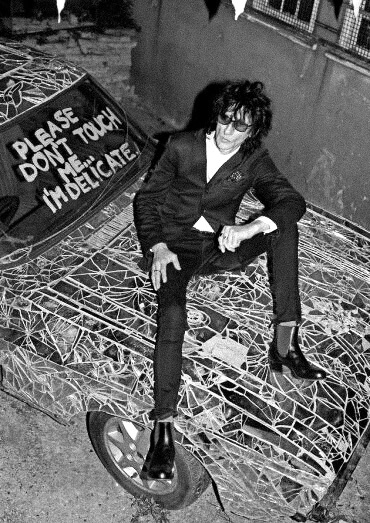
John Cooper Clarke with 'Dog On' Pauline Forster 'Dog On' (The George Tavern, n.d.).
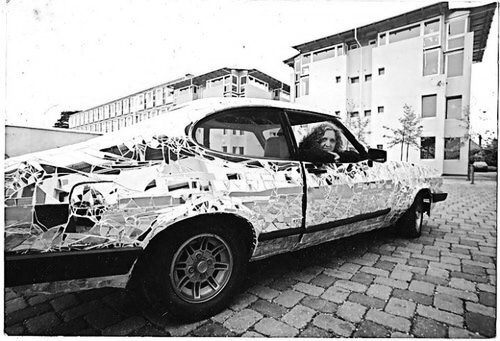
(The George Tavern, n.d.).
As an artist, Forster herself has effectively led the 'Save The George Tavern' campaign; from designing and making handmade t-shirts worn by high-profile celebrities to ephemera from past guerrilla stunts. 'Dog On' could be considered one of the first artefacts for the 'Save The George Tavern' campaign, although it was performed and made before Forster owned the venue. 'Dog On' was a guerrilla performance piece conducted in 2002, in which Forster camped outside the Tate Modern during their first three opening days in a mirrored mosaic car. This was to reject the rising elitist British art scene and revert attention to new 'breaking' artists. The guerrilla aspect of the campaign drew mass media attention and controversy which has made the bejeweled car synonymous with a punk attitude and a symbol of anarchic justice. After 'Dog On', the mirrored car resided within The George Tavern's beer garden until 2011; and celebrities such as punk poet John Cooper Clarke and singer Grace Jones have posed with it , to raise funds for The George Tavern's campaign (The George, n.d). By attracting attention from a range of celebrities 'Dog On' manifests itself within fan culture, reaching out to wider communities and broadening the spread of the campaign. The presence of 'Dog On' in The George Tavern's garden as part of the 'Save The George Tavern' campaign, expresses the history and authenticity of the venue itself to its loyal audience. It has also developed a new meaning beyond its original intention of rejecting elitist art scenes, to now rejecting gentrification and the elitist systems that follow it.
Following 'Dog On', The George Tavern has released numerous lines of t-shirts in a bid to raise funds and bring awareness to the cause of saving the venue over the years. There were a few limited edition runs, featuring artwork by Pauline Forster that the alcohol brand Jack Daniels sponsored. However, the most famous run of t-shirts was released by The George themselves, with the phrase 'Save The George Tavern' in simple bold type. Released in 2008, the t-shirts were seen on countless A-list celebrities including Amy Winehouse and Kate Moss. Winehouse recommended that Forster produce t-shirts, countering plans conducted by Swan Housing Group to demolish Stepney's Nightclub, the building adjacent to The George Tavern (Christiansen, n.d.). Built during the 1970s, Stepney's Nightclub had a huge cultural impact on the arts, notably the band Pulp used Stepney's iconic rainbow dancefloor for their music video for 'Common People'. The building was derelict since 2005, which prompted Swan Housing's first proposal to turn the space into luxury flats in 2007 (Saini, 2007). When discussing the controversies surrounding the luxury flat development, a Swan Housing Group representative stated, "I don't see that it has any cultural value" (Saini, 2007) showing disregard for the cultural significance of the venue. This is emblematic of how gentrification pushes out long-standing community and cultural venues, without understanding the loss to not only local community, but to the development of music as a whole. . Demolishing and re-gentrifying the Stepney area by building luxury flats adjacent to The George would have caused devastation, like the Botanical Lofts case, generating noise complaints and leading to licensing issues, expelling the local arts community and creating a detrimental hit on London's grassroots music scene.
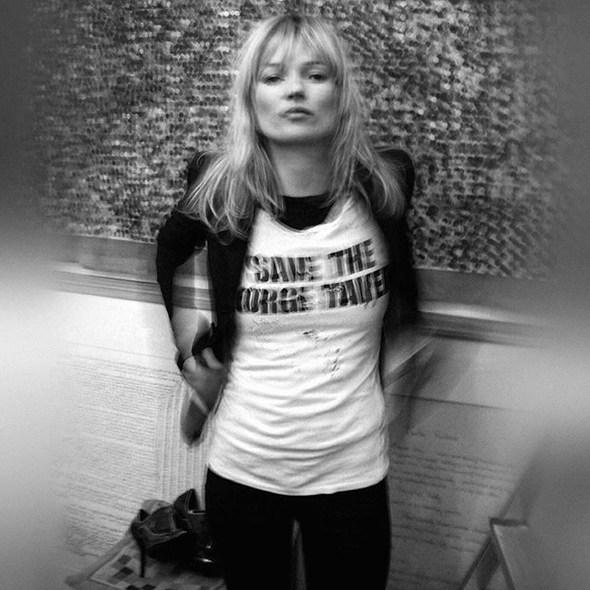
Kate Moss pictured with The George Tavern GQ magazine featuring Charlie Heaton
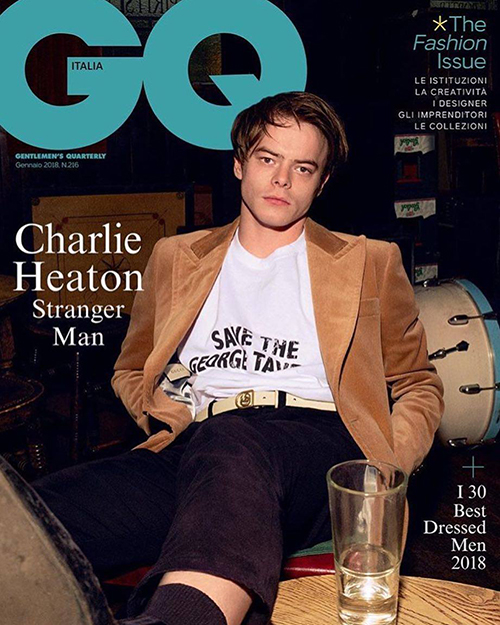
T-shirt (The George Tavern, n.d.). (GQ Magazine, 2018).
The space that was Stepney's Nightclub was used by Forster and The George Tavern as a function room in the first few years of the pub running, despite being owned by Swan Housing Group; resulting in the initial 'Save The George Tavern' campaign (Christiansen, n.d.). The bold san-serif typography on the 'Save The George Tavern' campaign t-shirts is eye-catching, leading the viewer to focus on the messaging rather than the design of the t-shirt. The T-shirts were printed in Brick Lane by a friend of Forster, which embellishes them with a passion for supporting London's creative community. Keeping the designing and printing within the local area re-enforces the wider impact of grassroots venues and The George's strong links with East London. To gain publicity, Forster used The George's celebrity regulars to model the t-shirts which included Kate Moss, Georgia May Jagger, and Louis Theroux. Amongst the celebrity traction, the bold type design on the t-shirts keeps the message at the centre of the campaign, bringing the context to the forefront rather than the famous faces attached. The simple design keeps authenticity within the messaging which could easily be lost with celebrity endorsements. Speaking on this, Forster states, "Unfortunately, in the way the world works, these celebrity endorsements are crucial to getting the press" (Christiansen, n.d.). This suggests an unfortunate, but at times useful, symbiotic relationship between celebrity culture and generating public and media interest for social and political campaigns, as in some cases genuine interest can be lost.
Over recent years the campaign t-shirts have become an A-list fashion staple possibly removing or reducing the political context behind the t-shirt and turning it into a trendy symbol for celebrity-driven consumerist culture. In 2018, a decade after the 'Save The George Tavern' campaign started, the text-based t-shirt starred on the cover of GQ magazine, modelled by Stranger Things star Charlie Heaton (Christiansen, n.d.). Although the issues The George Tavern has faced over the years are longstanding, the t-shirts being used as a fashion statement rather than a political one could be seen as glazing over the real issues behind the campaign. These being gentrification and its subsequent consequences, sanitising the t-shirt's original meaning represents the effects of gentrification. Celebrity culture being a running theme throughout this campaign could also be feeding this issue, parallel to gentrification flourishing in'trendy' areas from influencer culture, and favouring wealthier communities over longstanding ones (Heide, Nguyen Ajslev, 2016). But without celebrity endorsement, the question posed is to wonder what The George's fate would have been. Most GMVs don't benefit from celebrity backing to gain publicity and awareness for their campaigns, which often go unnoticed and underfunded, thereby triggering harmful closures.
Undoubtedly one of the main reasons the campaign succeeded in keeping The George Tavern in business was the t-shirt production and the celebrity endorsements surrounding it. Through simple messaging, it managed to keep authenticity behind the campaign despite the t-shirts being detached from their original context over the years. A major saving grace for The George is the fact that landlady Pauline Forster is an artist, strengthening the design and community surrounding their movement. 'Dog On' could be considered to be the seeds that saw the 'Save The George Tavern' campaign grow and succeed, attracting celebrity and media attention and making Forster herself a household name within guerrilla public art and London's art community. All of these contributing factors can be attributed to how design can be used to support GMV's protection from closure campaigns. However, most venues do not have access to this A-list celebrity culture but the basis behind the celebrity-focused campaign, the t-shirt designs and performance art, can be taken and transferred to other GMV campaigns.
Chapter 2: Save the Windmill Brixton
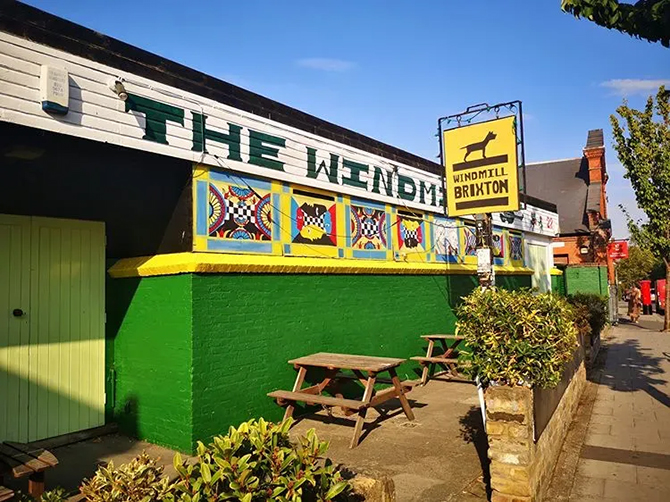
The Windmill Brixton (The Windmill Brixton, 2020).
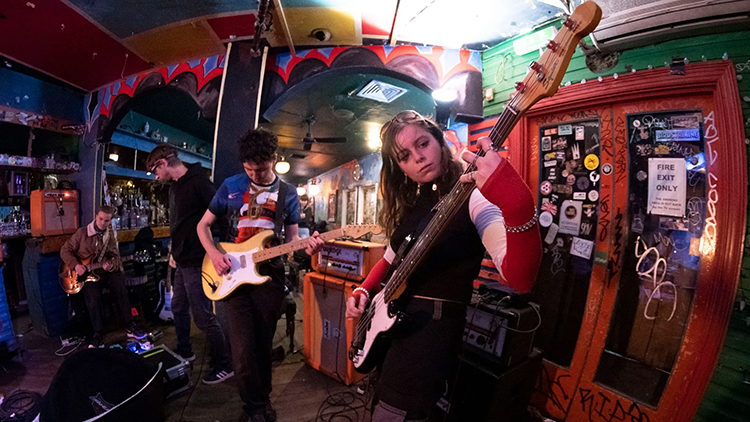
Black Midi, New Road (Smith, 2020).
Another venue that has survived threats of closure is The Windmill Brixton, a small GMV located in Brixton, South London, run by landlord Seamus McCausland. The Windmill is an Irish pub, established in 1971 alongside the Blenheim Estate situated nearby (Hodgkinson, 2020, p. 13). The fact that the building is located next to an estate highlights the community aspect of this venue. It is also in a remote part of Brixton, meaning audiences have to make an effort to visit. The Windmill has gained mass traction over the last decade as it has generated a revival in South London's alternative music scene; with bands like Black Country New Road, Fat White Family, and Black Midi. It also gives artists 90% of the profit from gigs, which is unusual for music venues , creating a strong supportive backbone for new artists (Thompson, 2021, p. 18). During the 2020 COVID-19 pandemic, The Windmill, among many other GMVs, faced mounting economic struggle due to social distancing regulations, and unattainable rents, alongside a lack of funding and support (Fife, 2022, p. 49). Gentrification is a major basis for unattainable rent. Notably, Brixton has faced major gentrification over the last 15 years due to it being seen as a 'trendy' area, causing property prices to rise by 76% (Marsh, 2016). The resulting increase in rents has pushed out Brixton's working-class residents as it is now unaffordable to live in; leading to an erasure of its cultural history and art scenes. In 2020, The Windmill encountered the possibility of permanent closure and was ineligible for vital funding from the 'Arts Council Cultural Recovery Fund'. The 'Arts Council Cultural Recovery Fund' was given to GMVs due to the pandemic, which the Windmill could not receive as they are not a limited company. This led to the creation of the 'Save The Windmill' campaign that attracted many artists from the community to come together and participate in different auctions to raise money for the venue. The Windmill attracts younger art students, due to its nurturing of smaller artists and has consequently generated a strong and loyal community (Thompson, 2021, p. 290). Community art is ingrained in the building through Kimia Amini's folklore murals. Amini was a regular at The Windmill and caught the attention of McCausland after creating a portrait of the infamous Windmill Dog (Hodgkinson, 2020, p. 9). By showcasing local talent, McCausland has created a strong sense of community, alongside showcasing local musical talent, both of which are beneficial for their 'Save The Windmill' campaign and for GMVs in general.
Lou Smith, a photographer and designer, was involved in the 'Save The Windmill' campaign and has been an important part of The Windmill's rapid growth in popularity due to his immersive gig photography and videos (Thompson, 2021, p. 36). Smith documented the beginnings of the Windmill scene from the 2010s, videoing and photographing early gigs from bands such as Fat White Family, who have now developed a cult following. His documentary-style photography and videography are immersive and capture the avant-garde experimental performances from The Windmill, exploring the vast ranges of music and its strong sense of community. Smith states "It's unmatched! The roster at The Windmill is like no other. There's no other community in the world like it, South London has the last remaining grassroots atmosphere." (Smith, 2024). Indicating the impact The Windmill has had on Smith himself, and it being a diamond in the rough within London's music scene. Over time, Smith's videography has gained traction leading to a vast international following on social media; becoming largely cherished during the pandemic due to a reminiscent need for gig culture throughout the COVID-19 restrictions. The Windmill broadcasted several online gigs to raise money for the "Save The Windmill" campaign in 2020, with Lou Smith as their main videographer. A notable performance was 'Black Midi, New Road' a collaboration between the venue's most prominent bands of the time, generating over 100k views on YouTube; helping to produce an online community and develop awareness for The Windmill's campaign. Social media and live streaming grew The Windmill's following internationally, allowing audiences to experience the atmosphere of The Windmill without leaving their houses. A drawback of showcasing online gigs is that the venue won't benefit from people watching online and not visiting in real life, leading to a loss of income overall. The immersive experience reinforces the unique live experience of GMVs prompting audiences to donate to The Windmills campaign. Whilst this was a good solution during the pandemic, when nobody could leave their homes due to COVID-19 restrictions, it could create a long-term trend of a younger audience being disengaged from live music, leading to more closures.

Speedy `Wunderground `The `Dubs- Vol 1
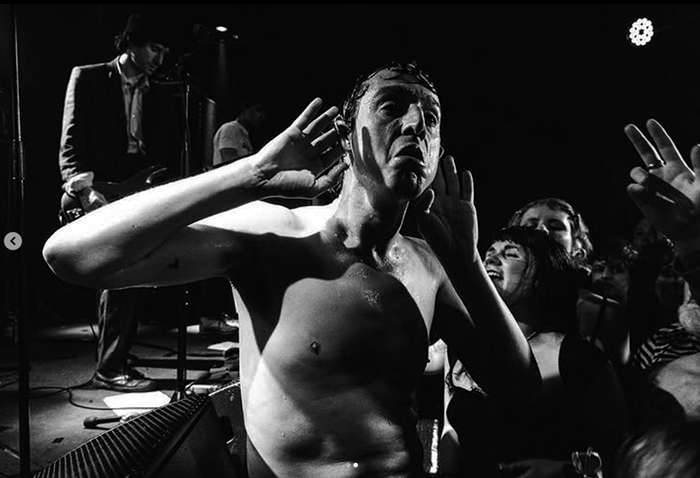
Fat White Family shot by Lou Smith (Smith, n.d.).
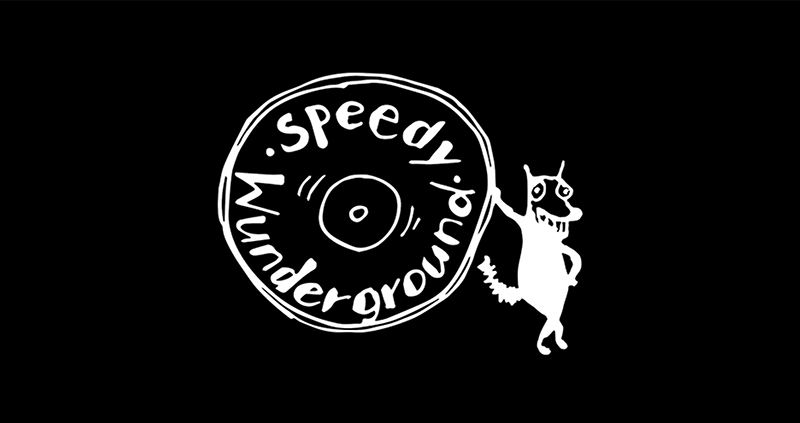
The Windmill created a crowdfunding page in 2021 after being put on the Music Venues Trust's red list of 'venues in danger of closing' (Kelly, 2023). In just over 4 months they raised £95,203. Alongside this page, they auctioned off rare artefacts from The Windmill scene including limited runs of vinyl from local record label Speedy Wunderground. Speedy Wunderground is run by Dan Carey, who can be credited with the rise of the South London alternative scene and, to some degree, the success of The Windmills' crowdfunding campaign; through very limited runs of 7" vinyl singles along with a cult following. Carey produces all releases that come from the label and asks artists to conform to stringent rules when recording in the Speedy Wunderground studios. Some examples of these rules are: no lunch breaks for artists whilst recording, all recordings have to be completed in one day, and each record has to use the 'Swarmatron', an analogue synthesiser (Speedy Wunderground, n.d.). Having these strict sets of rules that artists need to follow can be restrictive but also contribute to their success, producing new experimental approaches to music. Speedy Wunderground played a major part in raising funds for The Windmill during their campaign, allowing auctions of limited-run records and being at the forefront of projecting The Windmill's biggest bands into the limelight. Often, the singles released are by up-and-coming bands who are just starting their careers. Care,y being quick on the pulse of the South London scene, has managed to capture early singles by bigger bands such as Black Country New Road and Black Midi; making fans anxious to seek out these collectable records (Richler, 2023). The 7" records frequently come packaged in different bright colours relating to the artists and their aesthetics, making audiences eager to collect each colour and style. Speedy Wunder's logo is synonymous with The Windmill's aesthetic, using hand-drawn type and a line-drawing mascot of a fox. These hand-drawn elements are reminiscent of DIY punk era aesthetics, giving viewers a preview into what kind of music the label produces, adding a level of authenticity behind it by not using clinical digital type. The Windmill and Speedy Wunderground are intrinsically linked, through visual aesthetics, both favouring handmade DIY aesthetics over polished sanitised design; and through musical style and a willingness to explore new experimental approaches to music. Speedy Wunderground's contribution to The Windmill's crowdfunding campaign helped significantly due to the high demand for their rare 7" singles, emphasising the strength within The Windmill's community and the links between GMVs and the arts.
Speedy Wunderground's logo (Egger, n.d.).
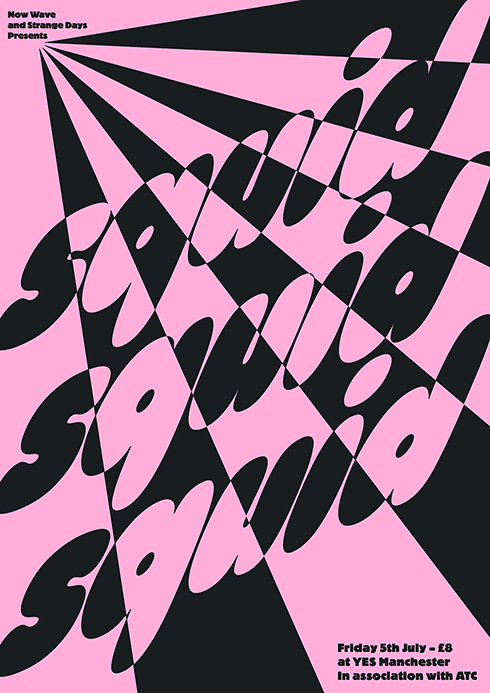
Squid poster by Raissa Pardini (Pardini, 2019).
Post-pandemic in 2021, after surviving the Music Venues Trust's red list for closures, The Windmill teamed up with shoe brand Dr.Martens to launch the 'Come Back Better' initiative. The initiative aimed to showcase the impact GMVs have on young musician's careers, and help young female, non-binary, and trans artists start their creative careers. 'Come Back Better' was set up to see more representation within mainstream music, giving support to unsigned acts through industry connections and knowledge. Supported by designer Raissa Pardini and Windmill band 'Goat Girl', amongst many others (Yack, 2021). Raissa Pardini's design work is interlinked with alternative music and GMVs, working with bands such as Squid and Idles, who have gained popularity through The Windmill (Jones, 2019). Pardini has an experimental quality to her typography, using expressive shapes and bold lines reflecting the type of music being she designs for. Using this approach makes the designs striking and authentic, allowing visuals to convey the ambience of music rather than the written content. Pardini's work has helped to propel The Windmill's bands into the mainstream, creating iconic visuals synonymous with the South London music scene. Pardini states "My visualisation of an artist's idea is in a way helping them also achieve goals and grow." (Jones, 2019). Taking part in the 'Come Back Better' initiative suggests Pardini values GMVs, and the influence it has had on her work; highlighting the importance GMVs have on networking and building creative communities.
While the campaign supported The Windmill post-pandemic and amplified queer female voices in music and design, Dr. Martens' sponsorship risks diluting its local identity and displacing the long-standing community in favour of trend-driven audiences. Discussing the new popularity of The Windmill, Lou Smith states "People just come to the windmill because 'It's The Windmill' they just come to film for social media and natter through the whole show and then leave." (Smith, 2024). Suggesting that audiences and genuine interest have been replaced with social media fame chasers, losing the lively atmosphere of The Windmill and fueling the effects of a newly gentrified Brixton. 'Come Back Better' supported The Windmill's business, helping them stay afloat post-pandemic having been sponsored by Dr. Martens, injecting funding to support the GMV. The campaign also helped raise awareness of the value of GMVs. Having such an iconic brand like Dr. Martens, who is known globally and rooted in alternative music subcultures supporting The Windmill, gives international exposure and interest to the venue. Involving local designers and musicians in this campaign like Raissa Pardini, offers a platform to expand their art and emphasises how GMVs build communities and subcultures.
Overall, The Windmill's strongest aspect of all their campaigns has been the community of artists surrounding them, having a range of designers and musicians teaming up to raise awareness and funds for them. Over time, The Windmill has grown to become an internationally known GMV, and would not have been able to stay afloat without people like Lou Smith, Dan Carey, and Raissa Pardini creating art whilst simultaneously publicising the venue, allowing it to grow in mass popularity. Using community-focused design, as The Windmill has, can be a strong method of building genuine support for a campaign and concurrently creating engaging experimental design.
Chapter 3: Save the Ivy House
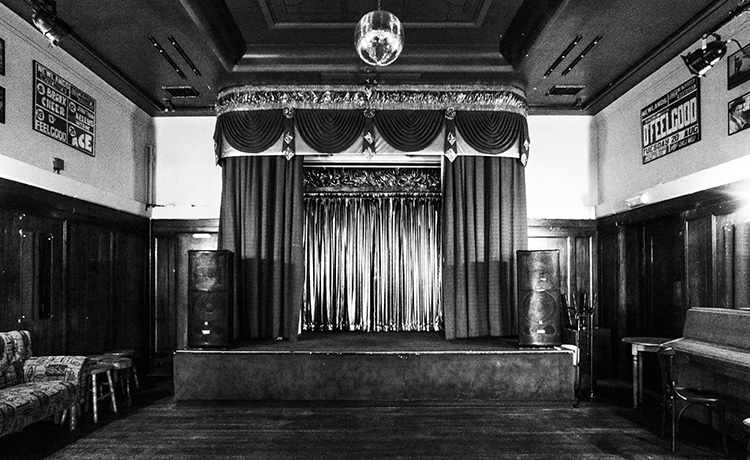
The Ivy House ballroom (London SE, n,d.).
The Ivy House, Nunhead, is known to support local musicians and artists; being one of the pillar GMVs of the South London music scene. Playing live music in the ballroom area of the venue dates back to the 1950s, with acts including Elvis Costello, The Stranglers and Ian Dury. It champions itself as London's first community-owned pub as it was brought in 2013 by the local community, under the 'right to bid' within the Localism Act 2011, after closing in 2012 (Blunden 2013). The building was sold in 2012 to private developers who wanted to demolish it and turn it into flats, giving the local community one week's notice of the closure and disregarding the value the building held over its community (Historic England, n.d). This generated outrage within the local community, engendering a group of regular attendees to start a campaign to save The Ivy House, mobilising the public to take action and raise awareness of the issue. The campaign managed to register The Ivy House as a Grade II listed building after intervention from English Heritage and Labour MPs; consequently preventing the building from being demolished and protecting its cultural musical history. A key figure involved in fighting for The Ivy House was Tessa Blunden, who helped to generate awareness among local residents by sharing the campaign on Facebook and Twitter and now is a co-founder of The Ivy House. Using social media platforms accelerates the distribution of information, allowing the campaign to reach further than the Nunhead community. The campaign heavily relied on community spirit, something that can sometimes be lost within gentrified London, which started small, reaching out to family, friends, and longstanding customers of The Ivy House. They succeeded in receiving funding from The Architectural Heritage Fund, a charity dedicated to conserving historic buildings in the UK, "particularly in economically disadvantaged areas" (Architectural Heritage Fund, n.d). This is due to the history embedded within the building, allowing the campaign to flourish and keep The Ivy House alive and running (Bianchi, Sforzi, 2020, p. 290). Receiving funding from The Architectural Heritage Fund stresses the cultural-historical significance of GMVs and how community-led campaigns are at the centre of keeping GMVs running in the UK.
Helping The Ivy House achieve a grade II listed status was its original 1930s interior design and features, as it was established in the 1930s by Truman's Brewery (The Ivy House, n.d.). The ballroom features a glistening gold backdrop to the stage surrounded by red curtains, adding a theatrical art-deco element, which could offer a nice contrast to the alternative music that bands play on the stage. Its interiors are certainly unique to The Ivy House, offering authentic interiors to the origins of the building's history, propelling authenticity and a sense of heritage to the core of the building. To have such a historical original interior for a music venue is rare and a niche within London, which is a major factor in why there was so much passion behind the community campaign; if the venue was lost a huge part of London's architectural history would have been lost.
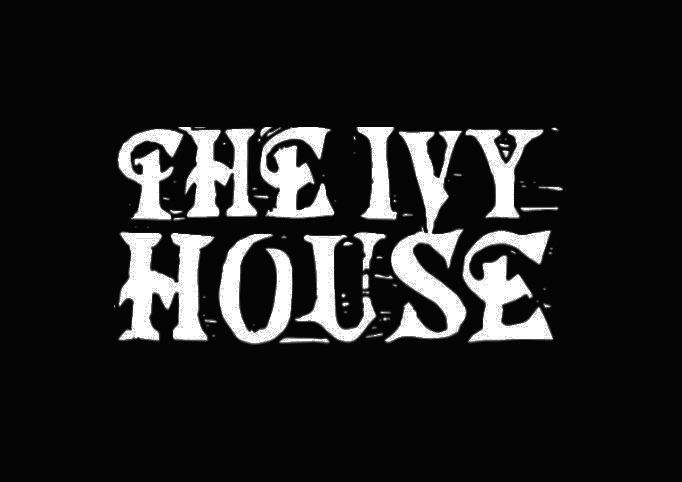
The Ivy House logo (The Ivy House, n.d.).
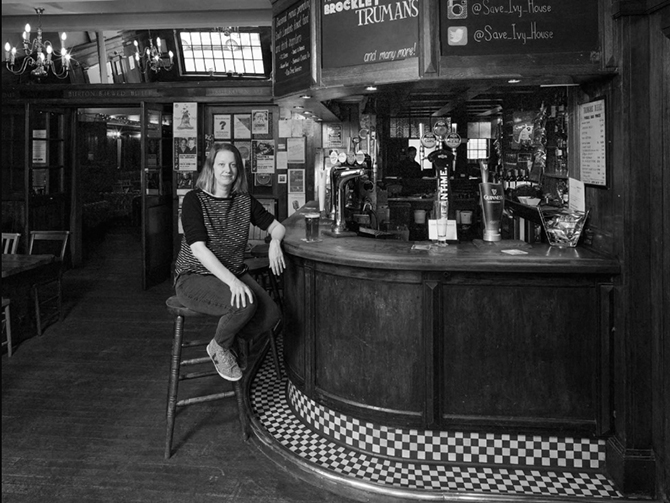
Tessa Blunden photographed for 'I Am London' (Historic England, 2017).
Spurring from the campaign, The Ivy House has rebranded by updating its logo to a handmade DIY aesthetic, emphasising the community atmosphere and alluding to the independence from property developers and the threat of gentrification. Re-branding the logo marks a shift from traditional pub to highlighting the live music aspect of the venue, referencing handmade elements of South London's alternative music scene. It could also connote the kind of music played at the venue, DIY aesthetics being synonymous with punk and alternative music, which has played throughout The Ivy House since the mid-1970s when the punk movement was rife. Utilising visual iconography connected to genres of music, The Ivy House has targeted specific demographics within and outside of their community, leading to growth within those alternative music scenes and creating traction for the venue itself. This can be seen through their re-brand, but also in the posters produced for the gigs at the venue, using hand-drawn and various print methods. Bands are responsible for creating their own posters leading to a jumble of aesthetics, but all follow similar iconography tied within alternative music such as experimental type and image. The jumble of visuals can relate to each section of The Ivy Houses' history, taking references from the musical subcultures the venue has seen throughout the decades of running; connoting a long-term value of community-based nights and events.
Save The Ivy House campaign put the local communities' needs first by listening to the public and mobilising the community to come together and save the venue; reinforcing community spirit and fighting back against gentrification and private property developers. However, a year after saving The Ivy House, the management noticed an increase in house prices across the local area, signaling gentrification. The consequence was to re-brand The Ivy House into a 'trendy' venue (Bianchi, Sforzi, 2020, p. 291). Again, the gentrification of South London is pushing out local communities creating elitist art scenes within London, and spilling middle-class tastes over existing communities. Discussing the gentrification of South London Anita Strasser, a designer with a PHD researching the gentrification of Deptford, states that "cultural institutions are often seen as a thermometer measuring the temperature of gentrification and its associated conflicts" (Strasser, 2021). If, as Strasser suggests, cultural institutions like The Ivy House gauge levels of gentrification in a single area, then The Ivy House's regeneration could have played a part in the rising house prices within Nunhead and be a catalyst to gentrification within that area. Although The Ivy House campaign has had an overall positive effect within Nunhead's community, in the long run, local residents could see the consequences of gentrification; pushing out the very community that helped build the new 'trendy' Nunhead.
The overall success of the Save The Ivy House campaign undeniably came from the utilisation of local communities, and the building itself being able to be registered as a Grade II listed building. They managed to successfully engender a community to take action and campaign against private property developers, through social media and re-branding to fit other alternative GMVs in South London. Unlike the previous campaigns mentioned, The Ivy House relied solely on the general public and laws to achieve their goal of saving the venue. Whereas the other campaigns used celebrity endorsements and artists; accentuating the value of community-based campaigning to The Ivy House. Re-branding the Ivy House's is another credit to the campaign, as it targeted alternative niche audiences by using DIY punk aesthetics; other endangered GMVs should take influence from this rebrand and use music iconography to target new demographics. Using the local community is a staple and leading attribute to this campaign, being an accessible method in activism and campaigning which other GMVs can easily utilise when facing threats of closure.
Comparisons Between Each Campaign
Each case study discussed has, as of writing, managed to survive the threats of closure due to various factors of gentrification. They have all utilised design differently to amplify their campaigns, yet, have also had the means to celebrity and brand endorsements. Lesser-known GMVs might not be able to access the same amount of notoriety, in this case, a community-focused design strategy should be implemented in order to reach a wider demographic and have an effective campaign. As seen in The Ivy House's campaign, using a re-brand to mobilise the general public can have a huge effect in saving a venue as it is now community-owned.
Experimental approaches to design have also been used in all three campaigns, each venue leaning toward a more grungy style of design. This could be representative of the music played within each establishment, as the South London scene is dominated by alternative music. However, the designs are still exemplary of contrasting aspects within the South London scene making them appeal to different audiences. The George Tavern's simple typographic t-shirts are reminiscent of the 'indie sleaze' subculture often using bold, san-serif, tightly kerned typography as a fashion statement. Whereas, within The Windmill's campaign Speedy Wunderground uses colour-coded illustrative designs on their limited vinyl releases, targeting a more dedicated fanbase arguably of an older demographic as it is comparable to 1970s punk designs and production of music. By attracting different audiences within the South London music scene, it spreads awareness of the vulnerability and impact GMVs have on communities and alternative cultures. The contrasting uses of mediums amplify the reach of awareness to GMVs, with The George Tavern using celebrity-cladded t-shirts and The Windmill using social media to grasp an international impact, compared to The Ivy House's use of local action to get government attention. These differences highlight the importance of any campaign being international or local as they all leave their mark in some way, and have managed to save these GMVs.
Conclusion: How Can Design Help Future GMVS?
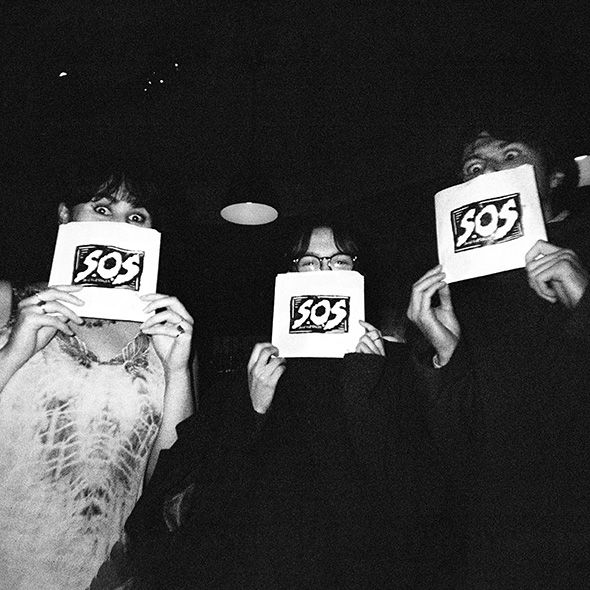
S.O.S gig (MacKinnon, 2024).
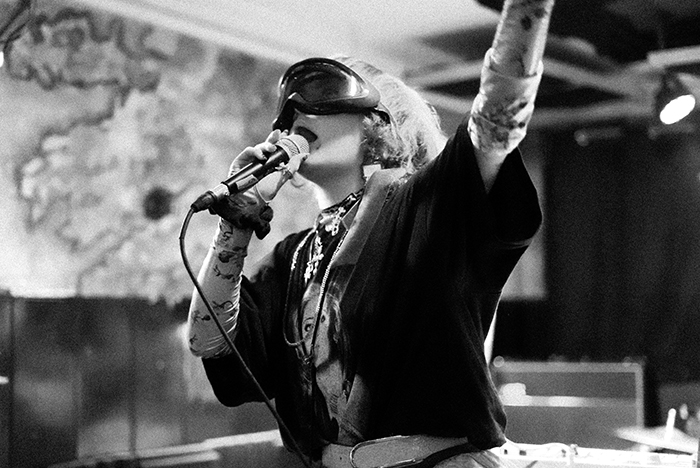
Plutoz Beach performing at S.O.S (Calfos-Folkes, 2024).
The most successful aspects of these campaigns were the use of local communities within the design visuals, and using music iconography such as experimental and handmade typography. By using these design practices, the campaigns have managed to generate engagement and mobilisation within audiences as they specifically target alternative music culture and the cult following that comes along with it. To put these campaign design methods into effect, I utilised them to organise a gig raising awareness of the importance of GMVs. The night was called 'S.O.S: Save Our Stages' and was hosted at The Old Dispensary in Camberwell on the 12th of December 2024. During the gig, zines, badges, stickers, and posters were handed out to audiences, along with photographers from the local community visually documenting the event.
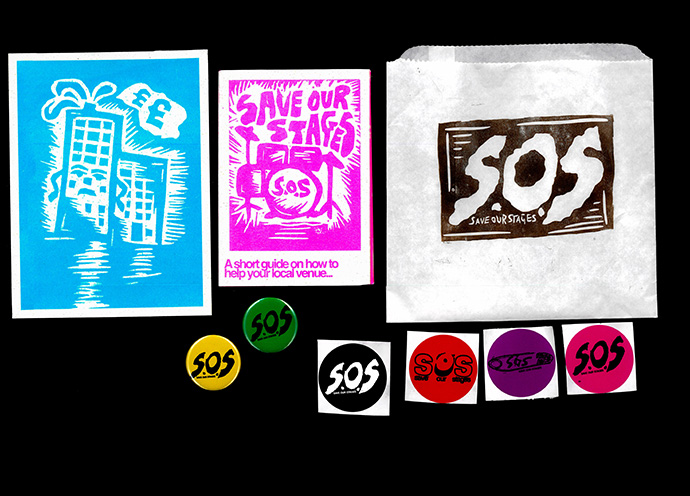
S.O.S zine pack (MacKinnon, 2024).
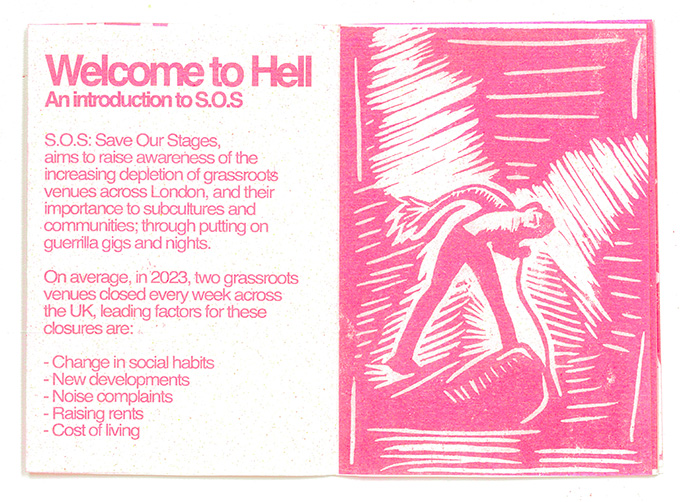
A page from the S.O.S zine (MacKinnon, 2024).
The typographic choices were influenced by the handmade elements of The Ivy House's logo rebrand, mixed with bold, tightly kerned san-serif body text in reference to The George Tavern's T-shirt designs. The combination of the two styles complimented each other, providing a contrast between experimental typography and bold simple type. Using these styles proved effective when promoting the event, as it managed to keep authenticity and personality throughout the branding. However, it still kept all the important information legible and clear, helping to reach specific audiences related to the South London music scene. Documentary-style photography and videography were at the forefront of capturing the event, similar to how Lou Smith documents The Windmill's gigs. Photographers from the local community shot the event in 35mm film to replicate a handmade effect, and gig photography from the 1970s. Using the photographers within the music scene helps to capture real experiences from the gig and build stronger ties within the South London scene. The S.O.S gig proved to be effective in raising awareness of the importance of GMVs, and brought an influx of customers to The Old Dispensary; helping this specific venue to stay in business. A major successful part of this event was the design; branding and promotion spread awareness of the event and the zines were made to mobilise the audience into action for GMVs. All outcomes were created using the tactics shown in these case studies. The case studies discussed within this dissertation have shown that design can be an integral part of campaigns, especially for GMVs, as music and the arts have a symbiotic relationship.
From the research documented within this writing and the implementation of design techniques used to create an event for GMVs; it is clear that design is a major part of saving venues from going extinct. Gentrification is a growing epidemic within South London and will affect many more GMVs, due to attracting 'trendy' crowds as seen within all of the case studies mentioned. In the future, venues should put design at the forefront of their campaigns. It brings authenticity, personality, and an expression of love for these graffiti-ridden, damp, beer-smelling, yet cherished buildings. Grassroots Music Venues are the beating heart of alternative music culture and have an intertwined relationship with design. It is imperative that communities harness this momentum and fight the encroaching grips of gentrification.
BIBLIOGRAPHY
Blunden, T., (2012). One community's battle to keep its pub alive [online]. the Guardian. [Viewed 9 December 2024]. Available from: https://www.theguardian.com/social-enterprise-network/2012/may/14/ivy-house-save-local-pub
Blunden, T., (2013). The Ivy House: the challenges of a community share issue in London [online]. the Guardian. [Viewed 9 December 2024]. Available from: https://www.theguardian.com/social-enterprise-network/2013/jul/15/london-pub-saved-by-community
Botanical Lofts, (n.d.). Botanical Lofts - A collection of studios, one and two beds, as well as three penthouses [online]. Botanical Lofts. [Viewed 9 December 2024]. Available from: https://botanical-lofts-e1.co.uk/
Christiansen, S., (n.d.). The George Tavern: two decades of rock and resilience. [online]. [Viewed 9 December 2024]. Available from: https://hardofhearingmagazine.com/2023/05/04/the-george-tavern-two-decades-of-rock-and-resilience/
"DOG ON" The George Tavern, n.d. Available from: https://thegeorgetavern.london/savethegeorge
Egger, J, Speedy Wunderround logo, (n.d.).
Fife, K., (2022). Lockdown Cultures. UCL Press.
Forster, P., (n.d.-a). The Story of Dog On - The George Tavern [online]. The George Tavern. [Viewed 17 November 2024]. Available from: https://thegeorgetavern.london/the-story-of-dog-on
Forster, P., (n.d.-b). The Story of Saving The George Tavern - The George Tavern [online]. The George Tavern. [Viewed 17 November 2024]. Available from: https://thegeorgetavern.london/the-story-of-saving-the-george-tavern
Hodgkinson, W., (2020). Roof Dog. London: Rough Trade Books.
House of Commons Culture Media and Sport Committee, (2024). Grassroots music venues Seventh Report of Session 2023-24. London: Parliamentary Copyright House of Commons 2024.
Gorton, T., (2014). On the brink: the George Tavern staves off gentrification [online]. Dazed. [Viewed 9 December 2024]. Available from: https://www.dazeddigital.com/artsandculture/article/22714/1/on-the-brink-the-george-tavern-staves-off-gentrification
Heide, T. and Nguyen Ajslev, J. Z., (2016). A gentrified ecosystem of live music. 1-9.
Historic England, (n.d.-a). Historic England - Championing England's heritage | Historic England. [Viewed 9 December 2024]. Available from: https://historicengland.org.uk/content/heritage-counts/pub/2014/case-study-ivy-house-pdf/
Historic England, (n.d.-b). Keep it London | Historic England [online]. Historic England - Championing England's heritage | Historic England. [Viewed 9 December 2024]. Available from: https://historicengland.org.uk/campaigns/keep-it-london/
Historic England, (n.d.-c). Keep it London | Historic England [online]. Historic England - Championing England's heritage | Historic England. [Viewed 9 December 2024]. Available from: https://historicengland.org.uk/campaigns/keep-it-london/
Historic England, (n.d.-c). 'I am London' exhibition - Tessa Blunden, Co-Founder, The Ivy House Community Pub Limited (2K/27192) Archive Job - Historic England Collection | Historic England [online]. Historic England - Championing England's heritage | Historic England. [Viewed 9 December 2024]. Available from: https://historicengland.org.uk/images-books/photos/job/2K/27192
Jones, R., (2019). So Young Magazine - Meet Designer Raissa Pardini - A fully illustrated new music magazine [online]. So Young Magazine. [Viewed 9 December 2024]. Available from: https://soyoungmagazine.com/musica-meet-designer-raissa-pardini/
Kelly, L., (2023). The George Tavern: the London gig venue at the heart of the fight against gentrification [online]. the Guardian. [Viewed 9 December 2024]. Available from: https://www.theguardian.com/music/2023/jun/27/the-george-tavern-the-london-gig-venue-at-the-heart-of-the-fight-against-gentrification
Kelly, L., (2023). How London music venue The Windmill made Brixton a mecca for the best new bands [online]. Big Issue. [Viewed 9 December 2024]. Available from: https://www.bigissue.com/culture/music/the-windmill-brixton-london-music-venue-watch/
Marsh, S., (2016). How has Brixton really changed? The data behind the story [online]. the Guardian. [Viewed 9 December 2024]. Available from: https://www.theguardian.com/cities/datablog/2016/jan/14/how-has-brixton-really-changed-the-data-behind-the-story
Miller, J., (2013). London's first co-operative pub [online]. BBC News. [Viewed 9 December 2024]. Available from: https://www.bbc.co.uk/news/uk-england-london-22016830
Munro, E*. "The Ivy House".* The Guardian, 2013. Available from: https://www.theguardian.com/social-enterprise-network/2013/jul/15/london-pub-saved-by-community
Music Venue Trust, (n.d.). Grassroots Music Venue (GMVs) - Definition [online]. Music Venue Trust. [Viewed 9 December 2024]. Available from: https://www.musicvenuetrust.com/resources/grassroots-music-venue-gmvs-definition/
Phillips, J., (2022). It is time to level up the Agent of Change principle so that its objective is actually realised [online]. Bidwells. [Viewed 9 December 2024]. Available from: https://www.bidwells.co.uk/insights-reports-events/planning-agent-of-change/
Revolutionary CEO's, (n.d). Pauline Forster: Preserving the soul of artistic expression | Aspioneer [online]. Aspioneer. [Viewed 17 November 2024]. Available from: https://aspioneer.com/pauline-forster-preserving-the-soul-of-artistic-expression/
Richler, P., (2023). Speedy Wunderground Celebrate 10 years with Boldest Artistic Statement to Date on 'The Dubs - Vol 1' [online]. So Young Magazine. [Viewed 9 December 2024]. Available from: https://soyoungmagazine.com/speedy-wunderground-celebrate-10-years-with-boldest-artistic-statement-to-date-on-the-dubs-vol-1/
Sforzi, J. and Bianchi, M., (2020). Fostering social capital: the case of community-owned pubs. Social Enterprise Journal [online]. 16(3), 281-297. [Viewed 24 January 2025]. Available from: doi: 10.1108/sej-07-2019-0050
Simpson, D., (2024). 'The whole ecosystem is collapsing': inside the crisis in Britain's live music scene [online]. the Guardian. [Viewed 9 December 2024]. Available from: https://www.theguardian.com/music/2024/mar/01/the-whole-ecosystem-is-collapsing-inside-the-crisis-in-britains-live-music-scene
Speedy Wunderground, (n.d.). Single Series [online]. Speedy Wunderground. [Viewed 9 December 2024]. Available from: https://www.speedywunderground.com/about/
Strasser, A., (2020). Deptford Is Changing. Anita Strasser.
SE London, "The Ivy House", SE London. n.d. Available from: http://london-se.siteleaf.net/spots/the-ivy-house/
The Mayor of London's Music Venues Taskforce, (no date). London's Grassroots Venues Rescue Plan.
Thompson, D., (2021). Woo! London: Secure Publishing Ltd.
What We Do | The Architectural Heritage Fund [online], (n.d.). Home | The Architectural Heritage Fund. [Viewed 25 January 2025]. Available from: https://ahfund.org.uk/about-us/what-we-do/
Whitaker, H. "Goat Girl for Come Back Better". Hero, 2021. Available from: https://hero-magazine.com/article/191485/the-windmill-brixton-come-back-better
Windmill Brixton, (n.d.). Windmill Brixton - Come Back Better [online]. Windmill Brixton. [Viewed 9 December 2024]. Available from: https://www.windmillbrixton.co.uk/come-back-better
Yack, M., (2021). Goat Girl coming back better with The Windmill and Dr. Martins. Yack Magazine. [Viewed 9 December 2024]. Available from: https://yackmagazine.com/interview-goat-girl-coming-back-better-with-the-windmill-brixton-dr-martens/