
How can archiving dreams be utilised to preserve and explore unique dream interpretations from South Asian and other cultural backgrounds?
Introduction
Dreams, often complex in nature but forever grounded in our human experience. Our interpretations and understanding surrounding said sleep-perceptions are vast. Varying not only from culture to culture but often from family to family and person to person. Thoughts circulating, wondering, how many of these practices are still used today, but also how long it will take for some of these ideas to die out. Exploring anecdotal methods of dream feeling while comparing these ideas to the rest of the world. Compilation of comparisons from the past to the present, from civilisations revered for their rich history. This fascination of dreams is far from new as humans have been documenting dreams for centuries. Archives of the "Hieratic Dream Book" show the documented interpretations of Ancient Egyptian dreams. The Greeks had a dream book called the "Oneirocritica" for the same purpose. Despite being part of ancient history, these books have influenced the likes of Freud (prominent atheist psychiatrist behind modern psychoanalysis) and impacted their attitude towards dreams. Shining a spotlight onto their ideology around the realm of dreams and how our attitudes have changed to now, in the present day.
This essay aims to emphasise the importance of archiving and archival material, with dreams in mind. The preservation of ideas. Without these complex systems to ensure every piece has a place in the puzzle that is oneirology (the study of dreams). There is a lack of digital safe keeping when it comes to South Asian views on dreams. A lot of my own personal attitudes are deeply rooted within my upbringing. Pakistani parents that hold a much more traditional outlook, keeping their spiritual beliefs clutched in their arms as tightly as possible. Documenting is still new to many parts of South Asia. Evident from my personal experience of struggling both digitally and in person to find specifics on niche rituals, superstitions, etc. This essay highlights why archiving is so important while also trying to preserve parts of my own culture through writing.
What does it mean to interpret a dream?
Symbols, cultural influence and sleep, a recipe for dream interpretations. At present, there are so many practising traditions and rituals when it comes to dreams. Our free will allows us to take something as complex as our cognitive thinking and unconscious mind and try to comprehend the abstract ideas that come with it.
Religion and dream meanings have remained intertwined for centuries. Though even within religion itself, there are multiple discrepancies. Since these meanings have acted as such a huge part of my own upbringing, exploring how religion may or may not influence interpretations. Even within Islam itself, you might see different scholars holding differentiating opinions. I considered how much religion would impact philosophy, which would then influence attitudes to dreams. Being discussed in areas ranging from "epistemology to ethics, ontology, and more recently philosophy of mind and cognitive science" (Windt, 2021). Lack of religion and geographical location will also influence the way a person may interact with their dreams. I will be diving into some of the many theories within psychology and how humans have always tried to decipher this part of our experience.
I was brought up within a dream-oriented household, it was the topic of each morning. Then the fun part would begin, picking apart what could have caused them, and if there was a message to learn. "Khawab" (pronounced, khaab) means "dream" in Urdu (UrduPoint, 2024), something I learnt early on from my parents. There were so many mornings where I would come downstairs and my mum would look at me a bit worried and say, "min ne khwab min kutta dekhtaa," meaning "I saw a dog in my dream." To a more traditional Pakistani, seeing a dog would have negative connotations. They are often seen as "unclean" and therefore, one appearing in a dream could imply several things such as encountering a bad person or facing difficulties soon. This piqued my interest, which resulted in going down a rabbit hole of how other cultures may perceive symbols.
It is important to look at the transcultural dialogue between different cultures, and their attitudes towards certain symbols. These emphasise how interpretations are informed from widespread belief within a certain region. During the pandemic, there was an online survey done to see how often our canine companions would appear in our sleep. "Dogs show up, on average, in about 5% of remembered dreams," (Schredl, et al, 2020) and emotions associated with them are affiliated to our waking feelings about them. Being afraid of dogs will imply you are more likely to experience negative dreams about them and vice versa. A reasonable and extremely logical response to why some cultures will portray seeing dogs as unlucky whereas others will perceive them as a sign of good.
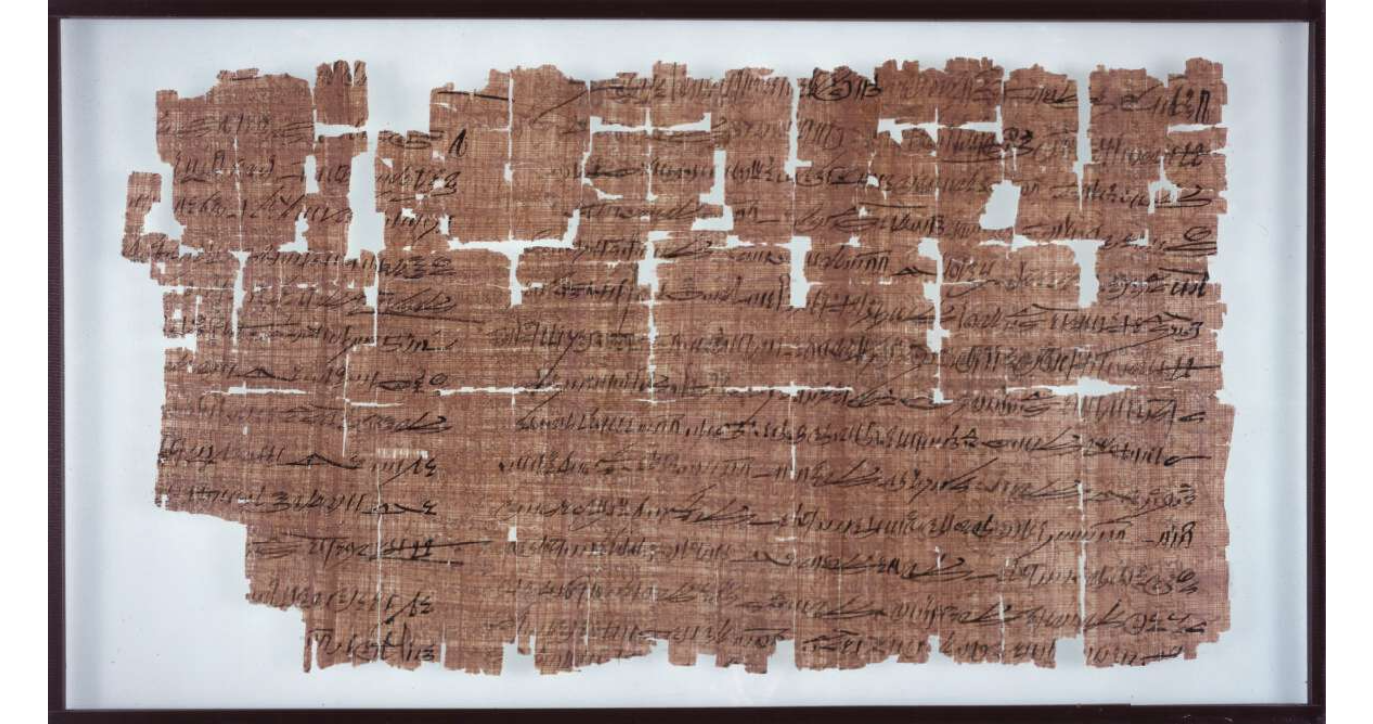
Figure 1. Close up of the Hieratic Dream Book, papyrus. (Source: The British Museum)
Ancient Egyptians believed that dreams allowed people to become vessels in hope of "receiving advice, comfort, or healing from the gods" (Parker and Parker, 1986). As many civilisations have, the Ancient Egyptians documented some of their interpretations in the 'Hieratic Dream Book' which is currently being kept in the British Museum. There are a multitude of theories on who would have had access to the papyrus, some speculating it would be priests, but it is overall unknown. Regular citizens would have been unable to read, which would imply someone of higher status would have had the power to access and relay its contents. Their interpretations include specific scenarios which reflect on what life must have been like at the time. For example, "choosing dates well. It entails locating food provided by a god," (Dreams in Ancient Egypt, 2023) dates are a staple and dreaming of them is unsurprising. In Pakistani culture, dates are perceived well too, with their connotations to stories told within scriptures and their influence on the cuisine. Compared to what the Egyptians thought, a relative of mine would consider dates as a sign of money and just an overall good message.
Artemidorus, a diviner from Roman Asia in the early third century AD, expresses through his dream interpretation book 'Oneirocritica' the following: "it is in the nature of experiences to return during sleep and re-present themselves to the soul, thus creating dream manifestations" (translated by Robert J. White, 1975). Memories coming back to us in dreams is a topic that has been discussed many times over by the likes of Freud and Jung. Freud was fascinated by the work of Artemidorus, calling it "the most complete and painstaking study of dream-interpretation as practised in the Graeco-Roman world". Expounding recurring giving it a meaning was still an abstract idea, yet even today people will still refer to this set of ideas in relation to dreams. Reading snippets of the book itself reminds me heavily of interpretations I would research for my parents; providing a range of meanings per dream.
'The Arabic Freud' by Omnia El Shakry is an interesting book addressing a lot of theories, including Freud's ideas. She starts by talking about psychologist Yusuf Murād, and his ideas from 1945.
Translating and blending key concepts from psychoanalysis and the French tradition of philosophical psychology with classical Islamic concepts, Murād put forth a dynamic and dialectical approach to selfhood that emphasized the unity of self, while often insisting on an epistemological and ethical heterogeneity from European psychological and psychoanalytic thought,
Shakry is much more focused around ideas within an Arab Islamic context, addressing topics surrounding colonialism while being careful not to discredit the influence of Western ideals in the Middle East. Having this unfamiliar perspective on a Western thought process was wonderful. This form of representation and importance only pushes the narrative further of needing a wide range of sleep philosophy in areas where there is a lack of preservation.
From a Western point of view on the matter, Freud would often refer to dreams as having a "senseful psychological structure". He was a firm believer that our dreams could help us improve our overall stability with our mental well-being. In his book, 'The Interpretation of Dreams' he talks extensively about symbolism in dreams. There is a beautiful part in which he dissects dreams as much as he can to find out what his unconscious mind was trying to tell him. He was a firm believer that "every dream represents the fulfilment of a repressed wish". Thoroughly going into a dream, he had in July of 1895, and every sentence is taken into consideration within his analytics technique. His conclusion on the matter makes complete sense, "The dream fulfils several wishes," and figures his motive of having the dream was wishful thinking. His theories are a result of new innovative ideas in which he pioneered. Although it is well known he has far too much interest in simplifying human phenomena into primal attributes, his thought process is clear. His controversy around this oversimplification is more so towards other theories he has outside of dreams but his method of identifying key symbols can be viewed as problematic by a modern audience.
Carl Jung, esteemed for his contributions in the world of psychoanalysis, although many find him much less appealing. Looking into the history of events, his reputation took a hit when he began talking about his most well-known idea, the collective unconscious. Jung was much more in tune with the idea of different symbols holding different meanings and that they do not always correlate with primal urges. All these different ideas make me question if there is even a right or wrong way to interpret what dreams mean. For some it is as simple as doing a quick search, for others it might become a time of reflection. This is why, to my understanding, trying to interpret dreams and apply logic and reason to them can be difficult. Their increased spontaneity carries an aura of the unknown, we cannot fully control what we dream of.
The transcultural dialogue of referring to symbols and assigning meanings to imagery is universal. There are so many crossovers with ideologies and beliefs that are highlighted by trading, word of mouth, etc. We are even more connected in the present. We have the freedom to articulate our ideas and come to own conclusions; encouraging the self-aware human mind to comprehend its behaviour. Though I personally enjoy interpretations as entertainment, we are all open to believing them as much or as little as we desire.
Oneirology (the study of dreams) itself is still a new science. However, due to how rapid advances have been, it has snowballed into a highly specialised and heavily researched field in recent years. EEGs, fMRIs, heart rates, etc. are all processes linked to brain activity. Looking at a persons' sleeping EEGs and using that to interpret dream cycles such as hypnagogia, REM, NREM and more. Some might argue that even a picture of an fMRI is a dream interpretation. A dream can be explained as mere brain activity and nothing more if that is something you want to believe in. Datasets become dream journals, the avid dreamer becomes a fragment of an evolutionary process. Whether it is a message from our unconscious, a deity or even just fragments of memories mashed up into a film; the ability to dream and give it meanings or no meanings will be a never-ending expedition.
Methods of dream archival
Dream archival shows no bounds when it comes to preservation. Many of whom link back to much more traditional and analogue methods within design. Analysing different forms of preservation, we can see how people from various places take on the role of archiving under the lexicon of dreams. More specifically, textiles and paper are the big two when it comes to archiving, paper allows us to write events and transcripts down, and textile becomes something we can display openly.
The materiality of archiving is infinite, and methods have fluctuated and changed with time. This chapter aims to explore the vastness of archiving and how people can weave aspects of dreams into their lives. Many of these examples display methods used to preserve information through art and how the artists have arrived at their individual practises. Some stem from their culture, others are informed by historical events. Each outcome being a complete realisation of its own. Some artists will focus more on the act of recording, while others may focus on the interpretive side to dreams, and how they are archived.
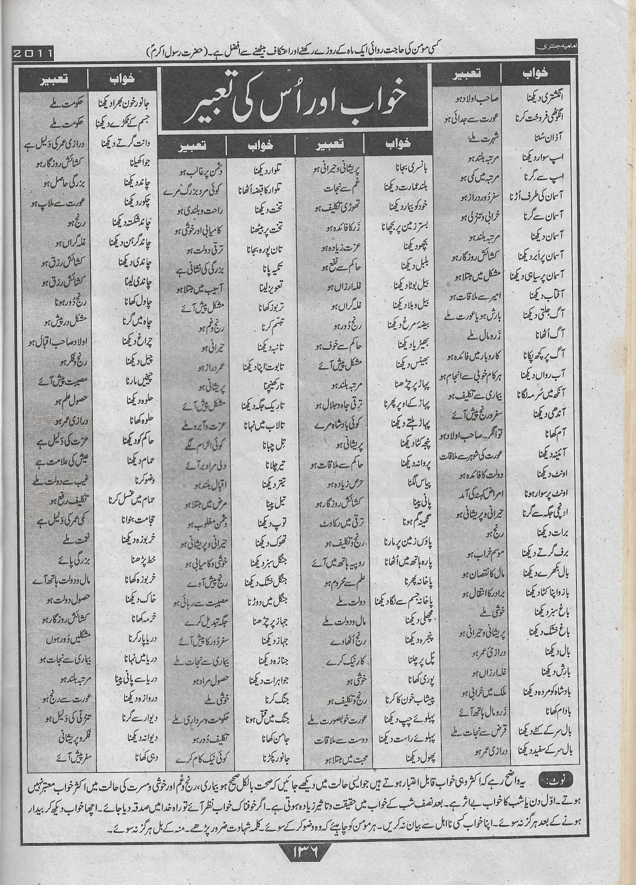
Figure 2. (left) Page from Imamia Jantri from my family home (2011)

Figure 3. (right) Cover of Imamia Jantri (2011)
A "Jantri" is a printed publication containing information regarding dream interpretations and media catered for those with Islamic-oriented thinking. These books were a brilliant piece of dream archival and spiritual guidance, often containing prayers, spiritual advice and astrology readings. In recent years however, I have seen these books stoop in popularity. With the early internet boom, the need for books such as these has become less necessary, a google search can supply a multitude of interpretations with a simple click. From observing families around me, the presence of these books shifted from being an everyday item to slowly depreciating and disappearing from homes. However, their significance lies in the fact that past copies and even ones running today reiterate and preserve information and ideas that would have otherwise been lost.
Jantris are much more than just a book, it "is a form of textual ephemera, a seemingly inconsequential and disposable object," (Bashir, 2021) it serves as a reminder that there is a history behind the evaluation of meanings and why people perceive certain dream scenarios the way that they do. Their materiality evolving with the current times mean they pass up that physical interaction of flipping through the pages in favour of a few taps or clicks. The sheer tenacity of continuing to publish, albeit digitally, despite loss of interest means some way this content is still able to be consumed.
In her essay, "Biography of a Wave", Jennifer L Roberts goes into detail about how the physiologist, Angelo Mosso, would meet a man named Michele Bertino and record as many "cerebral pulses" of his brain. In 1877, Bertino suffered from a severe injury that caused a part of his skull to fracture. Miraculously, he survived without any negative effects on his cognitive function. Though his wound eventually healed, his brain could be seen pulsing. Moving under the skin. Up until this point, the heart had been idolised as the main source of what we now know as cognitive function. Sayings such as "remembering (something) by heart," "take (something) to heart," etc, are short glimpses into the past. This ideology is called cardiocentrism, a belief that the heart controls emotions and behaviour. Queue the scientific excitement when the idea of the brain being responsible for more than just physical movement is slowly exposed on accident, much like Bertino's brain.
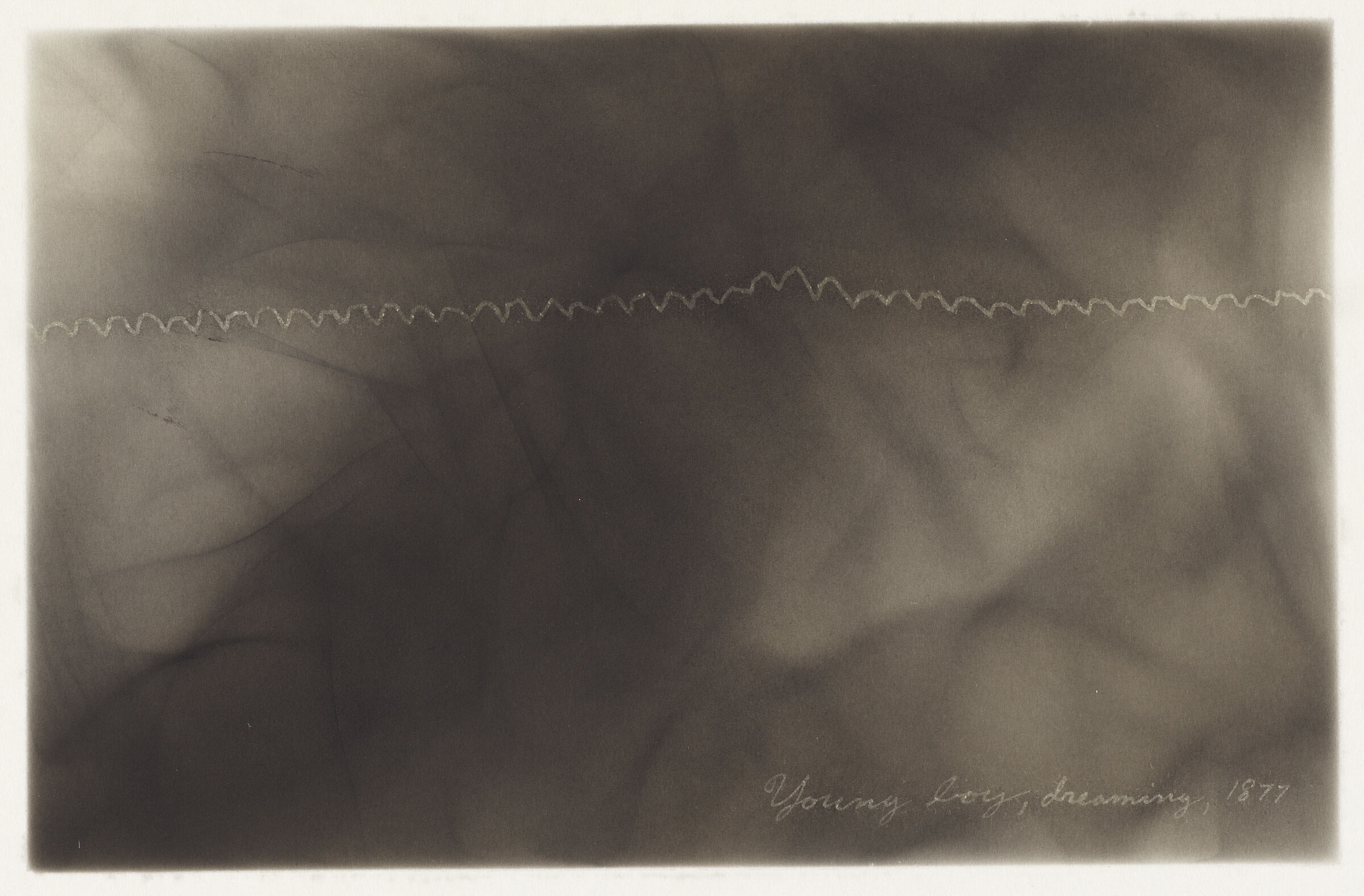
Figure 4. Print of Young boy, dreaming, 1877 (Source: Harvard Art Museum, 2017)
Mosso fitted an adapted sphygmograph, a chrome device used to take records of pulses, alongside a piece of equipment called a kymograph, which would have soot-covered paper attached to a cylinder, rotating slowly. The sphygmograph would have a thin piece of metal that would move up and down from the air pressure of a tube and rubber that was specially moulded to fit Bertino's healed wound. The pulsing would have caused the pressure in the tube to go up and down, which would in turn, allow the stylus to document an accurate reading. Mosso would ask a series of questions and record his findings from this newfound interface between the mind and heart.
The absolute fragility of the technique is almost endearing; recording something so intimate. Although this is a much more technical example, it can emphasise how as early as the 1877 people were attempting to get an insight on how our mind operates. These are some of the earliest medical forms of dream and brain archival that we have record of.
Dario Robleto often tried to find the "first of firsts" (Roberts, 2019) in bioengineering. In his piece "Unknown and Solitary Seas," using records of old data and replicating these outdated methods into a 3D brass-plated steel output. Medical equipment at the time would have used metal, and transforming it into creative preservation is an interesting approach at bridging medical archives and art. Having something taken from delicate paper and then into this steel piece is like a plaque to the pioneers who advanced in dream research from the 1870s. The stark contrast between original to this rebirthed outcome is much more interactive, you can see how the recordings would have looked in dimension, you can feel the different bumps of these once beating and feeling hearts. In his piece "The First Time, the Heart", Robleto reenacts the smoked-paper technique with more artistic twists. Using photolithography to make prints out of waveforms, transparent ink, a candle to almost reenact a deconstructed method of Mosso's work. Then bathing the paper in a solution made to seal the soot, the print is complete. Just like that, the wave is given a new audience in a curated exhibition that can express advances done by medicine-based pioneers.
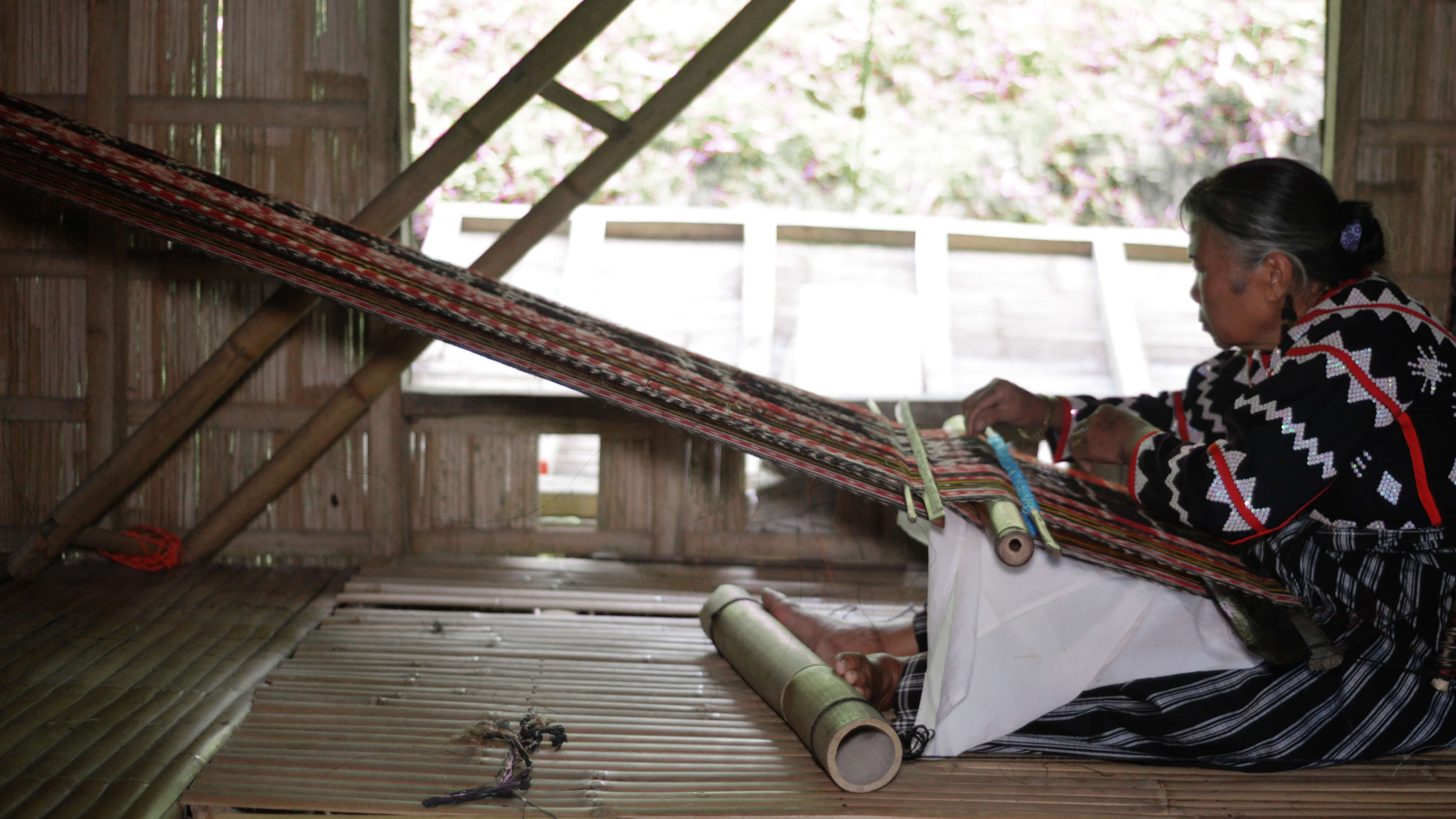
Figure 5. Woman artisan in South Cotabato (Source: Fameplus article, 2023)
Of course, all of this is from a much more scientific point of view. People have been interested in using different methods to record sleep and dreams for generations. Each culture defines their own ways in which they think is best to make something that is unseen and pivoting it into physical work. Different contraptions have always been helpful in creating documentation of dreams. Hand-woven designs from their dreams, the cloth is situated in their lives just as the threads they weave together. From birth, life and death, the cloth is woven to not only be gifted in their lifetime, but they also pay tribute to those who have passed. Sustainability is valued greatly in their culture and it is evident in their process, how "the cloth is woven from abaca fibres and is naturally dyed from bark, roots, and certain plants" (David and Everett, 2020), shows how deep rooted both the fibres and their beliefs are to the earth and their soil of existence. Just like how Bertino would have been attached to a machine, the weavers in this tribe have found ways to make their craft even more emotionally attached, "the woman becoming part of the loom herself" (Mundo, 2021). Weaving the cloth becomes a performance. A performance that integrates the material and the brain's capabilities into one interface.
In "Patterns of Culture," by Ruth Benedict, she states that "If we are interested in cultural processes, the only way in which we can know the significance of the selected detail of behaviour is against the background of the motives and emotions and values that are institutionalized in that culture." Which I would consider, applies to many of the examples presented within this essay.
Textiles are a popular material used in archiving. Projects can be undone with a simple tug, can be changed and added to at a moment's notice and can be as detailed and as simple as we desire. Through T'Nalak, the T'boli can describe stories and present how intricate the intention behind the textile can be. In an article written by author Ida Anita del Mundo, it is stated that using colours for instance, "The traditional colours of the t'nalak hold symbolic meaning: white for purity, red for the blood of their ancestors, and black for the soil from which they came." These dream weavers will only ever weave whatever patterns they dream and in "in reference to Fu Dalu, the goddess of abaca," the very fibre in which they are made from. Bringing these abstract dreams into the physical world and drenching them in so much care, love and delicate practice shows how well it fits to document with textile in the T'boli people's case. Using materials organically found and treated, soaked with tradition and background before being worn on the said bodies that the strong black colour represents.
As the fine fibres of the abaca fray, the reuse of textile in dream documentation meets a new light from across the pond. Working with much more physical mediums to reflect on sleep and dreaming in an ever-growing algorithmic world. Artificial intelligence is constantly changing and using it as a material to create work can be controversial depending on the method. Machine learning is extraordinary when it comes to innovative technology and digital documentation. In her work called "Night as Root," Kite explores the "intricate interplay between artificial intelligence and Lakȟóta philosophies of the nature of being" (Nome Gallery, 2024). Playing on the linguistic aspect of night being the root word to all things dream within her culture. Materials such as rock, fabric and embroidery are all elements she explores and contrast severely with stereotypical AI generated artworks.
Alisha Wormsley is a US based artist who uses her practice to highlight and disrupt the ordinary. Her work, usually advocating for people of colour, challenges and creates this space for discussing political concerns.
Her work contributes to the imagining of the future of arts, science, and technology through the Black matriarchal lens, challenging contemporary views of modern American life through whichever medium she feels is the best form of expression.
Her work embodies her views and often promotes politically charged messages in hopes of uniting community together. Displaying her work in New York provides the perfect opportunity for her to spread awareness with a large audience.
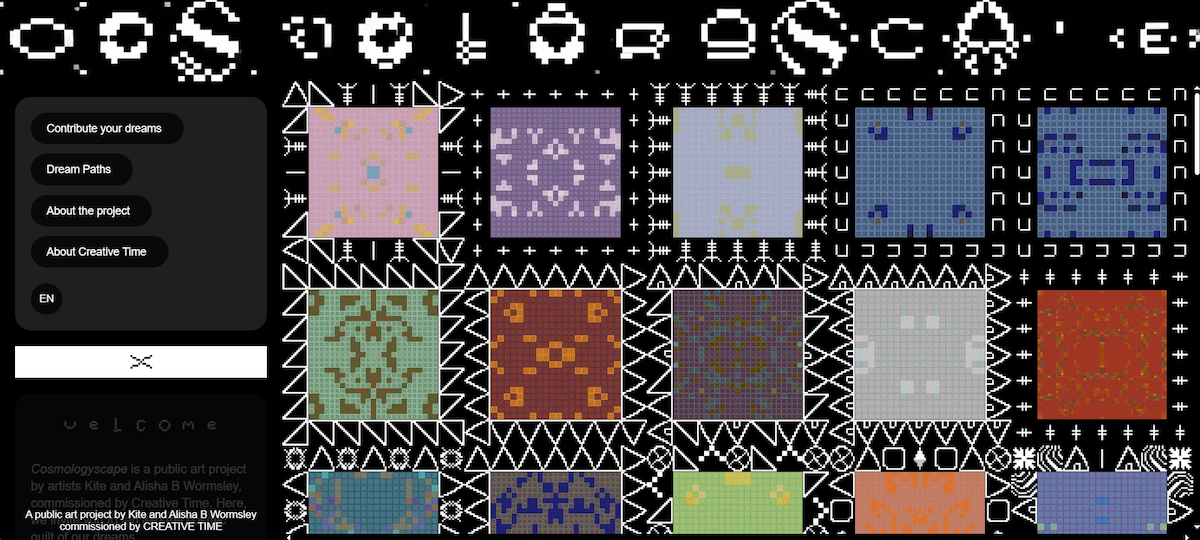
Figure 6 Screenshot of the Cosmologyscape website (2024)
However, the duo has worked separately and together in the past as well. Archiving can go beyond physical work and take form in a digital space too. Screen-work produced by the artists Kite and Alisha Wormsley, being one of them. "Cosmologyscape is a platform for exploring the dreamscape." It requires the user to submit their dream to receive a virtual-dream quilt, which represents your dream. This digitalisation of textiles allows for easy customisation and international accessibility.
Both the artists have ingrained aspects of their culture in the curation of this project. Kite, using "13 Lakȟóta dream symbols" and Alisha using "13 African American quilting motifs", utilised machine learning to generate their algorithm for dream-data inputs. This culture-rich and valuable information then gets passed onto us in the form of a website. Narrative quilting is an old concept that has been around for generations, but this cellular automaton output is a fresh new perspective into an ever-growing digital world. It stays relative to our times; digital dream archives are more common in present day due to the daily use of phones
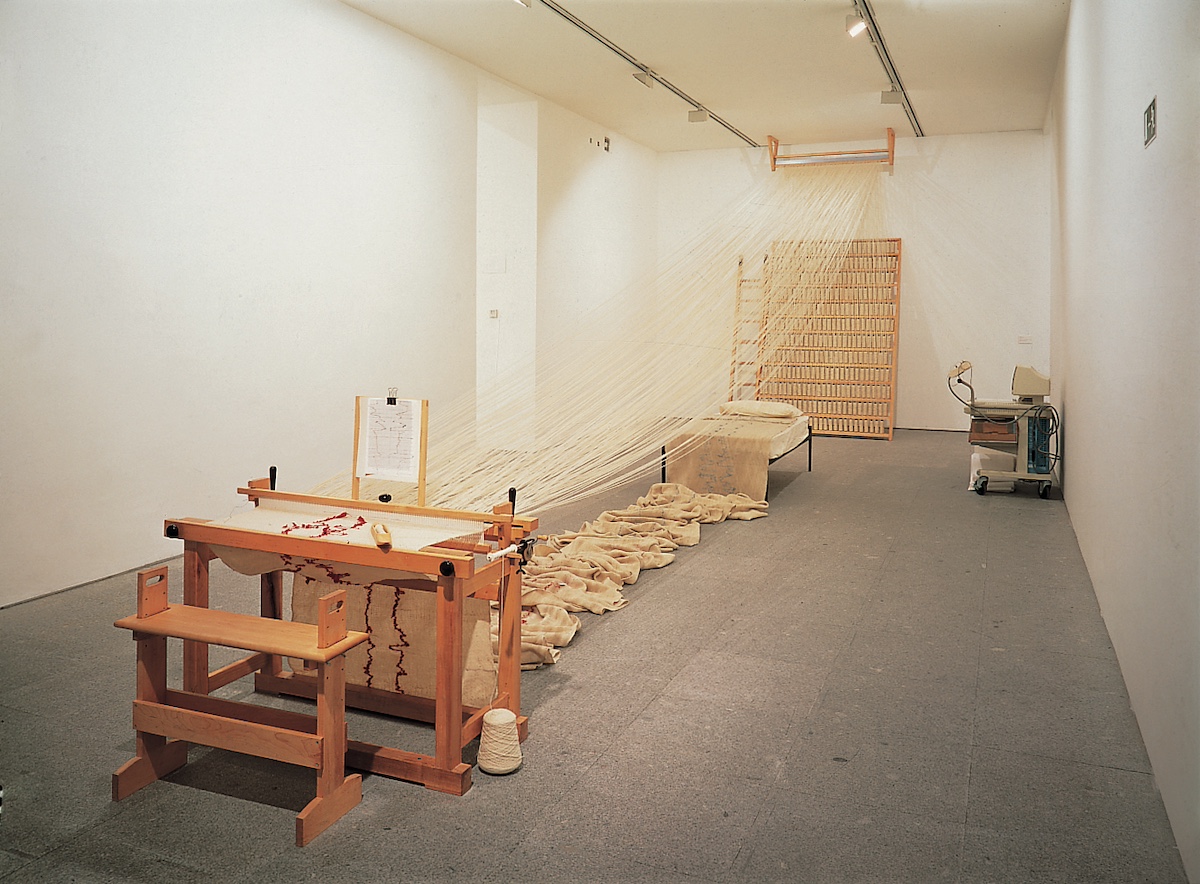
Figure 7. Slumber, 1993 (Source: Janine Antoni's Website)
Computation is far from being reserved for digital-scapes, Janine Antoni can bring these two separate worlds together in a much literal way. In her performative piece, "Slumber" (1993), she integrated a polysomnogram machine into her practice. The machine recorded her eye movement, and she took that data and turned it into a textile output. Both analogue and digital preservation methods were embraced and utilised as tools for the composition of her symbiose. Giving sleep-patterns a new meaning as she says on her website, "Science had made a machine for the body to make a drawing. I love the idea that if art comes from the unconscious, then this particular drawing is coming straight from the unconscious onto the page without an intercession of the conscious mind.", and then her material form of REM readings, being her very blanket to sleep in, brings this unity with both her conscious mind and unconscious mind forming this sleep-collaboration.
Computerised methods while still incorporating this handmade aspect is an incredible use of embracing societal change. It allows textiles to remain in the loop, hand in hand. It generates an abstract greatness which is still vastly unexplored. I noticed within my research that although weaving is so integrated and textile in general is a major form of South Asian representation, there is a significant lack of dream art. There is potential of combining South Asian culture with incorporating story telling of dreams in a textiles form.
What is a dream space?
Bringing back the ideas based off psychoanalytic theories and discussing materials and their use in dream preservation. Waking up in the middle of the night after a crazy dream, reaching for your phone and going in to type exactly what you dreamt about. You know that if you miss this chance, that dream will be lost to time. In that moment, your phone, the application of choice, and your words become a dream space.
A dream space is whatever you want it to be. The purgatory in both the space of your phone and the space in your memory, waiting to be relived and reshared. It can be more literal or more theoretical; archival and dream imagining are all forms of dream spaces. To be human is to dream, and although some people may have irregular dreams and some may have insanely lucid ones, it is a shared experience that has united and will continue uniting us all. People of the past have always tried to chase dream spaces and even now, we find ourselves in the same loop even millennia later. Dreaming and making space for them is something I think humans will never stop creating.
The archival nature within mobile applications gives us access to differing spaces and features regarding user experience. Being a more modern take on traditional dream journals, the overarching appeal is that they are compact and easily accessible. Especially as our dependency on technological growth continues, as does the array of remaking and reintroducing methods that offer convenience. Our phones are usually by our bed, within arm's reach "70% kept the mobile near the pillow while sleeping" (Rafique, N. et al, 2020), making it an almost instinctual habit to use them upon waking up. These behavioural patterns make dream recording apps a popular choice, especially to younger audiences.
Artificial intelligence crossing over with dreams is a product of our time. AI has made a huge surge in recent years and apps like "Elsewhere" and "DreamScope" are interested in employing this ever-growing software into their dream spaces. Interestingly, there is a lot of emphasis on multiple different interpretations being accessible when the user inputs their sleep-vision, both Jungian and Freudian. I find this to be tactile and a true reflection on how much our vision of what it means to hold a dream space can be so malleable yet so gentle. Using algorithms to take these archived dreams and
churning out data that can be beneficial while also providing a new interface to analysing and understanding dreams is a complete contrast to their notes app counterpart. Both charming, tiptoeing carefully so that people like us can use them as tools to enhance our own dreaming experiences.
Apps are a modern way of interacting with dreams, whereas journaling and diary keeping has been a practice for generations. There are various artifacts claiming to be the first archaeological instances in which dreams have been written down, but the reliance of these claims create uncertainty. Regardless, many cultures and many methods have been documented, writing down their dreamscapes in whichever way is relevant to their time. A takeaway from the modern and old days is that a physical documentation of dreams provides a different experience than accessing a phone. Pages can hold more character if the paper is discoloured or you see a note written in the margin. It brings us closer to a time we are unable to go back to, yet we can explore the depths of. Not all apps work the same and some offer a range of different interpretations that a user such as us might be interested in looking into. As mentioned before with the use of artificial intelligence, these algorithms can learn from the input of their users. Meaning they can strive towards a more concise answer, Individualised, depending on user data and preferences to form the refinement.
Even a website can be a dream space where you can explore interpretations, a current way people interact with dreams today. Cosmologyscape holds pieces of generational history. Submitting your own dream allows you to get a visual that relates back to how both artists think of sleep, this space where you can learn more about yourself in some way. They can give us a snippet of their history via the graphics, the algorithmic practice, and the self-care suggestions. Each pixel holds meaning and has been put there for a reason. Machine learning used like this can be controversial but the generative output of a written dream to a quilt square is a unique twist to incorporating this technology into art. Taking the dream from being a mind object into a digital representation and forming a digital quilt as a mode of archival is innovative and engaging.
In comparison, a lot of applications will have less of a focus on how information is presented to us as users. Focusing more heavily on having an "aesthetic" down instead of being informed by enriched backgrounds. It comes down to practicality and demand. If people wanted these dream spaces to be immersive and raw, then there would be more of it scattered across the web. These inform the differences between larger and smaller dream spaces. Larger dream spaces are what I would call much more physically interactive, full body encompassing experiences.
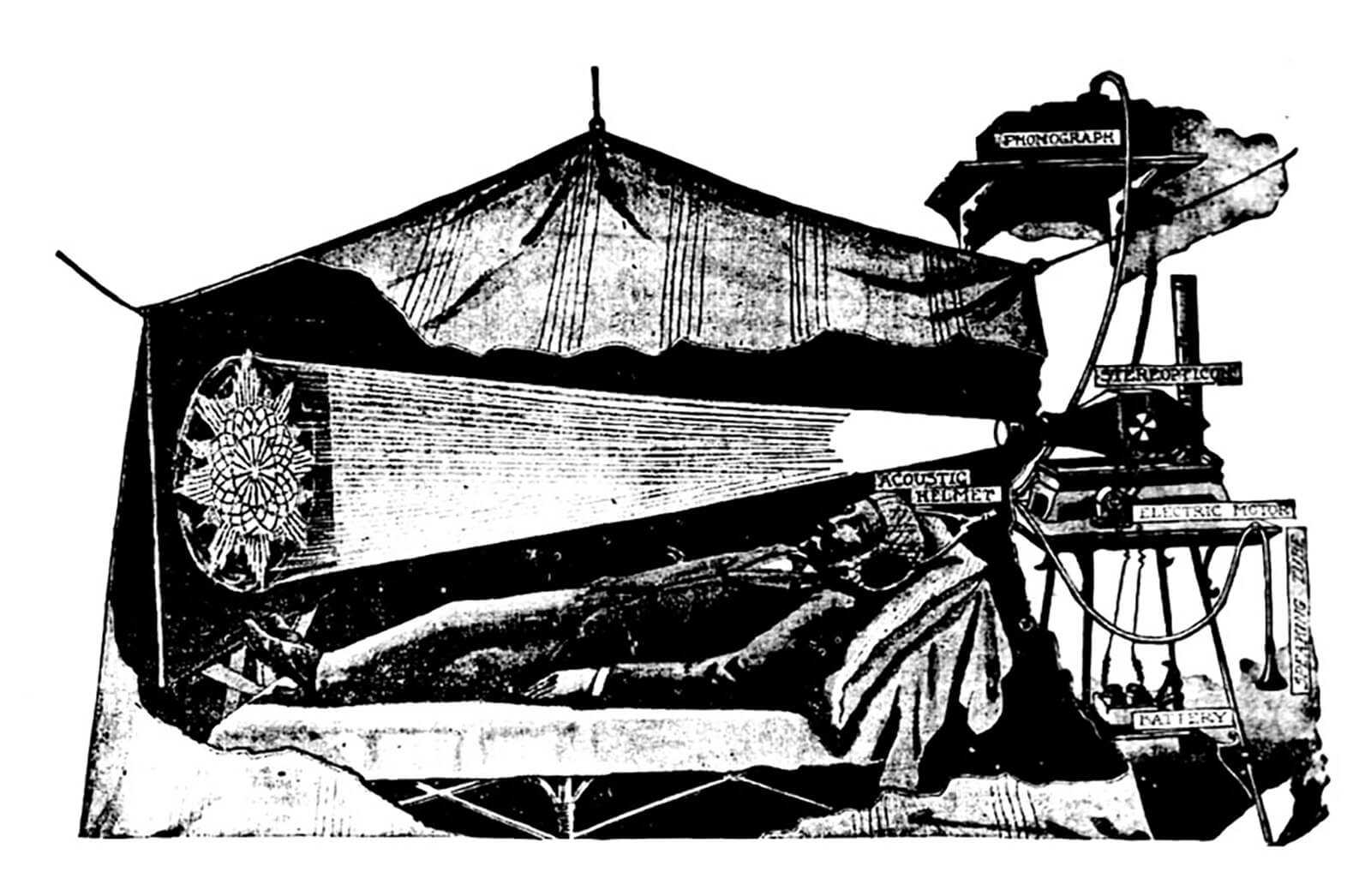
Figure 8. J. Leonard Corning's tent for inducing pleasant dreams. (Source: Illustration from the St Louis Post-Dispatch, 1899)
Even stepping away from a written or digital format, we can explore the vastness of what many people would consider to be a space for us to dream in. J. Leonard Corning was an American neurologist and was around from 1855-1923. He conducted multiple demonstrations on music therapy which is also where he sparked an interest with dream manipulation to promote mental wellness. Corning's tent for inducing pleasant dreams (Sommer and Fizer, 2020) is an archival relic, holding ideas within the realms of attracting positive dreams to the user. Within this notion, it is thought to not only give better dreams but to help the person sleep better. The idea behind this invention can easily be derived as the result of taking a bed and altering it to form this dream chamber, Corning himself states that "treating nervous excitability and kindred ailments by the induction of pleasing dreams, through the assembly of an unprecedented space." which is promoted by many people who want to remember their dreams. To remember them, most people will keep their routine the same and create associations with smell to try and have nicer dreams, so it makes sense why Corning was convinced his dream tent would do the job fine.
Dreamcatchers are a well-known piece of Native American history and there are many other dream objects that hold similar significant value. When you hear the word "dreamcatcher" what you might think of first are the type specifically derived from the Aboriginal Ojibwa Nation. The artifacts tend to be hung up above a child's bed to 'catch' good dreams and repel bad ones. These soared in popularity and have remained a shared piece of culture not just in America, but worldwide. Archival of the history behind dreamcatchers, respecting their origins and intention behind the craft is a wonderful way for them to create dream spaces for those who are not from the tribe itself.
The bed becomes a frame where add-ons can help promote healthy sleep. In a comparative sense, just like Corning who wanted to change how the bed acted by adding elements to form his dream lab. Altering our regular dream-habits is well known to help promote dream-remembering which would then aid dream-archiving (in whichever mode is suited for us). Art has always been so incredibly intertwined with dreams. All the way from textile to amulets, the promotion of wanting good sleep is universal, across all of history.
On the topic of art, archival as a practice holds importance to ensure these dream objects can remain well preserved so that future generations can learn from them or gain inspiration. The V&A and other curation-oriented spaces are filled with objects of art. Why? Well, human history has always shown to be incredibly interested in the archival nature of creation. Some societies have even gone on to be inspired by those before them, just as how Freud was deeply inspired by Artemidorus. Archiving as a practice is such informed human behaviour. Documentation behind old pieces is an investment that ensures future generations get to interact with these ideas and physical pieces as well.
Conclusion
Since it ties so deeply to my individual experience, I am afraid that somewhere along the line, dream realisations from my personal history will become lost. Some cultural beliefs are threatened by colonialism, and the spread of internet access. Through the never ending human artistic endeavour, I believe that we will continue to preserve and expand personal dream ideas Our modern internet allows cultures to dance together and feed one another with their individual ideas. We can borrow thoughts and believe in whatever we want to, the freedom of assigning meanings is a privilege of allowing ourselves to ponder on the whys and hows of sleep-thinking. Dream realisation is more diverse than it ever has been and I know that as more people add to the dream interpretation spaces, the more interesting this amalgamation of dream information will evolve, "ethnography of dreaming has changed from a simple gathering, arrangement, interpretation, and statistical comparison of dreams into an intersubjective dialogical communicative and interpretive process" (Tedlock, 1991) Forever changing and evolving into the next new idea.
Preservation enables the comparison how practices and knowledge, not specific to dreams, have evolved and changed into what they are now. Freud's ideas are still being taught to people even years upon years after his passing. Behaviour like this is what keeps traditions alive in cultures and keeps a population of people educated. The reinforcement of ideas we think are true hold more power than most of us would like to admit to. It begs the question, how many ways of dream recording and dream interpretations are still out there waiting to be discovered today? I can only hope that there comes a day where we can record our dreams and watch them back so we can relive our favourite dreams. These are just some fantasies to sleep on.
Dream archival and the thoughtfulness behind material selection for said archiving practises is incredibly important. Not only does it allow us to explore the human mind in ways we have never thought of, but even the materials and the way that information has been presented can impact the meaning and how an audience may perceive said works. Textile is a clear obvious when it comes to handling dreams. We can see why within some of these examples. Being able to interact with the data and feeling it with our own hands, wrapping ourselves with the very neuro-generated stories we see at night. Dreaming brings us together, just as how the fibres within a greige fabric entangle and hold each other. Making textiles is such an organic way of working, it is human and within being human comes dreams.
Bibliography
Anita del Mundo, I. (2021) How the T'boli women weave their dreams, FAME+. Available at: https://fameplus.com/touchpoint/how-the-tboli-women-weave-their-dreams (Accessed: 18 November 2024).
Antoni, J. (1993) Slumber, Janine Antoni. Available at: https://www.janineantoni.net/slumber (Accessed: 20 September 2024).
Bashir, S. (2021) A New Vision for Islamic Pasts and Futures - Reading the Stars. Available at: Reading the Stars - Islamic Pasts and Futures (Accessed: 20 Dec 2024).
Benedict, R.F. (1935) Patterns in culture. London: Routledge & Paul.
David, A. and Everett, S. (2020) T'nalak: The land of the Dreamweavers, Critical Filipinx American Histories and their Artifacts. Available at: https://uw.pressbooks.pub/criticalfilipinxamericanhistories/chapter/tnalak-the-land-of-the-dreamweavers/ (Accessed: 10 December 2024).
El Shakry, O.S. (2020) The Arabic Freud Psychoanalysis and Islam in modern Egypt Omnia El Shakry. Princeton: Princeton University Press.
Freud, S. and Eder, M.D. (2015) Dream interpretation: Psychoanalysis for beginners. San Francisco: Otbebookpublishing.
Hammond, M. (2020) Artemidorus on dreams, classicsforall.org.uk. Available at: https://classicsforall.org.uk/reading-room/ad-familiares/artemidorus-dreams (Accessed: 30 December 2024).
Jung, C.G. 1875-1961 (2002) Dreams. Routledge.
Jung, C.G., Hull, R.F.C. and Shamdasani, S. (2011) The undiscovered self: With symbols and the interpretation of dreams. Princeton, NJ: Princeton University Press.
Kite (2024a) Night as Root, Nome. Available at: https://nomegallery.com/exhibitions/night-as-root/ (Accessed: 18 October 2024).
Kite (2024b) Portfolio, k i t e. Available at: https://www.kitekitekitekite.com/portfolio (Accessed: 30 September 2024).
myIslamicDream (2011) Dogs Islamic Interpretations & Meanings. Available at: https://www.myislamicdream.com/dogs.html (Accessed: 25 November 2024).
Parker, D. and Parker, J. (1986) Dreaming, remembering, interpreting, benefiting. London: Mitchell Beazley.
Rafique, N. et al. (2020) Effects of mobile use on subjective sleep quality, Nature and science of sleep. Available at: https://pmc.ncbi.nlm.nih.gov/articles/PMC7320888/#:~:text=Only 19.7%25 of the subjects,media facilitate them to sleep . (Accessed: 12 December 2024).
Roberts, J.L. (2024) Dario Robleto - unknown and solitary seas: Dreams and emotions of the 19th century (Radcliffe Institute Exhibition Cat., 2019), Academia.edu. Available at: https://www.academia.edu/41037123/Dario_Robleto_Unknown_and_Solitary_Seas_Dreams_and_Emotions_of_the_19th_Century_Radcliffe_Institute_Exhibition_Cat_2019_ (Accessed: 27September 2024).
Schredl, M. et al. (2020) Dreaming about dogs: An online survey, Animals : an open access journal from MDPI. Available at: https://pmc.ncbi.nlm.nih.gov/articles/PMC7603358/ (Accessed: 12 December 2024).
Sleep and dream database (2019) SDDb. Available at: https://sleepanddreamdatabase.org/ (Accessed: 13 December 2024).
Tedlock, B. (1991) The new anthropology of dreaming. Available at: https://typeset.io/papers/the-new-anthropology-of-dreaming-2os6o5nktd (Accessed: 10 December 2024).
UnEarthed (2021) How ancient egyptians interpreted dreams, unearthed. Available at: https://www.unearthedpenn.com/post/how-ancient-egyptians-interpreted-dreams (Accessed: 20 December 2024).
Urdu word خواب - khawab (1997) UrduPoint. Available at: https://www.urdupoint.com/dictionary/urdu-to-english/khawab-meaning-in-english/28458.html (Accessed: 18 October 2024).
White, R.J. (1975) Artemidorus : On the interpretation of dreams (Oneirocritica), Artemidorus on Dreams - translation. Available at: https://www.attalus.org/translate/artemidorus.html (Accessed: 8 December 2024).
Your Egypt Tours (2023) Dreams in ancient Egypt. Available at: https://www.youregypttours.com/egypt-tours-blog/dreams-in-ancient-egypt#:~:text=Dreams%2C according to the ancient,books of the Old Testament . (Accessed: 12 November 2024).
List of figures
Figure 1: Papyrus | british museum (1930) The British Museum. Available at: https://www.britishmuseum.org/collection/object/Y_EA10683-3 (Accessed: December 2024).
Figure 2 & 3: Islam, Aqeda, amal- a complete lifestyle (2020) Imamia Jantri Official. Available at: https://www.imamiajantri.com/ (Accessed: 27 December 2024).
Figure 4: Harvard (2017) Young boy, dreaming, 1877, Harvard Art Museums. Available at: https://harvardartmuseums.org/collections/object/366566 (Accessed: 27 November 2025)
Figure 5: Anita del Mundo, I. (2021) How the T'boli women weave their dreams, FAME+. Available at: https://fameplus.com/touchpoint/how-the-tboli-women-weave-their-dreams (Accessed: 15 November 2024).
Figure 6: (2024) Cosmologyscape. Available at: https://cosmologyscape.com/ (Accessed: 12 November 2025).
Figure 7: Antoni, J. (1993) Slumber, Janine Antoni. Available at: https://www.janineantoni.net/slumber (Accessed: 10 December 2024).
Figure 8: Fizer, N. and Sommer, R. (2020) Glossary of dream architecture (full version): Richard Sommer and Natalie Fizer, CABINET /. Available at: https://www.cabinetmagazine.org/issues/67/fizer_sommer_full.php (Accessed: 28 October 2024)